Get Full Government Meeting Transcripts, Videos, & Alerts Forever!
Get email alerts on the Comprehensive Plan topic
No spam. Unsubscribe anytime.
Chesapeake planning director outlines multi‑year comprehensive plan update, public engagement and implementation steps
Summary
Planning Director Jimmy McNamara told the City Council the comprehensive plan update — built on years of outreach and seven focused policy areas — is ready for Planning Commission review with a follow‑up council session expected before adoption in January 2026.
Planning Director Jimmy McNamara presented a progress update on Chesapeake’s comprehensive plan at the council’s Sept. 23 work session, saying the document is the product of multi‑year public engagement and is moving toward public hearings and adoption.
"This has been a quite a journey," McNamara said, recounting that the update began in January 2023 and was built on demographics, housing and market analysis and extensive engagement with residents, boards and commissions. He said the process included geographically dispersed open houses, multiple surveys and more than 40 stakeholder focus‑group meetings.
The presentation emphasized scale and outreach: McNamara reported roughly 60 days of public posting for the draft and summarized participation figures, saying the project has had "close to 4,400 responses to our surveys, 20 total open houses, 45 events with about 1,100 interactions so far." He told council the Planning Commission will hold a public hearing in October and staff plans a follow‑up council work session in December before seeking adoption in January 2026.
McNamara described several structural elements of the draft plan. It replaces a narrow, map‑only approach to land use with "character districts" that provide more detail about intended development patterns and placemaking; it retains and codifies overlay districts (including a Rural Overlay District with density requirements) and adds an environmentally sensitive overlay that draws on floodplains, sea‑level rise projections, habitat corridors and wetlands to identify areas where additional mitigation is recommended.
On policy areas, McNamara summarized seven focus chapters: connectivity and infrastructure (a strong call for sidewalks and trails while acknowledging car travel remains primary), economic prosperity (protecting redevelopment sites, talent attraction, and support for small businesses), environment and resilience (stormwater, tree canopy, shoreline and sea‑level considerations), growth management (a reinvest‑and‑preserve strategy to accommodate an estimated 50,000 additional residents by 2045), housing (a housing continuum and attention to senior and supportive housing), placemaking and design, and implementation guidance including a public tracking dashboard.
Council members asked procedural questions about public access to the draft and future integration of other plans. McNamara said the draft is posted on the planning department webpage and that the city is accepting public comment through the posted comment period; he also confirmed small‑area plans such as Deep Creek and a Western Branch Area Plan will be linked to the comprehensive plan.
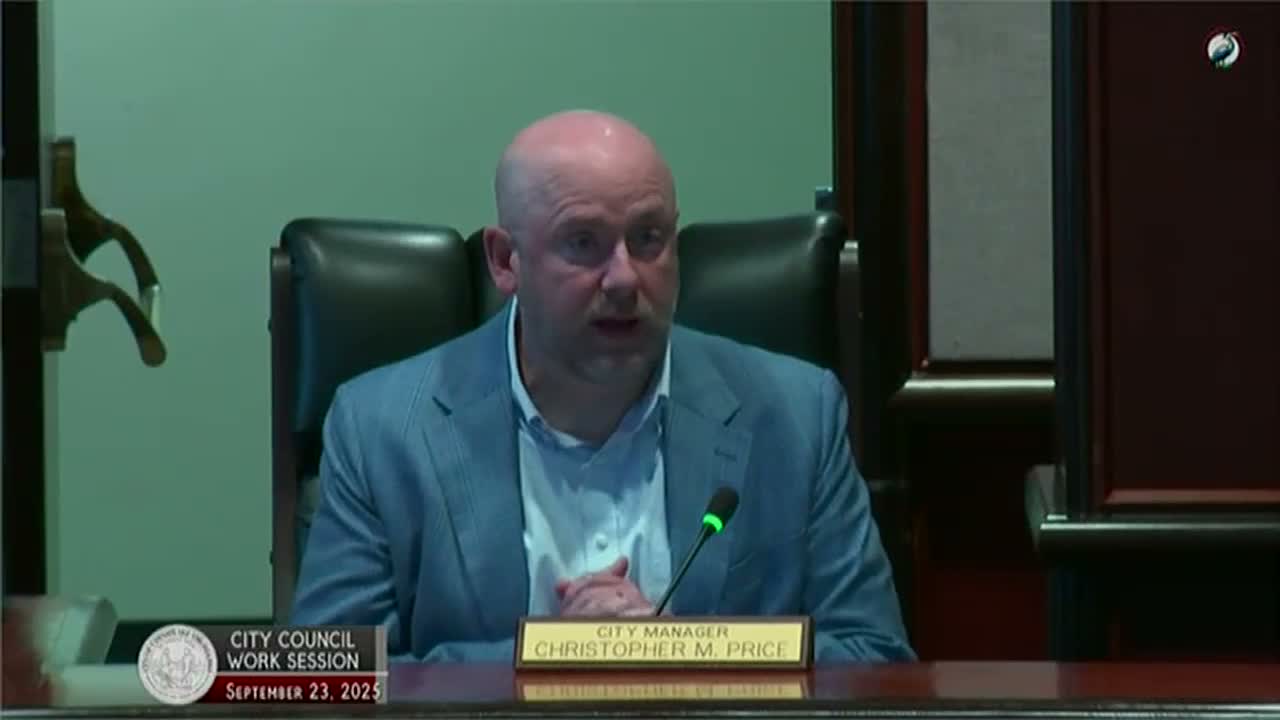
City Manager Price and council members praised staff outreach. Price highlighted the city's intent to create a public dashboard for implementation tracking; Councilmember Whitaker thanked McNamara for the scale of community participation. McNamara asked council to reserve detailed policy questions for an October retreat where staff can dive into chapter‑level topics.
The council did not take a formal vote on the draft at the meeting; McNamara said Planning Commission action and subsequent council sessions will determine the path to adoption.