Get Full Government Meeting Transcripts, Videos, & Alerts Forever!
Get email alerts on the Urban Overlay Density topic
No spam. Unsubscribe anytime.
Chesapeake approves urban-overlay density increase amid concerns about traffic and scope
Summary
An ordinance to raise allowed single-family densities in the urban overlay passed 5–2 after public speakers warned the change could spur development that outpaces road capacity; staff said the amendment affects future discretionary rezonings and not already-platted lots.
The Chesapeake City Council voted 5–2 to approve an amendment (PLN text 2025‑5005, version dated 05/22/2025) that raises permitted single‑family densities within the city’s urban overlay district.
Staff said the change aligns zoning standards with existing lot types and will apply to future discretionary actions such as rezonings and subdivisions. "This is really looking at new developments," Planning staff told council, adding that lots already platted would not be affected.
Public speakers raised concerns. Vic Nichols said the Urban Overlay includes parts of Greenbrier and warned that increasing density without addressing road capacity risks worsening congestion. "If the number 1 issue people keep telling you is traffic, then that means we have too many people, not enough roads," Nichols said. Markela Moore asked why the change applied to the entire urban overlay rather than being targeted to South Norfolk, and urged coordination with the pending industrial waterfront study.
Staff responded the density provisions sit in the urban overlay code section and, because of that structure, the amendment was written to apply across the overlay; targeted protections and project-level review would still be processed through council decisions on rezonings or conditional permits.
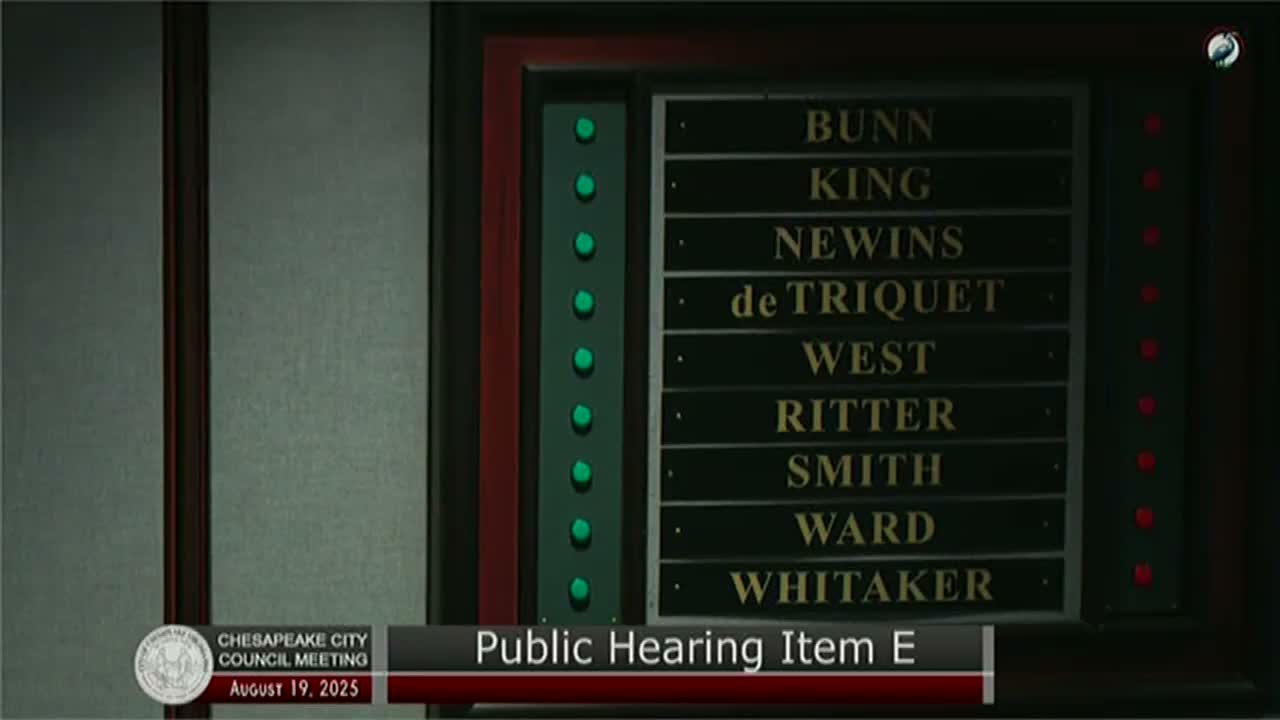
The ordinance passed 5–2 on council’s recorded vote. Council members who opposed said they worried the broad change could have unintended effects in neighborhoods where increased density was not appropriate; supporters said it allows infill and aligns code with existing development patterns.
Staff will continue to apply discretionary review processes (rezoning/conditional-use review) for projects affected by the new density standard.