Get Full Government Meeting Transcripts, Videos, & Alerts Forever!
Get email alerts on the Speaker Time Policy topic
No spam. Unsubscribe anytime.
Chesapeake council work session coalesces on tiered speaker-time rule for large public comment nights
Summary
Council members proposed a tiered policy to shorten individual speaker time when many residents sign up, preserving every person’s chance to speak while limiting total meeting length. Staff will present a formal ordinance or rule for council vote.
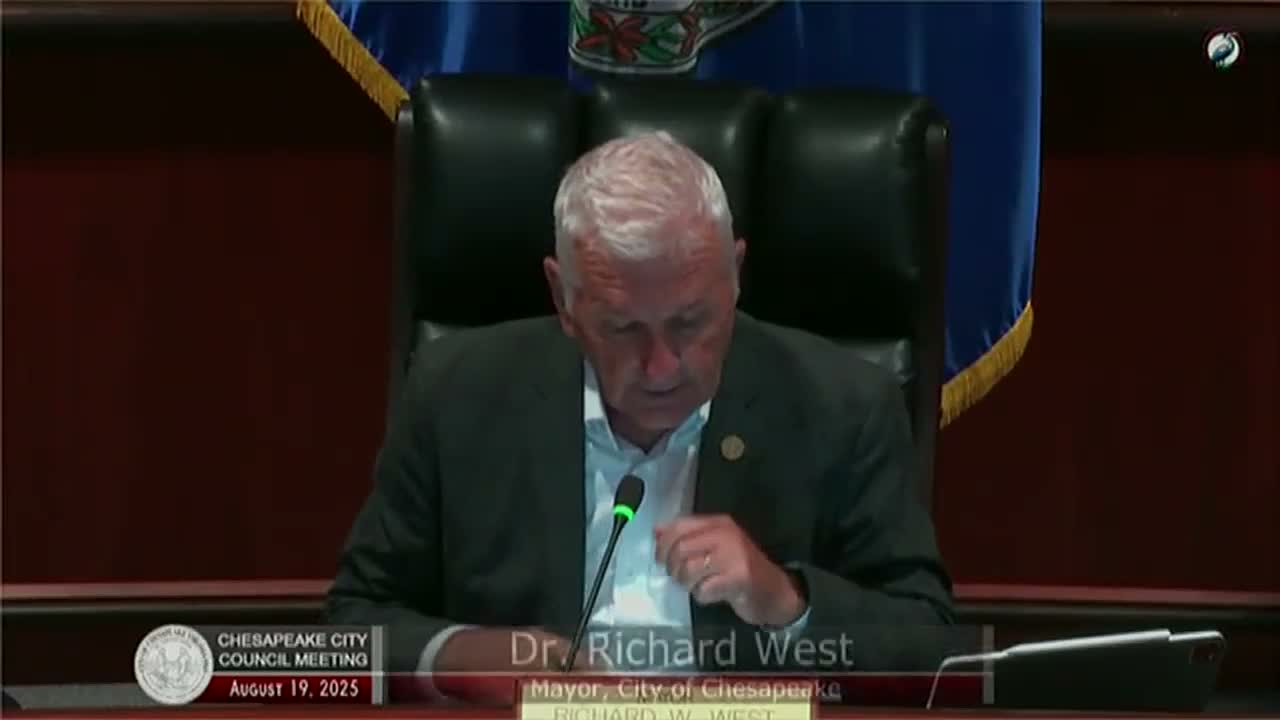
Chesapeake council members exchanged proposals Tuesday on a draft policy to limit individual public-comment times when many people sign up for a single agenda item, aiming to keep meetings to a manageable length while allowing everyone a chance to speak.
At the opening of the work session, Councilmember Debbie Ritter proposed treating agenda-item speakers like non‑agenda speakers: when sign-ups exceed a threshold, reduce each speaker’s time but ensure every signed-up person is heard. "Speaking time is reduced to 3 minutes, but every signed up speaker is allowed their 3 minutes," Ritter said during the session.
Council members debated where to set numeric triggers and how to treat the principal applicant. Staff and members agreed on a draft three-tier structure to return to full council for formal action: up to 10 total speakers — principal applicant 10 minutes, others 5; 11–16 speakers — principal applicant 7 minutes, others 3; 17 or more — principal applicant 5 minutes, others 2. City staff confirmed the committee can present that scheme for a future council vote.
Supporters said the plan balances fairness and efficiency. "It allows everyone to speak and we know the number of speakers who signed up," Ritter said, while others noted applicants often bring multiple representatives and that a single principal applicant slot keeps presentations focused.
Opponents urged caution about perceived fairness and public perception if applicants retain a time advantage. Several members proposed lowering applicant time proportionally when public-speaker time is reduced.
The item will return to the council with a drafted rule and clean ordinance language for formal consideration and a recorded vote. No formal rule change was adopted in the work session itself.