
Officials weigh expanded urban archery, feeding ban and outside vendors in Lynchburg deer response
Get AI-powered insights, summaries, and transcripts
Subscribe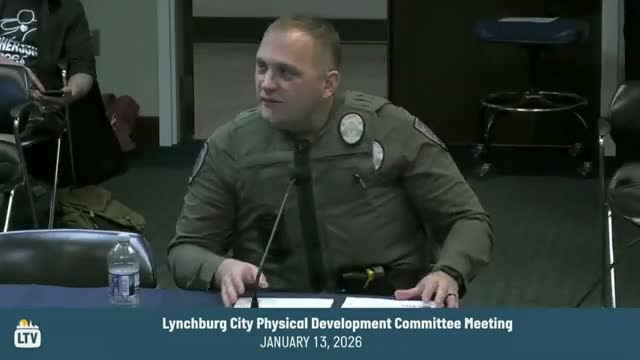
Summary
City staff described expanded urban‑archery permits and parcel access, reported five years of deer data and recent vehicle‑deer crash counts, and council debated options including a year‑round feeding ban, preapproval matching systems and contracting private culling vendors.
A city animal‑control presenter, identified in the record only as Ryan, briefed council Jan. 13 on Lynchburg’s deer population and management options, and council members engaged on safety, cost and legal tradeoffs.
Ryan said the city has authorized urban‑archery permits on three groups of publicly owned parcels (about 45, 60 and 11½ acres) and offered week‑long permits that were fully booked into February for two of the parcel groups. He described the city’s septic‑to‑sewer incentive — waiving availability fees for two years where sewers are available — and reported 53 inquiries, 29 completed applications and 14 installed sewer connections in 2025 as part of that incentive.
On deer counts and crashes, Ryan told council there is no precise census but said hunter reports and internal tracking suggest a large regional deer population; he presented reported vehicle‑deer crash notes for 2021–2025 (2021: 21; 2022: 14; 2023: 7; 2024: 11; 2025: 33) and acknowledged underreporting is likely. He traced programmatic declines in active culling to three causes: the state’s prohibition on the previously used quiet .17‑caliber rifle, recruitment and retention of hourly staff, and rising cost when the city relied on sworn officers’ overtime.
Council members pressed staff on alternatives. Suggestions included creating a preapproval or matchmaking program to pair hunters with property owners, expanding promotion of urban archery, permitting elevated bow hunting after GIS/site review, and contracting with outside vendors that use thermal technology. Ryan said the city has informally worked with local hunters and would rotate a list of volunteers; he acknowledged liability and safety review needs and said staff typically uses GIS and Google Earth for an initial permit screen and will meet on‑site when parcels require more scrutiny.
Ryan also proposed a local ordinance banning the feeding of deer year‑round, saying feeders draw deer into neighborhoods and complicate control efforts. He described outreach plans with city communications to encourage hunters to use public parcels and said staff hoped to expand safe publicly owned hunting sites.
Council members asked staff to continue exploring contracting models and vendor demonstrations, noting some private vendors operate in nearby counties for a limited season. No formal action was taken; council members asked for additional cost information and for staff to return with options that address safety, liability and neighborhood suitability.