
Lynchburg water staff report 20 years of top water quality, flag infrastructure needs
Get AI-powered insights, summaries, and transcripts
Subscribe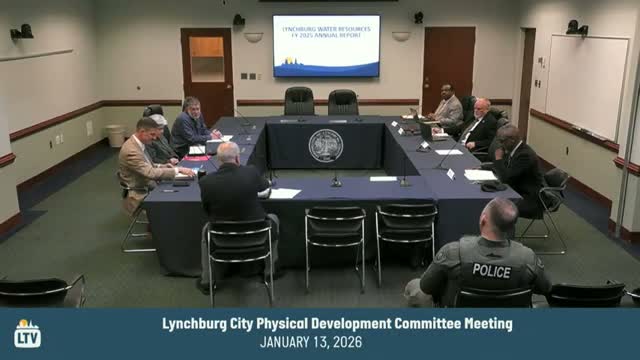
Summary
City water director Tim Mitchell told council the department won a 20th consecutive award for water quality, completed major testing and capital work, and warned 86 miles of waterline and millions in treatment-plant repairs remain unmet needs.
Tim Mitchell, Lynchburg’s director of water resources, told the City Council at its Jan. 13 work session that the department marked a year of operational accomplishments while laying out pressing infrastructure needs.
Mitchell said the division was recognized by the Virginia Department of Health for the twentieth consecutive year for producing drinking water “three times cleaner than federal and state standards.” He said staff performed more than 130,000 laboratory tests during the year and that the department recently launched a water service line‑inventory program in response to the EPA’s lead‑and‑copper rule; the city sent about 20,000 customer notifications and has received roughly 700–800 authorizations to inspect service lines so far.
The presentation condensed division‑by‑division highlights: the drinking‑water lab workload and plant maintenance, upgrades to coagulation tanks, the city’s wastewater plant receiving a National Association of Clean Water Agencies Gold Peak Performance Award for continuous operation without violations, and a septic‑to‑sewer incentive that produced 53 inquiries, 29 completed applications and 14 installed connections in 2025. On capital work, Mitchell said crews broke ground on the Blackwater combined‑sewer overflow tunnel, advanced Main Street Phase 4, and continued College Hill utility improvements; staff also completed pond retrofits at Breezewood and Seabury and are using targeted sewer lining as a cost‑effective alternative to full replacements.
Mitchell identified the department’s short‑ and medium‑term needs: about 86 miles of waterline that should be replaced over coming years, an estimated $27–28 million in repairs and upgrades at the Abert Water Treatment Plant, and the continuation of an ambitious sewer system evaluation survey that has helped prioritize lining and rehabilitation. He said the meter division installed roughly 5,300 cellular read meters and expects to finish the conversion this year, enabling near real‑time leak notifications for customers.
Council members asked for clarity on the mailer response rate and the scale of laboratory work. Mitchell said much of the testing is performed by in‑house operators on a 24/7 basis and that some tests are shipped out; he confirmed the 130,000‑test figure covers all in‑house and required hourly sampling. He also described routine operational pressures — 67 waterline breaks last year and an ongoing break near 12th and Kemper — and noted two engineers earned professional licenses in 2025.
Mitchell closed by offering copies of the annual report and by noting planned public engagement: a tour of the new CSO tunnel likely in April or May and upcoming FEMA floodplain map presentations to council. The report and the Q&A highlighted that while the city produces high‑quality water, deferred capital needs and equipment replacements represent a multi‑million‑dollar challenge over the next several years.
The Water Resources report was delivered as an informational briefing; no formal council action was taken at the work session. A copy of the full annual report was offered to council members for follow‑up.