
Committee advances bill to require autism micro-credentials, teacher incentives
Get AI-powered insights, summaries, and transcripts
Subscribe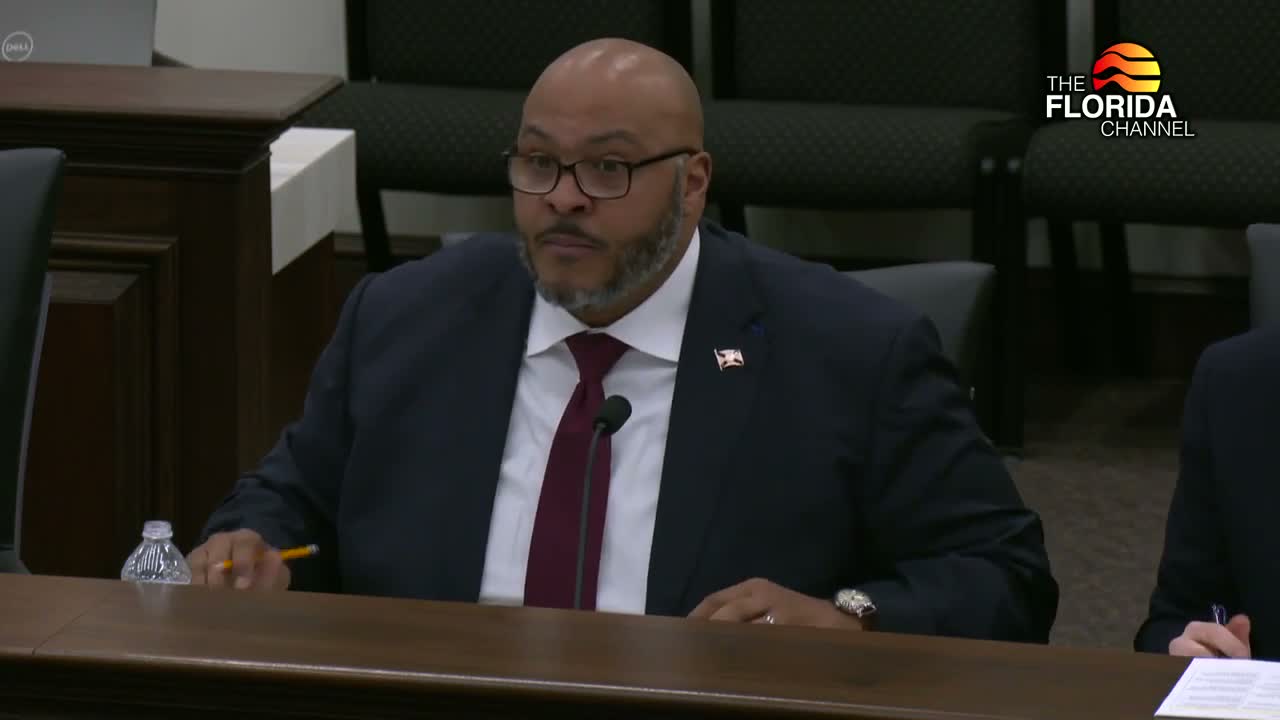
Summary
The committee reported CS for SB 206 favorably after sponsor Sen. Harrell described requirements for autism training in teacher-preparation programs, a micro-credential for ESE teachers effective 08/01/2027, and incentives including loan forgiveness, stipends and salary supplements to encourage specialization.
Sen. Harrell told the Senate education committee that CS for SB 206 updates teacher preparation and incentives to improve instruction for students with autism spectrum disorder.
The bill requires education preparation programs to offer autism and other neurodevelopmental disability training and directs exceptional student education (ESE) certified teachers in those programs to earn an autism micro-credential. Harrell said the micro-credential counts for three college credits or equivalent in-service teacher hours and that the effective date for the micro-credential requirement is Aug. 1, 2027. The bill also creates an "autism education loan forgiveness" program, authorizes salary supplements and stipends for teachers who earn a special endorsement, and requires district professional development systems to include at least one autism-specific training.
During questioning, senators pressed Harrell on timelines for current classroom teachers to obtain required credentials and whether experienced teachers would be grandfathered. Harrell said he was open to a two-year window for current educators to obtain endorsements and differentiated between the micro-credential (3 credits) and the full endorsement (12 hours). He said the definition of autism language tied to DSM-5 was removed from the bill for fiscal reasons and that a related definition bill was pending in the House.
Public commenters included Marquise McMillan of Orange County Public Schools, who said the district supports the bill as amended but seeks flexibility for current instructional personnel, and Nicole Grabner, a parent and nonprofit worker, who described personal support for added teacher tools. After sponsor closing remarks, the secretary called the roll and the committee reported CS for SB 206 favorably.
The transcript records loan-forgiveness language as "up to 5 annual payments of $3,500 up to a total sum of $1,750," which is internally inconsistent; the sponsor described the program's intent to provide multi-year payments to incentivize specialization. The sponsor committed to clarifying specific timelines and to working with appropriations on funding.