Senate Committee Advances Agriculture Bill With Density Limits, Biosolids Delay and Stricter Subcontractor Penalties
Loading...
Summary
The Senate Fiscal Policy Committee reported favorably on CS for SB 290 after debate over density limits for small municipalities, a delay in biosolids regulation implementation, higher insurance requirements for fumigation contractors and a controversial increase in penalties for failure to pay subcontractors.
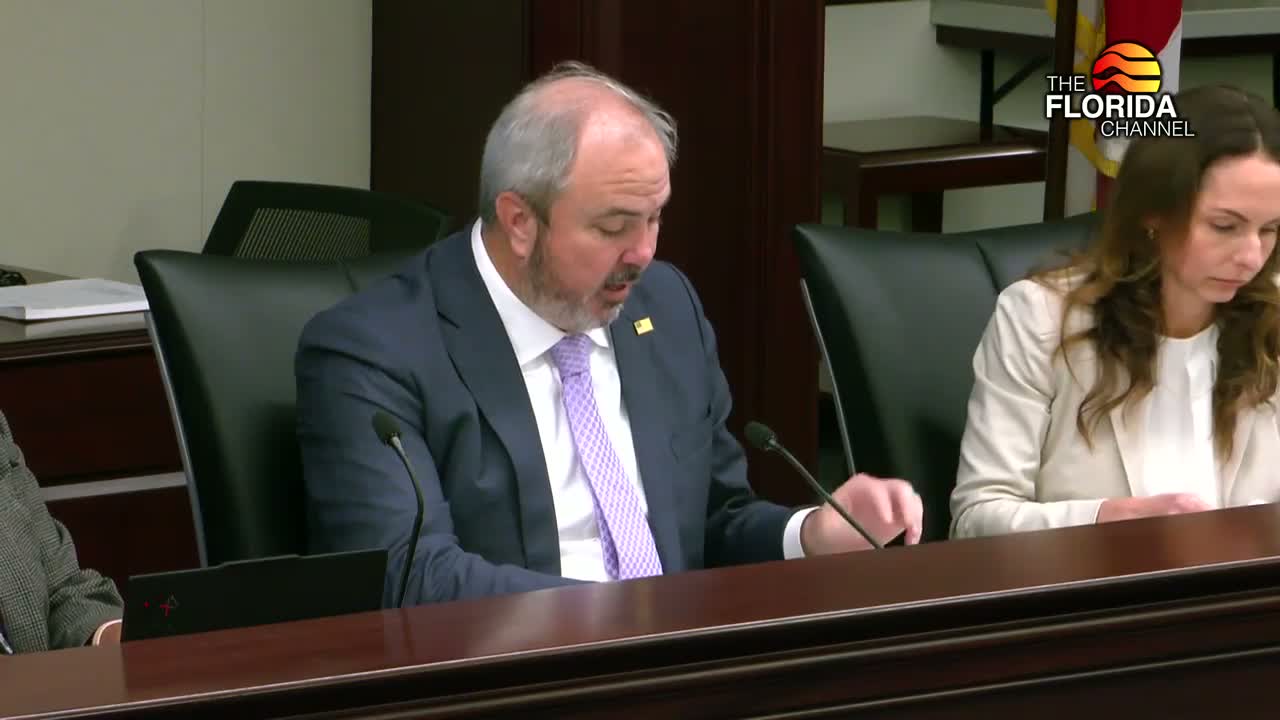
The Senate Fiscal Policy Committee advanced CS for SB 290 on a committee vote after the sponsor presented a strike‑all amendment that would set density limits for small municipalities, delay biosolids regulatory changes, tighten fumigation insurance requirements and raise penalties for contractors who fail to pay subcontractors.
Senator Trunnell, the bill sponsor, told the committee the amendment "establishes density requirements, 1 resident per 20 acres for developers who seek to build in small municipalities" defined in the amendment as under 2,500 acres and with fewer than 5,000 legal residents. He said the provision includes an exemption for housing for families.
The amendment also delays the effective date for the bill's biosolids regulatory changes from July 1, 2026, to July 1, 2028, and requires pest‑control licensees who perform fumigation to carry liability coverage at specified thresholds. "[Licensees] would hold either a $1,000,000 per person, $2,000,000 per occurrence of bodily injury and property damage, or a combined single limit coverage of 2,000,000 in the aggregate," Trunnell said. The amendment increases maximum fines tied to fumigation violations and extends the time contractors have to compensate subcontractors or suppliers from 15 business days to 30 business days after receiving payment.
Trunnell also told the committee the amendment would prevent counties from adopting or enforcing ordinances that require agritourism venues to obtain event permits or licensing, and it renames the Bonifay Forest Forestry Station to the John Michael Mathis Forestry Station.
Audubon Florida raised objections during public comment. Beth Alvey, senior director of policy at Audubon Florida, said the bill "removes agricultural related surplus decisions from ARC" (the Acquisition and Restoration Council) and shifts final authority from the Board of Trustees to the agency, a change she warned would reduce public oversight. Alvey also contended the bill "does not align with Florida's existing regulatory structure" for biosolids and said prohibiting class B land application without a workable framework for class AA ("double A") material would create oversight gaps.
Several agricultural and industry groups waived in support of the measure, including the Florida Farm Bureau and the Florida Nursery Growers and Landscape Association.
Committee members focused sustained attention on two areas: the criminal penalty in section 13 that would elevate certain failures to pay subcontractors from a third‑degree misdemeanor to a first‑degree felony, and the timeline and cost to implement the proposed change to biosolids regulation. Senator Davis questioned whether the felony escalation aligns with existing procurement, bond and lien statutes and whether enforcement gaps might be better addressed by other remedies. Senator Jones likewise urged further review of unintended consequences even as he voted in favor of the measure.
Vice Chair Osgood relayed concerns from Broward County about the time and capital needed to construct systems for handling class AA biosolids, saying county officials estimated two studies had cost about $280,000, design could take roughly two years at an estimated $50,000, and construction about three years with an estimated $500,000,000 price tag. Osgood asked for a phase‑in approach and state support for permitting and interim capacity.
Sponsor Trunnell acknowledged the concerns and said he would continue discussions with affected counties and stakeholders. He noted the committee extended the implementation window for certain biosolids provisions and said double A material would be regulated as fertilizer under best‑management practices while conversations continue.
The clerk called the roll and the committee reported CS for SB 290 favorably. The committee record in the transcript includes recorded "Yes" and "No" responses for many members but does not consistently record every member's roll call line in the text provided; the clerk announced the committee report as favorable.
The committee moved on to the next agenda item.