Get AI Briefings, Transcripts & Alerts on Local & National Government Meetings — Forever.
Florida HHS budget proposal centers Medicaid and behavioral‑health investments, funds Medicaid IT maintenance
Loading...
Summary
The governor’s "Floridians First" FY 2026–27 proposal would allocate roughly $48.5 billion to Health & Human Services, focusing on Medicaid behavioral‑health redesign, expanded treatment beds, provider rate adjustments, and continued maintenance for the Health Care Connection (FX) system.
Chair Trumbull convened the Senate Appropriations Committee on Health and Human Services to review the governor’s FY 2026–27 "Floridians First" budget, which totals about $117.4 billion statewide and proposes roughly $48.5 billion for HHS programs, the agencies said.
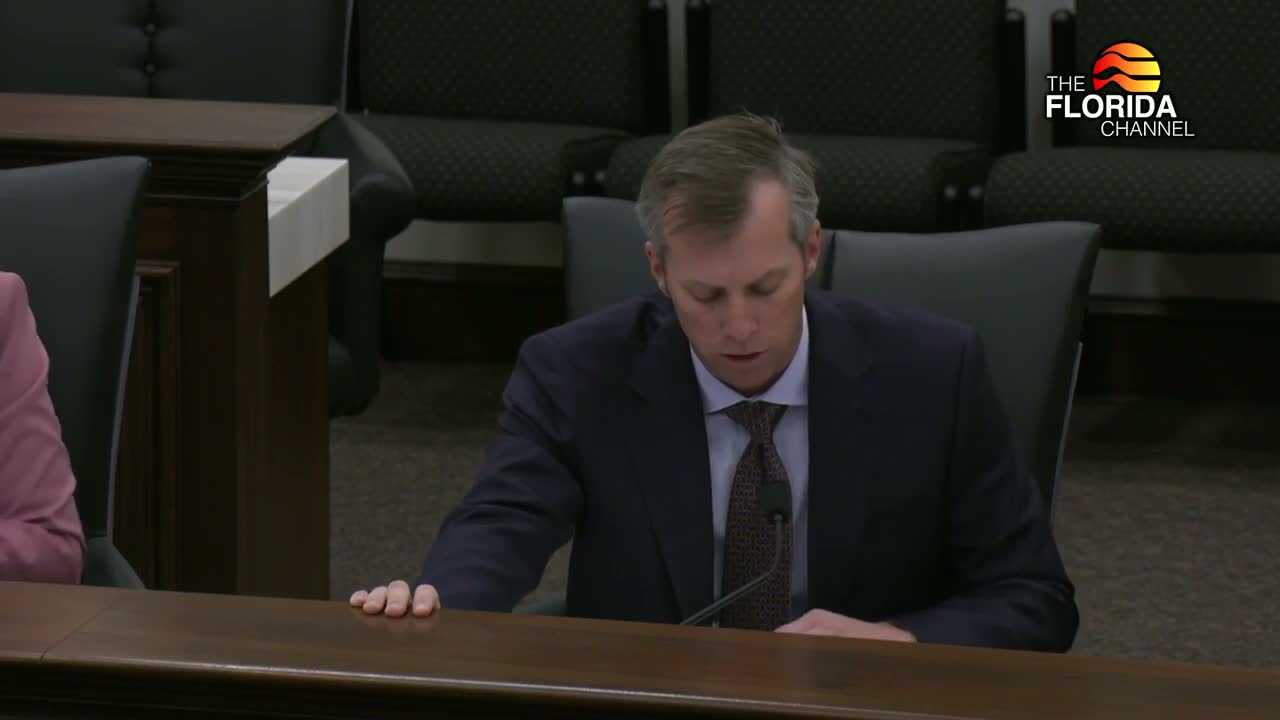
Kendall Kelly, the governor’s health and human‑services policy coordinator, introduced agency heads who summarized line items for Medicaid, long‑term care, behavioral health and agency operations. "Health and Human Services continues to be the largest portion of the overall budget," Secretary Harris told the committee, noting Medicaid accounts for the largest HHS share.
Key Medicaid and behavioral‑health proposals highlighted by the Agency for Healthcare Administration include a $71.6 million behavioral‑health redesign—among it $54.3 million to temporarily cover residential services (institutions for mental disease) for up to 90 days, $10.9 million to establish a home‑and‑community‑based services waiver for people with serious mental illness at high risk of hospitalization, and $6.4 million to increase daily reimbursement rates for statewide inpatient psychiatric services for youth. Secretary Harris also proposed a $7.1 million restructuring of private‑duty nursing fees in fee‑for‑service Medicaid; the agency said the new rate schedule would vary by region and acuity and would range from about $39.64 to $64.44 per hour to address workforce and access gaps.
Agency leaders also requested $124.4 million for the Health Care Connection (FX) system, described as predominantly maintenance and operations funding for modules already live or about to go live (enterprise data warehouse, provider services, and a unified operations center) and initial work on the core claims module.
The Agency for Persons with Disabilities sought $20 million in general revenue to enroll people from pre‑enrollment onto the iBudget waiver and requested funds to stabilize two developmental disability centers as census declines. Director Stalas said APD’s pre‑enrollment list has been reduced from a recent high but that operational needs remain.
Department of Children and Families Secretary Taylor Hatch outlined $81.9 million for integrity and economic self‑sufficiency work (mailing, eligibility verification, and Access Florida modernization), $187.5 million for opioid prevention, treatment and recovery programs (including naloxone distribution, mobile medication‑assisted treatment and recovery housing), $35.5 million for community‑based care lead agencies, and $72.7 million to expand behavioral‑health treatment capacity—including funds to add hundreds of short‑term and state hospital beds.
Secretary Branham at the Department of Elder Affairs described additional funding for the Alzheimer’s Disease Initiative (raising ADI funding by $3 million) and increases for Home Care for the Elderly and Community Care for the Elderly programs that provide meals, transportation and homemaking services.
Surgeon General Ladapo highlighted $278 million for cancer research initiatives (combining federal and state funds), $5 million to expand food‑safety testing, a proposal to equip EMS providers to carry and administer blood products in the field, and about $5.7 million for a public‑lab feasibility study to review lab capacity and relocation options.
Agency officials told senators the budget materials are recommendations and that detailed implementation, federal approvals and procurement timelines remain. On FX specifically, ACA staff said the procurement for the core claims module is expected this spring and the department is working toward a December 2027 finish date for full system implementation.
The committee’s discussion ranged across topics from data dashboards and minority‑health offices to hospital bed studies and procurement timing. Several senators said they appreciated the presentations and asked agency staff for follow‑up information on operational details and cost drivers.
The committee did not take final votes on the budget at the hearing; materials presented were framed as recommendations to inform later appropriation decisions.