
House expands mandatory use of E‑Verify to all private employers; opponents cite cost and glitches
Get AI-powered insights, summaries, and transcripts
Subscribe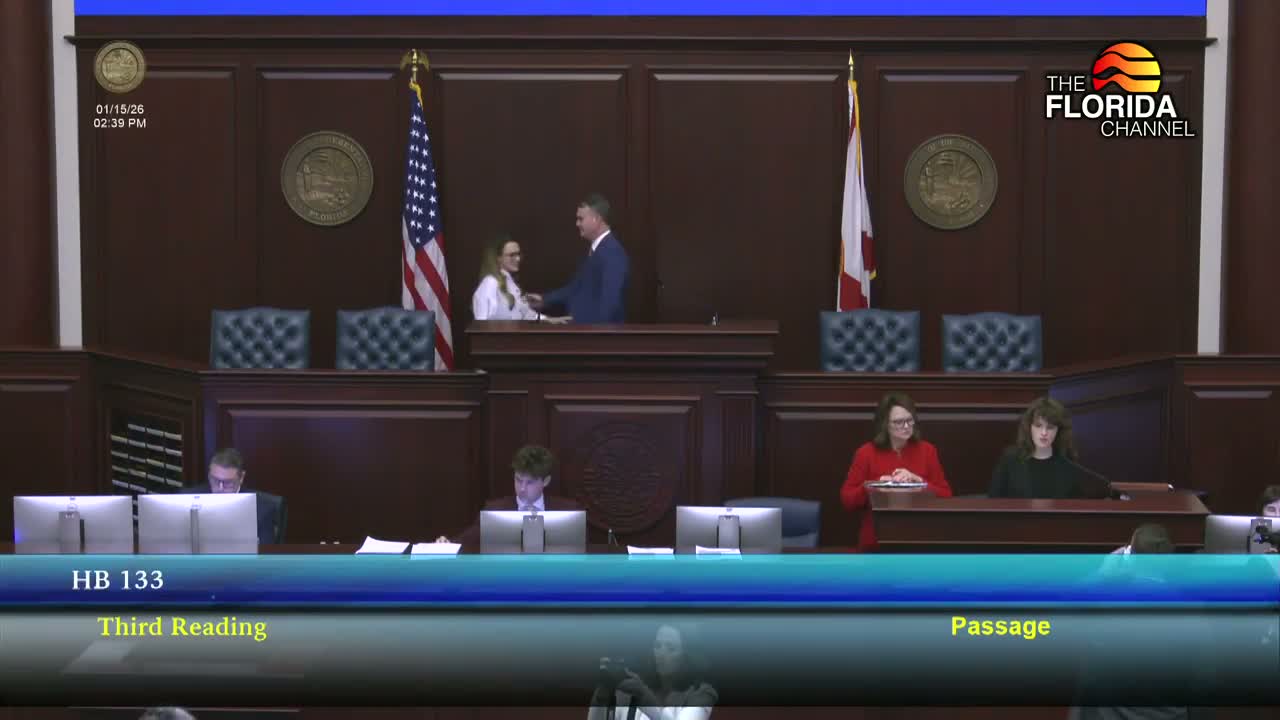
Summary
The House passed HB 197 to require E‑Verify for all private employers, 80–30. Supporters said the check levels the playing field and prevents hiring of unauthorized workers; opponents warned the system’s technical errors and compliance costs would burden small employers and agriculture.
CS/HB 197, an expansion of Florida’s E‑Verify requirement, passed the House on Jan. 15 by an 80–30 vote.
Representative Bernie Jacques (bill sponsor) said the bill closes an enforcement gap by making the federal E‑Verify system mandatory for all private employers in Florida, not just those above a size threshold or those contracting with the government. Supporters said mandatory E‑Verify protects lawful workers and prevents unscrupulous employers from undercutting wages by hiring unauthorized labor.
Opponents, including members who represent agricultural and small‑business districts, argued the federal E‑Verify portal is prone to technical problems and produces a measurable number of erroneous tentative nonconfirmations that require additional paperwork to resolve. Representative Henson and others raised examples from other states where employers faced delays and costs; they warned household employers and small rural farms could be disproportionately affected.
The sponsor and backers pointed to enforcement and fairness concerns, and cited constituent cases of violent crime involving undocumented workers as motivation for the change. After limited floor debate the bill was read and passed 80 yeas to 30 nays.
Next steps: The measure will be sent to the Senate for consideration.