
Grand Canyon University president urges Arizona Senate to back workforce expansion
Get AI-powered insights, summaries, and transcripts
Subscribe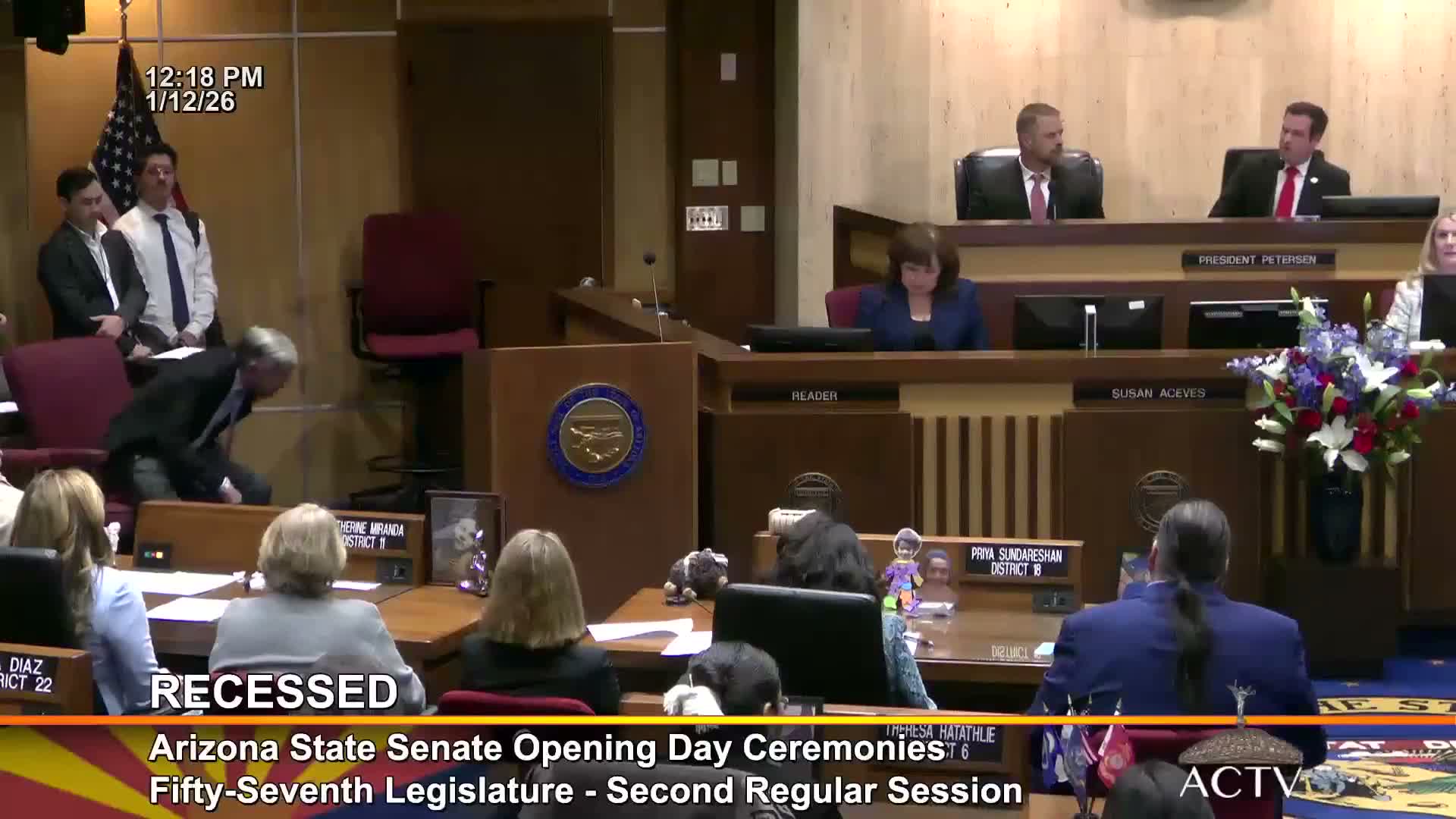
Summary
Brian Mueller, president of Grand Canyon University, told opening-day Senate listeners that GCU plans major campus and program expansions to train workers for projected job growth and to lift residents into middle-class jobs, citing concrete targets and local investments.
Brian Mueller, president of Grand Canyon University, told the Arizona Senate on opening day that his university plans large-scale expansions and workforce programs aimed at moving residents into middle-class jobs.
Mueller outlined a multi-part strategy that he said has already driven neighborhood investment in West Phoenix and could scale statewide. "Arizona stands on the precipice of doing something very, very, very unique," he said, adding that the state should focus on getting people living below the poverty line into middle-class jobs that can become upper-middle-class careers within a few years.
Mueller gave several specific figures to illustrate the university's plans and the state's labor challenge. He said GCU graduated about 31,000 students last year and set an institutional goal to graduate 400,000 students over the next decade; the Phoenix campus would expand from about 25,000 to 50,000 students while the university's online enrollment would rise from roughly 108,000 to 200,000. He described a $2 billion campus expansion, and said GCU has raised more than $18 million and awarded over 2,000 full-ride scholarships from neighborhood-focused funds.
On workforce programs, Mueller said GCU has established short courses and apprenticeship-style programs—citing an electrician training track and two-semester technician programs developed with industry partners—that place graduates into jobs paying $50,000–$60,000 a year and rising to $80,000–$90,000 within a few years. He named partnerships and local hiring initiatives, and said that GCU's neighborhood investments created roughly 16,000 jobs and rehabilitated more than 500 homes in the Maryvale area, with a goal of 800 rehabs.
Mueller framed the case as an economic opportunity tied to labor supply: "For every 100 jobs that are available, there are only 71 workers... prepared to take those jobs," he said, arguing the supply-demand shift makes aggressive local workforce training timely and necessary. He pointed to corporate demand—naming TSMC as an example—and said the university tailored short, no-cost credential programs to meet hiring needs.
His remarks mixed institutional accomplishments with an appeal to lawmakers to prioritize workforce and education policy that supports scalable, career-focused training. Several senators reacted with applause when he described local investments and scholarship programs; the speech was delivered as part of the Senate's ceremonial opening day and did not contain a formal legislative proposal or motion.
The Senate recessed after the address to continue a joint session; no committee votes or statutory actions were taken during the speech itself.