Senate passes SB 250 to fund rural 'renaissance,' creates Office of Rural Prosperity
Loading...
Summary
The Florida Senate passed SB 250 on a 39-0 vote, creating an Office of Rural Prosperity, a renaissance grant program, increased minimum SHIP allocations and targeted rural transportation and health investments; sponsor said amendments removed overlap with a new federal rural health grant.
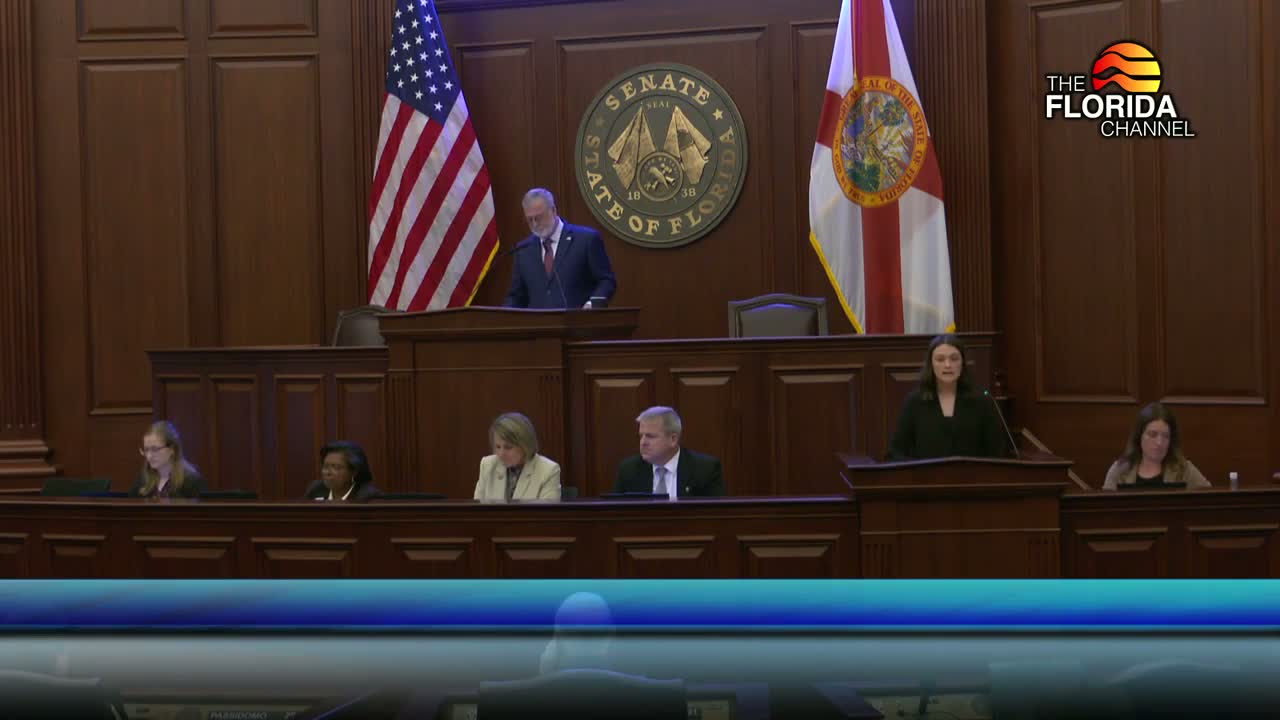
The Florida Senate on the floor passed Senate Bill 250, the "Rural Renaissance" package, by a recorded vote of 39 yeas and 0 nays. Sponsor Senator Simon told colleagues the 138-page bill aims to expand and diversify economic development in rural counties, shore up transportation and housing, and improve access to education and health care so "families can stay and thrive."
Simon described key provisions to create a dedicated Office of Rural Prosperity within the Department of Commerce to help local governments access state and federal resources, a Renaissance Grant program for counties reversing population loss, and an increase in the minimum SHIP (State Housing Initiatives Partnership) allocation to $1,000,000 to preserve USDA‑subsidized rental housing at risk of converting to market rate. The bill also directs more than $25 million to a rural education consortium and authorizes new funding streams for small county road assistance and a new arterial roads modernization program for agricultural corridors.
On health care, Simon explained the bill was amended after the state applied for and received federal funding. He told the Senate that federal legislation creates a rural health transformation grant program he described as $50 billion nationwide over five years and said the Agency for Health Care Administration (AHCA) submitted an application to the Centers for Medicare & Medicaid Services; Simon stated that CMS awarded Florida roughly $209.9 million over five years, which he said supplements state efforts. The first amendment debated and adopted removed portions of the bill that overlapped with the federal grant, which the sponsor said avoids conflict with grant rules that prohibit supplanting state programs.
Senators asked how counties and municipalities would access funds. Simon said AHCA and state agencies will set up the grant processes and eligibility criteria; he cited population-based eligibility thresholds in the bill for some programs and said counties could seek funds through county incentive grant programs for road work. Several senators expressed support for the legislation's flexibility and focus on tailoring investments to local needs.
The Senate recorded 39 yeas, 0 nays on final passage. Rules were subsequently waived and the bill was certified to the House for further action.
What’s next: SB 250 was certified to the Florida House after floor passage; implementation details for grants and program guidelines will be worked out administratively by AHCA and the Department of Commerce as described by the sponsor.