WIFA outlines seven candidate projects to import or exchange water, urges lawmakers not to cut funding
Loading...
Summary
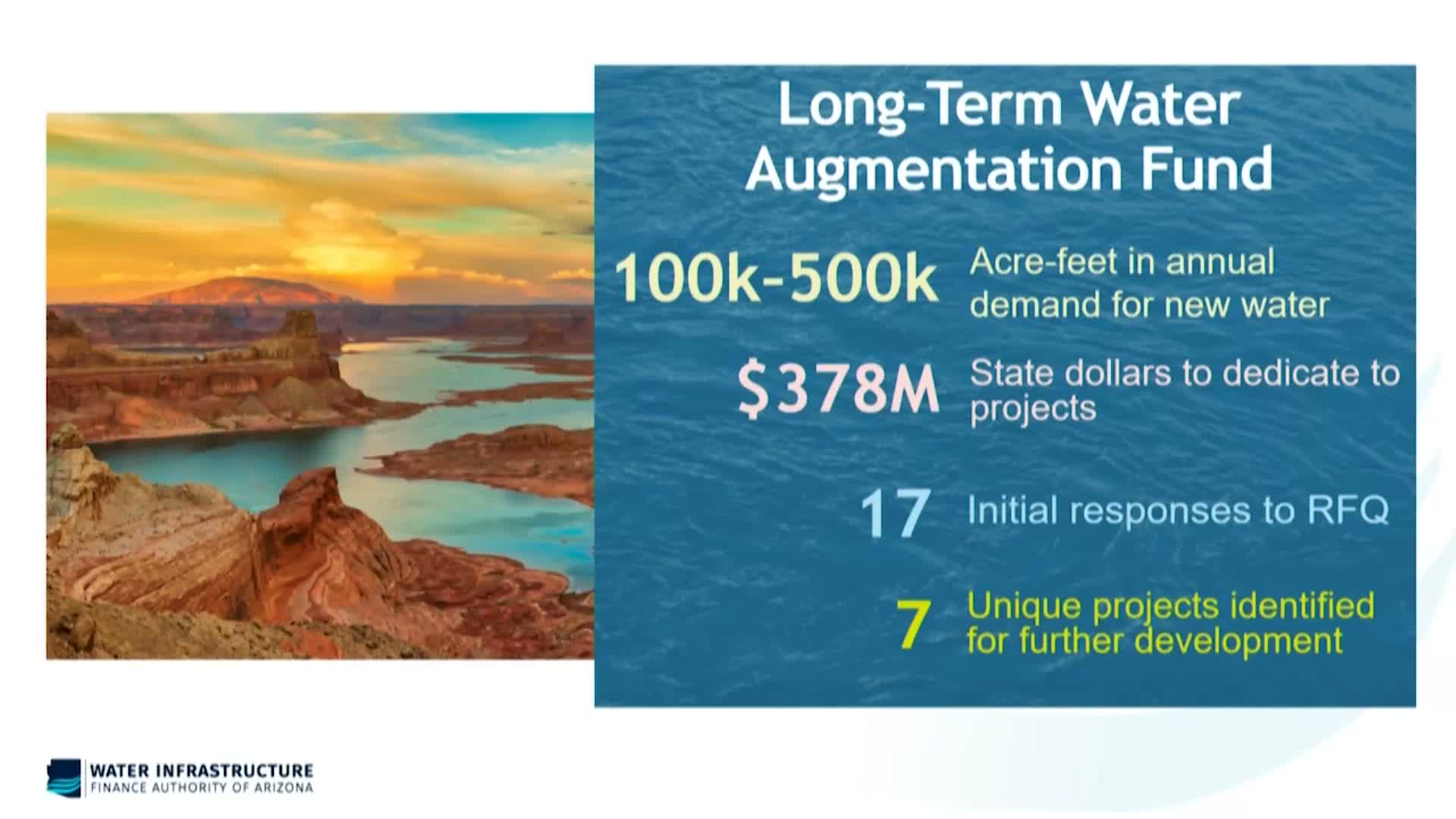
The Water Infrastructure Finance Authority told Arizona senators it has 7 projects under feasibility review for the Long Term Water Augmentation Fund after a competitive solicitation and asked legislators to avoid further cuts so the agency can complete due diligence and help secure affordable financing for large‑scale water supplies.
The director of the Water Infrastructure Finance Authority told the Arizona Senate Natural Resources Committee that WIFA has moved seven candidate projects into a formal vetting phase under the Long Term Water Augmentation Fund and is asking the Legislature to preserve the agency’s funding so the state can lower project risk and financing costs.
“We have been tasked with stewarding three state‑funded programs to their greatest potential,” WIFA Director Chelsea McGuire said. “We have been able to invest nearly $3,000,000,000 in Arizona’s water infrastructure over those 30 years.”
McGuire said WIFA issued a competitive solicitation, received 17 initial responses and selected seven unique projects for further development. Two of the teams she named were an Acciona/FenGate alliance, which proposed options including Gulf of California desalination, binational conveyance and irrigation modernization, and EPCOR Water Innovation Partners, which proposed groundwater storage and recharge in California, desalination in the northern Gulf of California, and expansion of potable reuse at South Bay.
Many proposals contemplate exchange frameworks in which water produced or stored elsewhere would be exchanged for Colorado River allotments rather than always relying on direct physical conveyance to Arizona communities, McGuire said. The solicitation was designed to bring complete project teams (engineering, construction, operations and equity partners) to the table so WIFA can evaluate technical, regulatory and financial feasibility.
McGuire described the next phase as a task‑order, due‑diligence period in which WIFA will contract the selected teams to analyze financial, environmental and regulatory aspects. “We will issue to each of these teams ... task orders that outline the information we need to make assessments on the financial, environmental, societal, regulatory, and technical aspects of these projects,” she said.
WIFA asked the Legislature to avoid further cuts and to maintain a predictable baseline so the agency can present clear, bankable commitments to private partners. McGuire warned that reducing the state’s available commitment raises project risk and therefore the cost of water for eventual off‑takers. “Every time we cut from this fund, we cut from the ability of water providers to afford this water into the future,” she said.
Committee members pressed WIFA on cost, permitting, environmental protections and timelines. McGuire said some projects (for example, construction of new desalination plants) could take 10–15 years from permitting to delivery, but the portfolio approach should allow some sources to come online sooner and others later to match off‑taker needs.
The committee did not vote on any measure during the hearing. McGuire said public engagement events and stakeholder review will follow the task‑order phase and that off‑takers and community representatives will be invited to review deliverables before board decisions on which projects to advance.