Committee backs 6‑acre‑foot limit for irrigators in INAs amid debate over effectiveness
Loading...
Summary
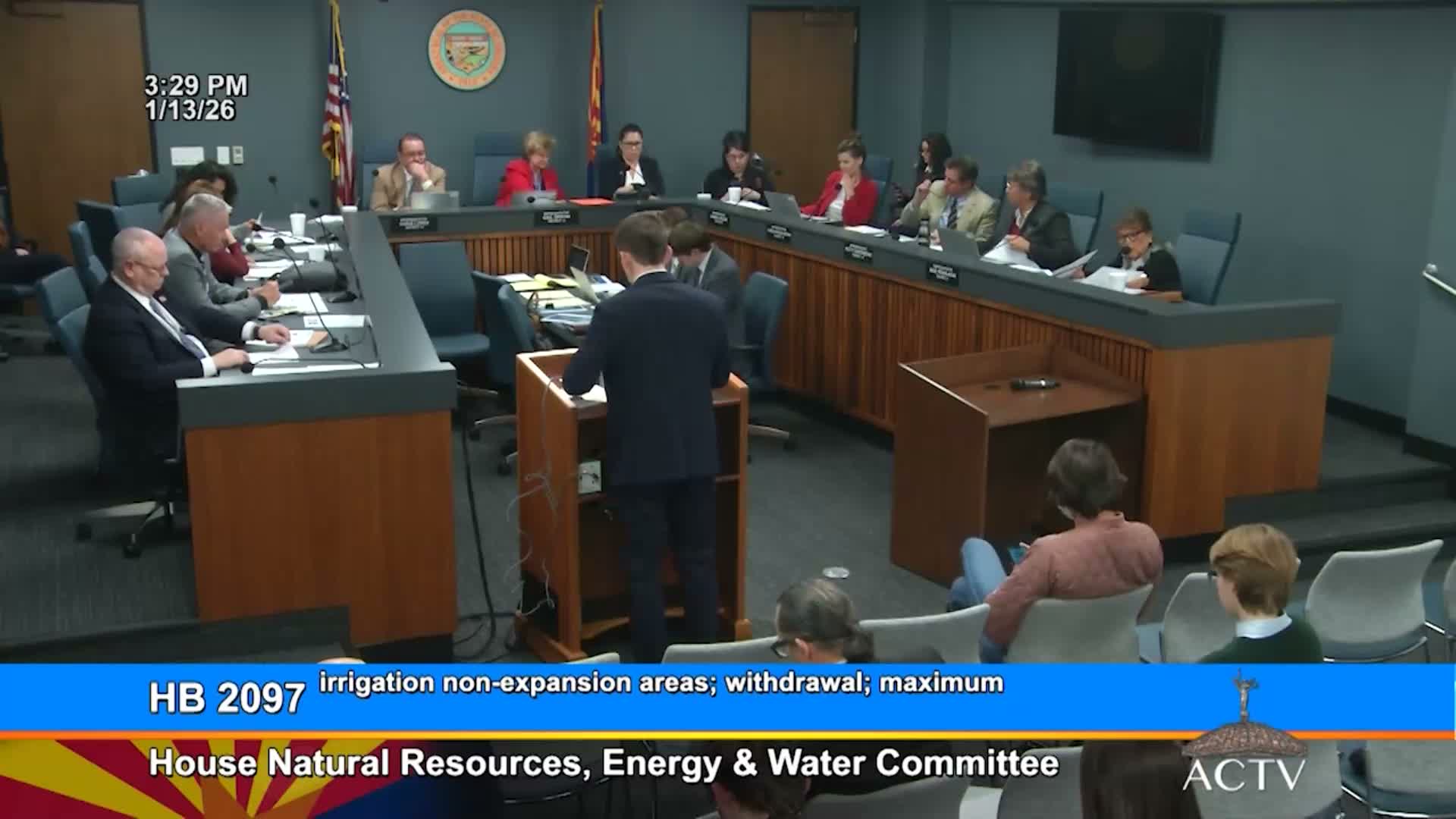
House Bill 20 97 would cap annual withdrawals from nonexempt wells in irrigation non‑expansion areas (INAs) at 6 acre‑feet per acre. The committee passed the bill 6–4, but members and stakeholders debated whether a 6‑acre‑foot figure is meaningful and raised implementation issues for ADWR.
The committee voted to advance House Bill 20 97, which would prohibit annual withdrawal greater than 6 acre‑feet per acre from nonexempt wells used for irrigation within irrigation non‑expansion areas (INAs) and impose a $150 penalty for violations.
Sponsor and staff said the rule fills a perceived gap: INAs currently limit expansion of irrigated acres but do not cap volumetric pumping inside those boundaries. The bill also creates reporting and measurement requirements, allows landowners to permanently retire acres and substitute them in some circumstances, and provides limited exemptions.
ADWR's legislative liaison, Trent Blomberg, testified neutral and highlighted technical issues: the bill lacks a clear baseline or timeline for substitution portability; substitution could unintentionally increase groundwater use by moving irrigation rather than retiring it; ADWR currently does not collect per‑acre pumping data and estimated it may need 3–4 new staff to implement compliance and monitoring. Blomberg also said ADWR is aware most irrigators currently use less than 6 acre‑feet per acre in existing INAs, and that crop types drive consumptive use (alfalfa in the Douglas AMA reported around 4.8 acre‑feet per acre).
Environmental witnesses, including Sandy Barr of the Sierra Club, opposed the bill on the grounds that a 6 acre‑feet figure is too high to serve as a true cap and that the bill could permit new irrigated acres where they are currently prohibited. Some committee members argued the level would effectively become a target rather than a conservation measure, while other members stressed agricultural needs and pressed for realistic limits.
The committee recorded explanations of vote and then moved HB20 97 on a do‑pass recommendation. Chair Griffin announced the bill passed the committee by a 6–4 vote.
ADWR and the sponsor agreed to follow up on technical clarifications, baseline definitions for substitution and reporting implications before the bill proceeds to the House floor.