Witnesses and affidavits accuse State Bar of Arizona of arbitrary discipline; committee hears calls for reform
Loading...
Summary
At a Jan. 13 Judiciary and Elections Committee hearing, attorneys and affidavit authors alleged procedural failures and political bias in the State Bar of Arizona’s discipline process; senators debated due‑process, separation‑of‑powers, and whether legislative reforms are warranted.
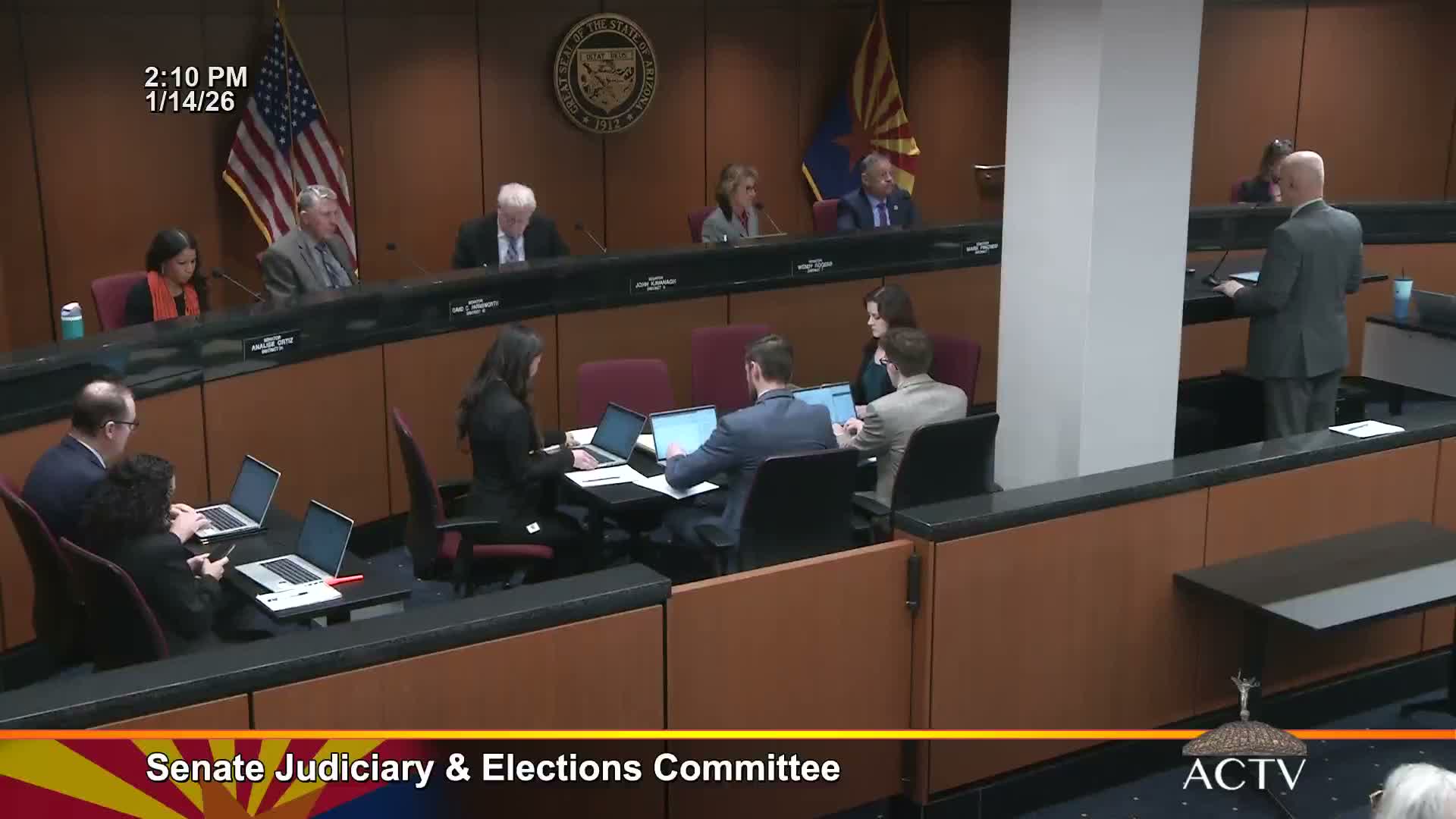
A Senate Judiciary and Elections Committee hearing on Jan. 13 opened with testimony and submitted affidavits alleging flaws in how the State Bar of Arizona disciplines attorneys.
Vladimir Gagic, a North Phoenix attorney, told senators he practiced for 20 years and described what he called "unfortunate experiences" with the State Bar, saying he effectively lost his license without a merits hearing and that he was denied the ability to subpoena witnesses or depose evidence in his defense. "The State Bar of Arizona is every bit as bad as the Udba," Gagic said, accusing the organization of hypocrisy and selective enforcement. Senators followed with clarifying questions and asked him to leave contact information for staff follow‑up.
Chair Wendy Rogers read an excerpt of an affidavit submitted by attorney Jeffrey Moffitt alleging deficient notice in his disciplinary proceedings, claims that disciplinary judges paid by the Bar raise judicial‑independence concerns, and that Moffitt is pursuing federal litigation related to his disbarment. The affidavit asks the committee to investigate the bar and consider legislative reforms.
Sen. Mark Finchem read portions of a second affidavit by Keena (Kina) Harding describing what she termed arbitrary discipline and a process that allows third‑party complaints and costly defenses that can damage a lawyer’s career. Harding’s affidavit, Finchem said, reflects a system that is "incapable of self‑management."
Several senators pushed back on aspects of the testimony and the affidavits. Sen. Analise Ortiz and others noted that the Arizona Supreme Court supervises attorney discipline and that suspension or disbarment decisions are governed by court rules. Sen. Kuby and others pointed to public records showing troubling conduct in some disciplinary cases and said context matters. Committee staff confirmed affidavits were on file and said they would circulate the documents to members.
No formal committee action on Bar governance or attorney‑discipline statutes was taken during the hearing. Several senators signaled interest in pursuing technical clarifications with counsel, and members asked staff to follow up with the witnesses and affidavit authors.
The hearing record contains competing factual claims: witnesses alleged procedural and political bias; some members noted public records of misconduct and questioned whether the affidavits understated aggravating facts. The committee did not resolve those disputes at the meeting and left procedural next steps to staff and future committee work.