
Senate advances campaign-finance transparency bill for ballot question spending after multiple amendment votes
Get AI-powered insights, summaries, and transcripts
Subscribe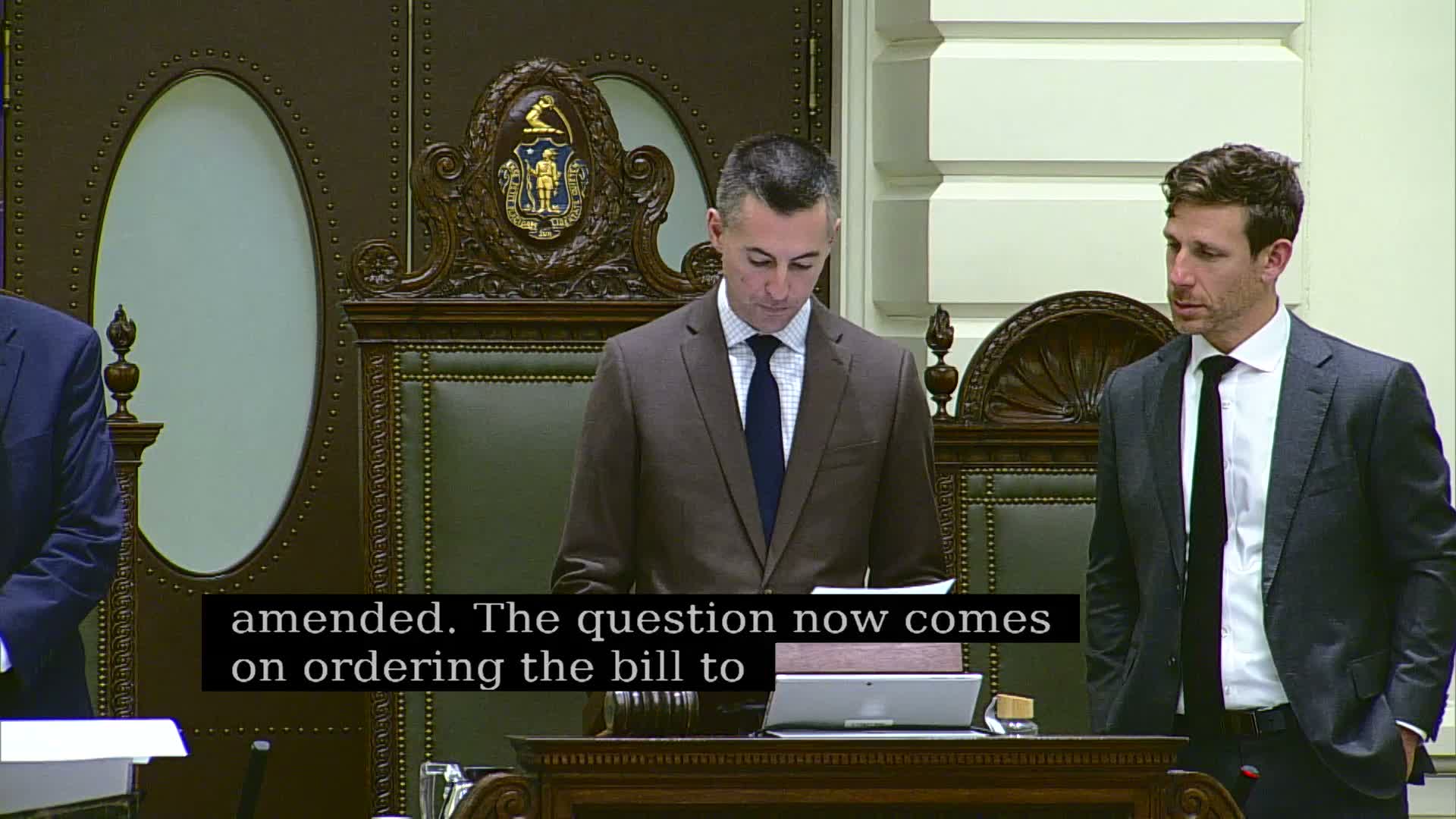
Summary
The Massachusetts Senate advanced Senate Bill 2898, a measure to tighten campaign-finance reporting for ballot-question activity, to a third reading after adopting several amendments (including new late-reporting and signature-gatherer rules) and rejecting others in roll calls.
The Massachusetts Senate on Monday advanced Senate Bill 2898, a measure intended to expand transparency in campaign spending on ballot questions, ordering the bill to a third reading and passing it to be engrossed by a recorded vote of 38-0.
Sponsor Sen. Bruce E. Tarr (First Essex and Middlesex) framed the package as a transparency initiative and offered multiple amendments aimed at defining in-kind contributions, adjusting contribution limits and extending reporting to local ballot-question activity. "This amendment's intended to promote transparency by causing the Office of Campaign and Political Finance to standardize definitions of what counts as an in-kind contribution," Tarr said during debate.
Why it matters: Supporters said the bill closes gaps in reporting for money spent to influence ballot questions so voters and local clerks can see who is funding campaigns at both the statewide and municipal level. Opponents cautioned that some proposed changes — particularly those extending state-style reporting to municipal committees — would impose new requirements on local clerks and deserved separate vetting.
What passed and failed: Several Tarr-led amendments (including proposals on valuation rules and higher contribution limits) were rejected in voice votes or roll calls. Amendment 6 — a proposal to trigger municipal reporting when an entity spends more than $1,000 in the aggregate — failed on a roll call, recorded as 6 in favor and 31 opposed. The Senate did adopt a suite of other changes: Amendment 7 (late contribution reporting for statewide ballot committees) was adopted by voice vote after sponsor Sen. Rebecca L. Rausch described it as "a pretty straightforward amendment" to align late-reporting with campaign norms. Amendment 10, which included an emergency preamble and retroactive reporting language to capture recent funding during the covered period, was adopted. Amendment 13 (regulating preliminary costs) and Amendment 14 (prohibiting pay-per-signature arrangements for petition circulators and requiring disclosure that circulators are paid) were also adopted; the roll call on Amendment 14 recorded a 34-3 vote in favor.
Debate highlights: Opponents argued that municipal reporting is a complex statutory and administrative area and that changes affecting municipal clerks should be examined in a separate bill or committee process. Proponents said recent controversies around paid signature-gathering for ballot initiatives demonstrated the need to curb incentive structures that can invite fraud; one sponsor cited other states that ban pay-per-signature models.
Votes and next steps: After adopting the Ways and Means amendment package and the adopted provisions listed above, the Senate ordered the bill to a third reading. On third reading the clerk recorded 38 ayes and 0 nays and the bill was passed to be engrossed. The bill will return for further consideration on its third reading stage and any subsequent procedural steps before final enactment.
Several senators asked that particular votes be taken by roll call during the amendment process; where roll-call tallies were recorded those figures are reported above. Where the transcript records only voice votes, the article notes the adoption or rejection without a numerical tally.
Ending note: Supporters described the package as an effort to bring local and statewide ballot-question spending under consistent transparency standards; opponents urged further review and stakeholder consultation for proposals that would impose new administrative requirements on municipalities.