Get AI Briefings, Transcripts & Alerts on Local & National Government Meetings — Forever.
Joint committee hears wide support and targeted requests for $3 billion Mass Ready resilience bond bill
Loading...
Summary
Agency officials told the bonding committee S.2542 would authorize $3 billion for climate resilience and related programs; witnesses praised the goals but urged larger allocations for MVP, drinking-water projects, urban forestry, air monitoring, and food-security grants.
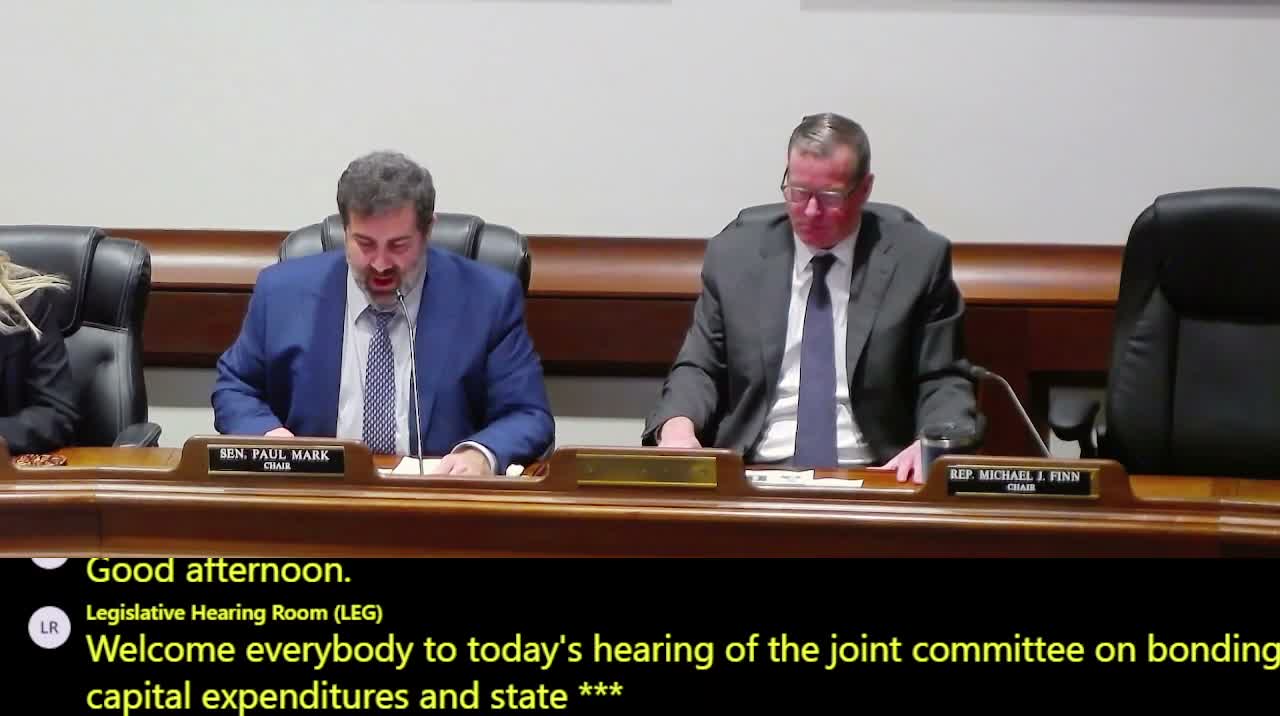
The Joint Committee on Bonding, Capital Expenditures, and State Assets heard testimony on S.2542, the Mass Ready Act, a $3 billion bond proposal aimed at climate resilience, drinking‑water and wastewater upgrades, land conservation and food‑system investments.
Secretary Rebecca Tepper, secretary of the Executive Office of Energy and Environmental Affairs, said, "At its core, this bill is about protecting our state's future," and outlined major authorizations included in the draft legislation: $600 million for inland and coastal flood protection, $385 million to bolster the Clean Water Trust for drinking‑water and wastewater upgrades, $120 million for PFAS remediation, $340 million for land conservation, $315 million to expand the Municipal Vulnerability Preparedness (MVP) program, and $125 million for food‑security infrastructure grants.
The bill would also create a resilience revolving fund to provide low‑cost, flexible loans for municipalities and water districts, streamline environmental permitting for nature‑based and housing‑related projects, require updated building‑code flood standards and disclosures, and fund park and shoreline projects.
Why it matters: Supporters said the authorization addresses decades of deferred maintenance and the accelerating costs of climate impacts. But many speakers urged larger or reallocated funding to ensure the bill reaches communities most at risk and that authorized amounts translate into actual, spent dollars.
Committee members pressed agency witnesses on implementation details. Representative Paulino and others sought specifics on how the $385 million for water infrastructure would be distributed; DEP staff and Clean Water Trust officials described no‑ and low‑interest loans, affordability criteria, and grant programs alongside the revolving fund. On the resilience revolving fund, officials said initial capitalization would come from existing state trusts rather than new surcharges and that the Trust would administer loans with EEA program management.
Advocates and municipal officials asked the committee to increase targeted authorizations: environmental justice groups requested $75 million for outdoor air‑quality monitoring and $50 million for indoor air programs; the Municipal Vulnerability Preparedness coalition pushed for $500 million for MVP rather than the administration's $315 million; urban‑forest advocates sought $100 million for municipal reforestation and clearer prioritization for municipalities; and agriculture and food‑system witnesses warned that the Food Security Infrastructure Grant program needs continued funding to avoid a gap.
Several witnesses also called for complementary long‑term revenue tools to turn authorization into outlays; 350Mass and others urged mechanisms like a climate trust or dedicated excise changes to produce recurring revenue rather than one‑time bonding alone.
The committee heard requests to refine program language to ensure funds prioritize environmental‑justice communities, make grant eligibility accessible to small municipalities and tribal governments, and preserve funding for projects already in progress and facing cost overruns (PFAS and SRF projects were cited). The hearing closed without committee votes; chairs said they would continue to work with the administration and stakeholders as the bill is refined.