
Talent council orders pause on Flock ALPR, directs staff to draft surveillance policy and to stop data sharing
Get AI-powered insights, summaries, and transcripts
Subscribe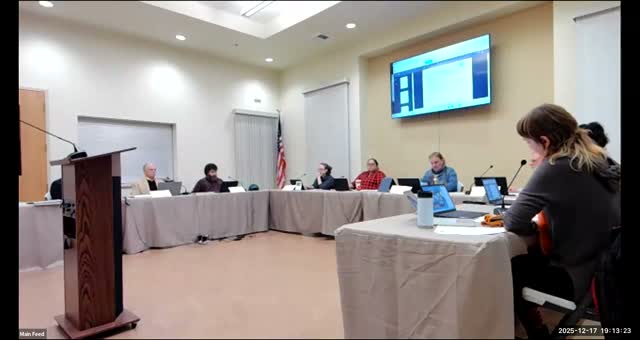
Summary
After heated debate about data security and potential federal access, the Talent City Council voted to keep automatic license‑plate readers offline, cease sharing stored Flock data with partner agencies, and directed staff to return with policy options after the legislature’s short session.
At its Dec. 22 meeting, the Talent City Council voted to pause its Flock automatic license‑plate reader (ALPR) program and to stop sharing the system’s stored data with partner agencies while the city develops a formal surveillance policy.
The motion, made by Councilor Perry Miller, directed staff to draft policy options “regarding surveillance activities and surveillance technology, and the storage of technology and data for further council discussion after the conclusion of the legislative session, ideally in March or April,” and included the understanding that cameras and data sharing would remain off pending council action. An amendment to the motion that explicitly added “data sharing remain off” passed on roll call, and the amended motion subsequently carried.
Chief (name not provided in the record) told the council the cameras have been turned off but the department retains access to about 30 days of stored data. “We still have access to the data, the 30 days of data that’s stored, but the cameras have been turned off,” she said during her report. She also said the department has required multifactor authentication for all users of the vendor portal.
Councilors pressed several practical and legal concerns. Councilor Panomaroff warned of the risk that federal agencies could obtain location data, saying ICE “represents a real and present danger to our community” and urging a halt to both camera use and data sharing. The chief and City Manager Alex said the city’s current sharing agreements limit access to Oregon agencies and that state ‘‘sanctuary’’ protections apply; the council nonetheless voted to cease sharing immediately and to wait for the outcome of pending state legislative action before reconsidering renewal.
Councilors also cited staff time and public attention required to manage the program as reasons to pause. Several members urged staff to produce clear public information and a robust transparency portal link once vendor material is available.
The council’s roll call on the motion recorded affirmative votes from the council members present (roll‑call entries in the meeting record). The motion instructs staff to present draft policy options for council review after the short legislative session and to keep cameras and data sharing deactivated until the council acts.
What happens next: staff will prepare surveillance policy options and report back after the short legislative session, including recommendations about data retention, access controls, public transparency, and whether to re‑engage the vendor or pursue alternative tools. The council instructed staff to ensure community engagement is part of that process.