
Talent URA narrows questions for Gateway site after RFQ reviews; staff to provide written Q&A and recordings
Get AI-powered insights, summaries, and transcripts
Subscribe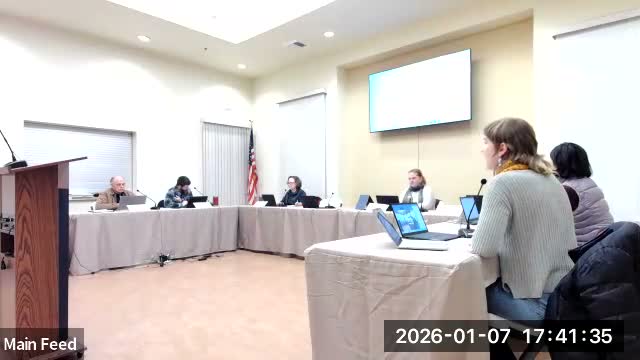
Summary
Staff told the Talent Urban Renewal Agency both RFQ proposals for the Gateway site were strong but not decisively ranked; the board asked for written answers and access to recorded interviews and raised concerns about prevailing wage rules, commercial space and modular construction.
Staff report and subcommittee findings dominated Wednesday’s Talent Urban Renewal Agency discussion of responses to the Gateway site RFQ, with staff saying scores were “not determinative” and both proposals presented viable but different approaches.
Alex, the agency staff lead, told the board the subcommittee and staff developed a list of follow-up questions for each proposer and will deliver written answers in the next staff report. He said both interview recordings can be made public with the proposers’ agreement and recommended staff present clearer, graphic comparisons of the teams’ key differentiators at a future meeting.
Board members pressed for more detail on three recurring issues: whether to move from an RFQ/negotiation process to a formal RFP, how much commercial frontage to require on Highway 99, and the legal/pricing risk from prevailing wage determinations. One member asked whether switching to an RFP would impose undue work on applicants; staff said an RFP is possible but was not advertised and could lead to some proposers declining to submit refined proposals.
On prevailing wage, staff referenced a recent BOLI determination in Eugene and cautioned that a prevailing-wage finding for commercial work could carry over and affect residential components, substantially raising costs. The board discussed whether separating developers or project components would reduce that risk.
Members also sought evidence of modular/prefab building performance and flexibility to convert space between commercial and residential uses; staff said proposers had expressed flexibility but that some design and zoning changes might be required to achieve certain phasing options.
Staff will provide the written Q&A and is evaluating how to release proposer interviews to the public record. The board did not take formal action Wednesday; staff asked the board to identify any additional information it wanted in advance of more substantive deliberations and a possible later selection vote.