UND medical school pitches pulling MD program from formula, offers fixed funding and PCAT plan
Loading...
Summary
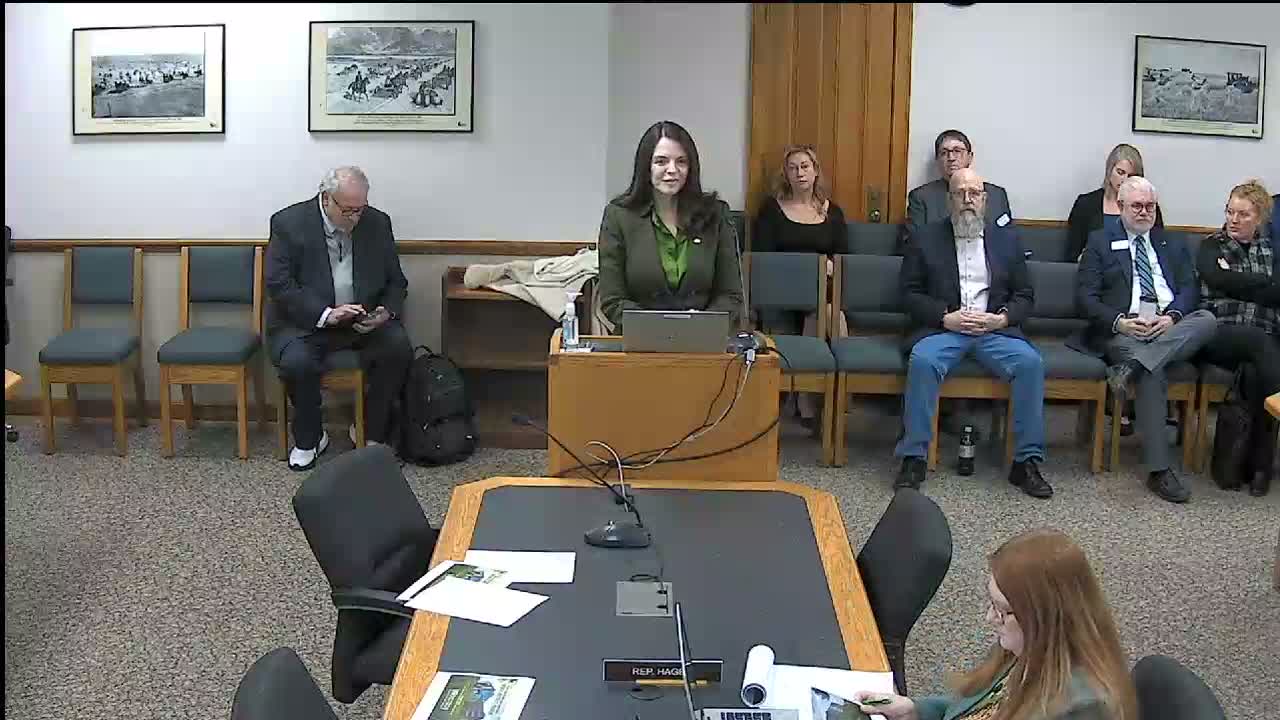
Dr. Jenkins told the Higher Education Funding Committee that the School of Medicine and Health Sciences (SMHS) wants the MD program treated separately from the system funding formula and proposed a fixed‑funding approach plus staged growth tied to outcomes; he described a Primary Care Accelerated Track (PCAT) to boost in‑state retention.
Dr. Jenkins, representing the School of Medicine and Health Sciences, told the Higher Education Funding Committee the MD program should be considered separately from the North Dakota University System funding formula and presented three funding options, stressing the need to keep the program well funded.
The committee heard that the MD program is heavily state‑supported through a mix of the general fund and a statewide 1‑mill property tax, and that prior curricular changes produced an $8 million biennial increase in funding. Jenkins outlined three approaches: a fixed funding model that extracts the MD program from the formula but maintains current or next‑biennium funding levels and requires a business case to request expansion; a phased (multi‑year) funding approach; or remaining inside the existing funding formula while accepting associated complexities.
Why it matters: lawmakers pressed Jenkins about retention of North Dakota applicants and workforce outcomes. Jenkins said growing graduate medical education in‑state is the proven retention tool: “We know that if they go to our medical school and they go to a training program in the state, we have a 75 percent chance of keeping them here.” He proposed the Primary Care Accelerated Track (PCAT) as a recruitment and retention vehicle — launching in 2028, offering full scholarships, and requiring five years of in‑state practice — and estimated PCAT at roughly $4,000,000 per year for scholarships and administration.
Details and tradeoffs: Jenkins said the MD program is weighted substantially higher in the current formula (about 20 points higher than other professional programs) and that extracting the program would reduce formula skew but require clear transition and funding governance. He also raised nonrecurring and ongoing costs — for example, integrating AI into curriculum — and cautioned that some costs (technology licensing, residency expansion) will continue to rise.
Next steps: Committee members asked for additional data (applicant origin, projected residency growth, and fiscal estimates to expand class size toward the stated goal of 100 MD students annually). The committee did not take formal action on Jenkins’s proposal and directed staff and system office representatives to provide further analysis before the next meeting.