
Sponsor proposes delaying property taxes on new homes until occupied
Get AI-powered insights, summaries, and transcripts
Sign Up Free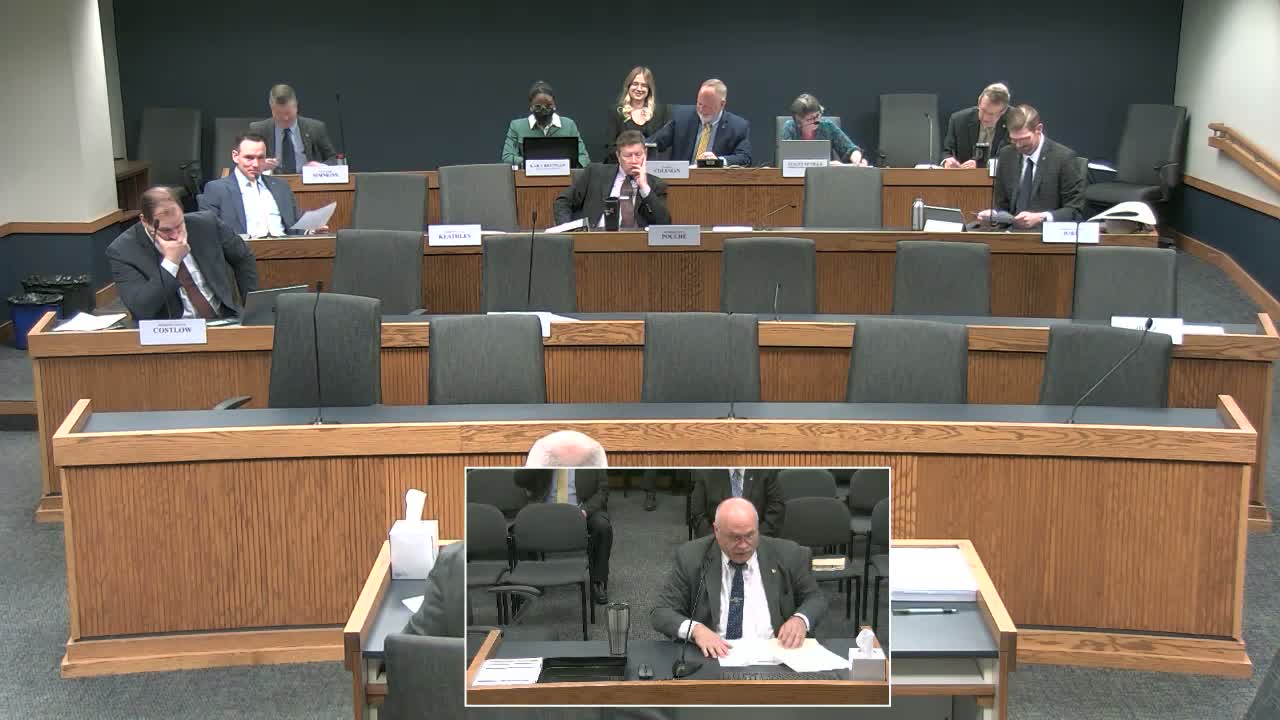
Summary
Rep. Don Mayhew introduced HJR 132 to prevent assessors from placing newly built residential properties on the tax rolls until they are 'in use,' proposing assessor discretion and a one‑time appeal; assessors told the committee practices already vary widely between counties.
Representative Don Mayhew introduced House Joint Resolution 132 on behalf of homeowners who build or complete houses slowly, telling the Special Committee on Tax Reform the measure would stop assessors from taxing new residential construction until it is being used. "Taxes are never meant to be punitive," Mayhew said, arguing assessment should reflect when a property places a demand on services rather than when framing or other early work begins.
The measure, as explained by Mayhew, would leave the determination of when a property is available for use to the assessor, while permitting the property owner a one‑time appeal of that determination. "The termination of use shall mean use or shall be in the sole discretion of the assessor," Mayhew said, describing proposed language he expects to offer as an amendment.
In testimony, Kenny Moore, Boone County assessor and legislative chair of the Missouri State Assessors Association, told the committee counties already take different approaches. "If the house is under roof and seal ... we put that house on for 50%. If we have a house that sheetrocked, sheetrock is up. We put it on for 75%. And then ... if the house is complete ... we put it on for a 100%," Moore said, describing a stair‑step valuation practice used in his non‑occupancy county.
Moore warned that HJR 132 as written could remove certain partially finished homes from the tax rolls entirely in counties that use partial valuation steps, and he said assessors rely on a mix of physical inspection, photographs and reporting from utilities to make determinations. He described non‑occupancy counties as more variable: "In a non occupancy county, it's, I mean, for lack of better terms, it's kind of wild west."
Committee members pressed on several recurring issues: whether the proposal should be limited to new construction (Mayhew confirmed that was his intent), how to prevent gaming by flippers who make properties temporarily uninhabitable, whether statutory clarifications or time‑limits (for example, a one‑ or two‑year cap on the 'under construction' designation) should be added, and whether the change belongs in the state constitution or can be handled by statute. One committee member noted existing statute language that ties assessment to occupancy or to a finished structure in some counties and urged careful drafting.
No formal action or vote was taken on HJR 132 at the hearing. The committee closed the hearing after receiving testimony and signaled it will consider sponsor amendments and input from assessors about uniform guidelines and potential time limits.