Get AI Briefings, Transcripts & Alerts on Local & National Government Meetings — Forever.
Missouri bill would require universal screening to identify gifted students
Loading...
Summary
Rep. Brenda Shields introduced HB 17-57 to require defensible, research‑based universal screenings so districts identify gifted students early; witnesses urged DESE guidance and cautioned about staffing and funding for small districts.
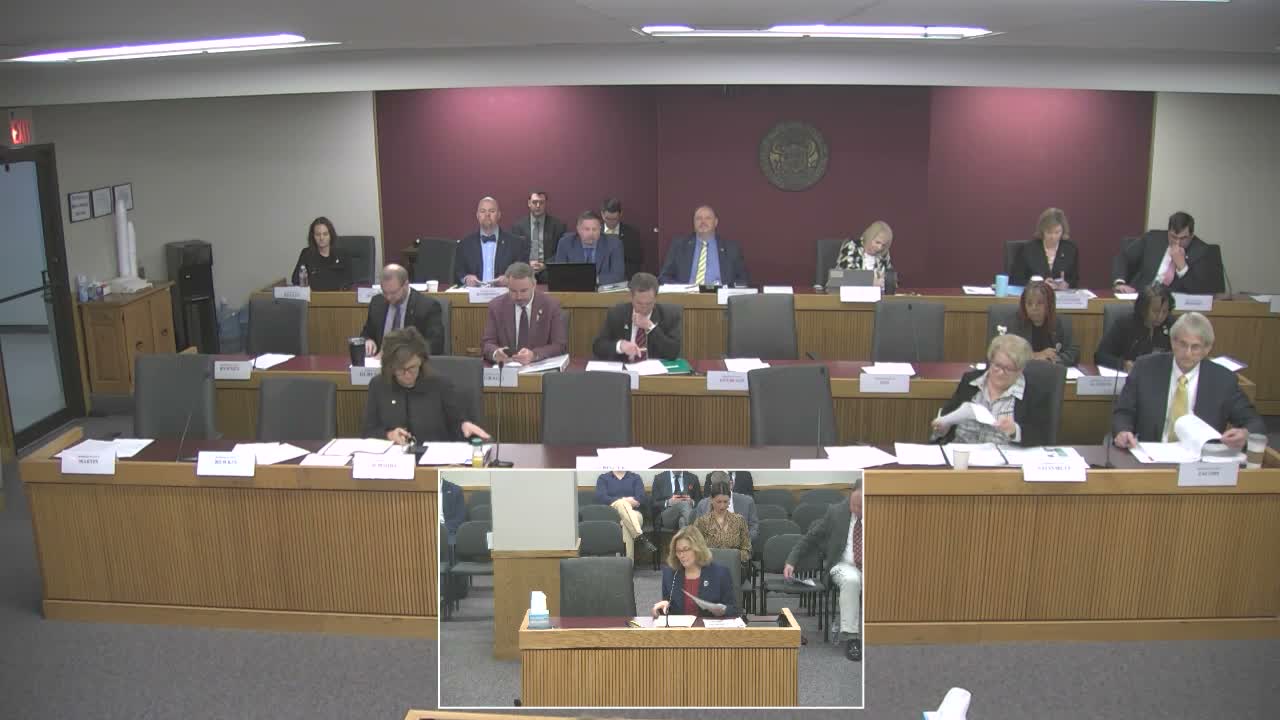
Representative Brenda Shields, sponsor of House Bill 17-57, told the House Committee on Elementary and Secondary Education that the bill would require universal screenings to identify gifted students in public schools. “Requiring universal screenings to identify gifted students in public schools,” Shields said, presenting the bill and arguing the state now misses thousands of students because many districts do not screen.
The sponsor and expert witnesses described the bill as a fix to a gap left by prior law. Shields and witnesses referred to a 3 percent statutory threshold that triggers a district’s duty to operate a gifted program and said the lack of systematic screening has kept many districts below that trigger. Shields said only 227 of 518 school districts presently offer gifted programs and estimated roughly 20,000 students are unserved.
Dr. Beth Winton, chair of the Advisory Council on the Education of Gifted and Talented Children, testified that identification must rely on multiple measures and best practice. “A defensible screening procedure should cast a broad net,” she said, urging use of nonverbal assessments (she cited the Naglieri) and additional data points so that a single measure does not exclude a child from consideration.
Committee members pressed the sponsor on practical details: the bill’s effective date, whether districts would have sufficient time to develop policies, and how screening differs from formal evaluation. Representative Boiko and others warned that certain listed factors—if misapplied—could reproduce bias and leave less‑resourced students underidentified; Representative Steinhoff and Shields clarified that screening is intended to be an initial, broad step distinct from qualification through a competent professional evaluation.
Witnesses and associations supporting the bill emphasized implementation challenges. Dr. Winton and others noted gifted certification typically requires graduate coursework (about 15–18 hours) and that small or rural districts may lack certified staff; they recommended district-level committees, shared staffing arrangements between neighboring districts, and guidance from DESE and the advisory council.
Several witnesses also addressed funding: Kaina Iman (Gifted Association of Missouri) and a Missouri NEA representative said funding for gifted programming was folded into the foundation formula after 2008 and urged the committee to consider whether districts are using existing formula resources for gifted services. Committee discussion did not include a formal vote; sponsors and witnesses said they would work with DESE and the advisory council on clarifying language and implementation timelines.
The committee invited additional feedback and indicated staff will review statute language and potential technical edits before further action.