Missouri education officials: certification pathways exist, but retention and funding limit teacher supply
Loading...
Summary
DESE told the House committee that Missouri offers multiple certification routes — traditional, reciprocity, provisional and alternate pathways — and reported rising enrollment in teacher programs but ongoing shortages that improved modestly after recent investments; officials urged restoring funding for Grow Your Own grants and other supports.
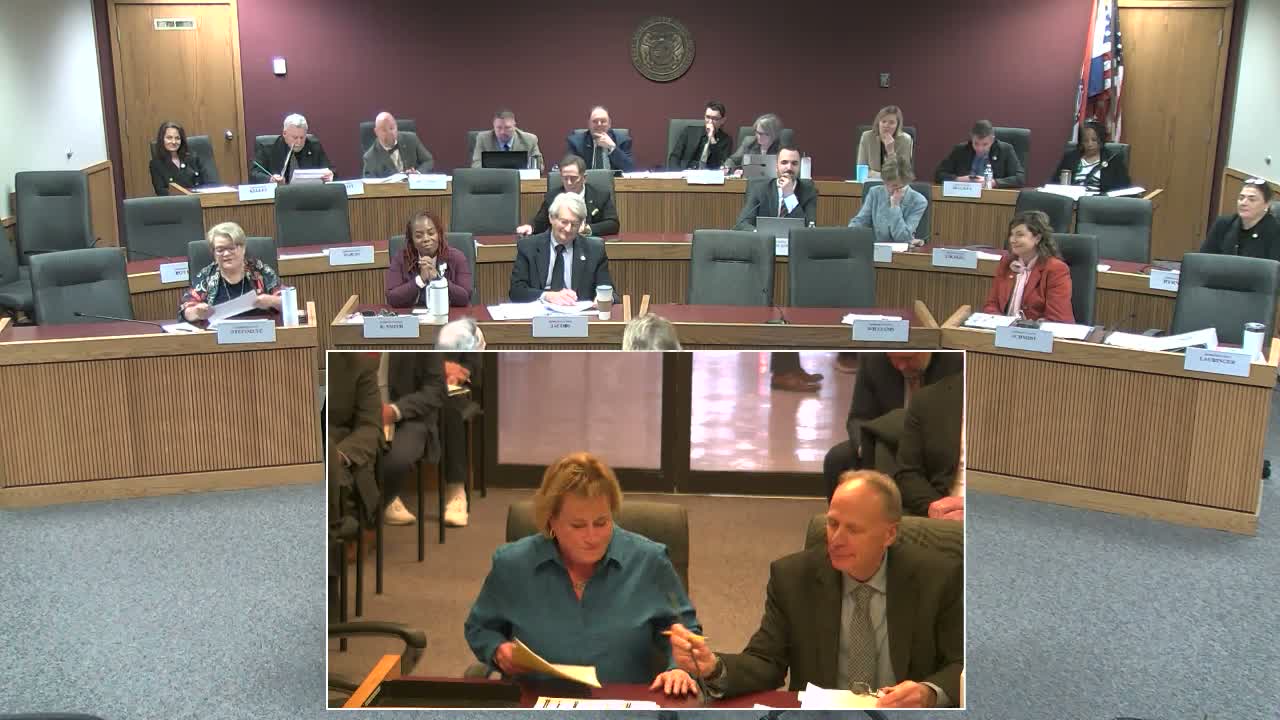
Missouri Department of Elementary and Secondary Education officials told the House Committee on Elementary and Secondary Education on Jan. 21 that the state offers multiple certification routes yet still faces teacher shortages, particularly in elementary and several secondary subject areas.
Assistant Commissioner Paul Katnick said Missouri law requires persons who teach in public schools to hold a valid certificate and reviewed the professional certification landscape, including 41 approved educator-preparation programs (EPPs) and several alternate routes. "Teacher quality matters number 1," Katnick said, arguing certification is a key mechanism to ensure classroom readiness.
Katnick said traditional preparation remains the largest single source of new teachers (about 2,900 completers per year on a three-year average), and Missouri offers full reciprocity with other states (about 1,200 reciprocity certificates per year). He described provisional and temporary authorization certificates used to place candidates in classrooms while they complete requirements, and specialty routes such as doctoral-track certificates and alternative providers (ABCTE and the newly authorized Teachers of Tomorrow program).
On workforce numbers, Katnick reported enrollment in teacher-education programs rose to 13,675 in 2024–25 — an increase of about 3,200 candidates (roughly 32%) over three years — and said that uptick should yield more completers in subsequent years. He cautioned, however, that "we still have an issue in Missouri" with shortages. The department's recent retention data show modest gains: statewide teacher retention rose about 1.3% over two years and improved 2.8% for teachers with five years or less experience, the group the department described as most vulnerable to turnover.
Katnick credited recent investments for some gains — citing Grow Your Own grants to roughly 125 districts, recruitment grants to educator-preparation programs and community colleges, Missouri Teacher Development System (MTDS) supports for more than 3,000 teachers, and a scholarship program that provided $1,000 awards to nearly 800 candidates — and told lawmakers that cuts to some funding this year have limited program reach. "We believe those grants definitely contributed" to enrollment growth, he said, and urged lawmakers to consider reinvesting when budgets permit.
Committee members asked whether higher enrollment would quickly translate to more certificates. Katnick said certificate issuance lags enrollment because candidates must complete programs before receiving certificates and that DESE expects completer numbers to rise in the next one to two years. Members also pressed DESE about data gaps: the department is studying the subgroup of substitute-certified or one-day substitute hires and student-teachers who are hired early, which DESE officials said are hard to track with current systems.
The session ended without any formal committee action; lawmakers signaled interest in both preserving program investments and in targeted strategies — such as mentoring and supports for early-career teachers — to convert the larger candidate pipeline into stable classroom staffing.
The next procedural step announced by the chair was a meeting to hear bills tomorrow at 10:30 a.m.