
Missouri to accept federal counter‑drone funds for KC2026; DPS describes prescribed training and equipment
Get AI-powered insights, summaries, and transcripts
Subscribe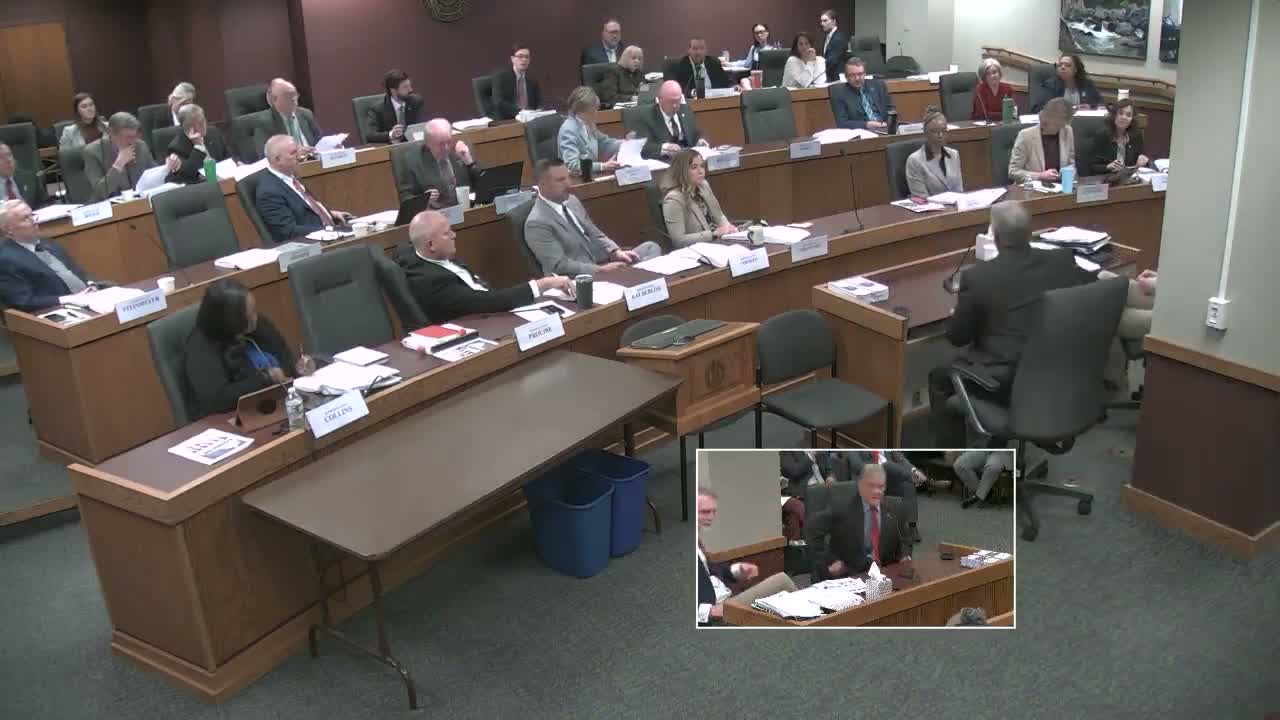
Summary
The committee reviewed a $14 million federal pass‑through from FEMA for counter‑unmanned aerial systems for Kansas City policing and patrols around KC2026. Missouri Department of Public Safety Director Mark James said the grant is prescriptive, requires FBI‑mandated training, and enables detection and mitigation systems that can disable hostile drones.
JEFFERSON CITY — Members of the House Appropriations Committee asked detailed questions on Jan. 21 about a roughly $14 million federal grant to support counter‑unmanned aerial system (counter‑UAS) capabilities for the Kansas City hosting footprint of the 2026 FIFA World Cup.
Mark James, director of the Missouri Department of Public Safety, testified that the money is federal Homeland Security grant funding administered through FEMA and will be a pass‑through to local recipients with strict reporting, training and equipment criteria. "The purpose is not for surveillance equipment, but it is for counter unmanned aerial surveillance equipment," James said, adding that the program includes mandatory FBI‑operated training and grant conditions for eligibility.
James described the technical capability in plain terms: the equipment is designed to detect hostile drone activity, identify likely operators, and — in some systems — take control and force the drone to land so investigators can determine origin and intent.
Committee members pressed on operational details: where the funds will be held, whether interest earned on deposits can be retained by Kansas City or must be returned to the federal government, whether the state can require the federal pass‑through to be banked in Missouri institutions, and whether equipment would remain in the host jurisdictions after the event. James said the federal rules usually require interest to be returned to the feds and that he would raise the banking question with KC2026 planners. He also said most equipment will become part of Kansas City Police Department capabilities and that the Highway Patrol will request two FTE in the regular budget for ongoing operations.
Privacy, oversight and long‑term maintenance were themes in committee questioning. Representative Kupps and Representative Voss asked whether the technology creates persistent local surveillance concerns and who controls data and access; James said the grant includes detailed allowable‑use restrictions, reporting, and training requirements and that operational control would be exercised by trained troopers and Kansas City detectives.
What's next: DPS will provide the committee a written spend plan and further details on eligible uses, training schedules and anticipated maintenance costs. The appropriation request is included in the supplemental to ensure the state has authority to accept and process the federal pass‑through within the 45‑day timing constraint tied to the World Cup funds.