
Missouri committee hears bill to channel $50 million into downtown building rehab and upper‑floor housing
Get AI-powered insights, summaries, and transcripts
Subscribe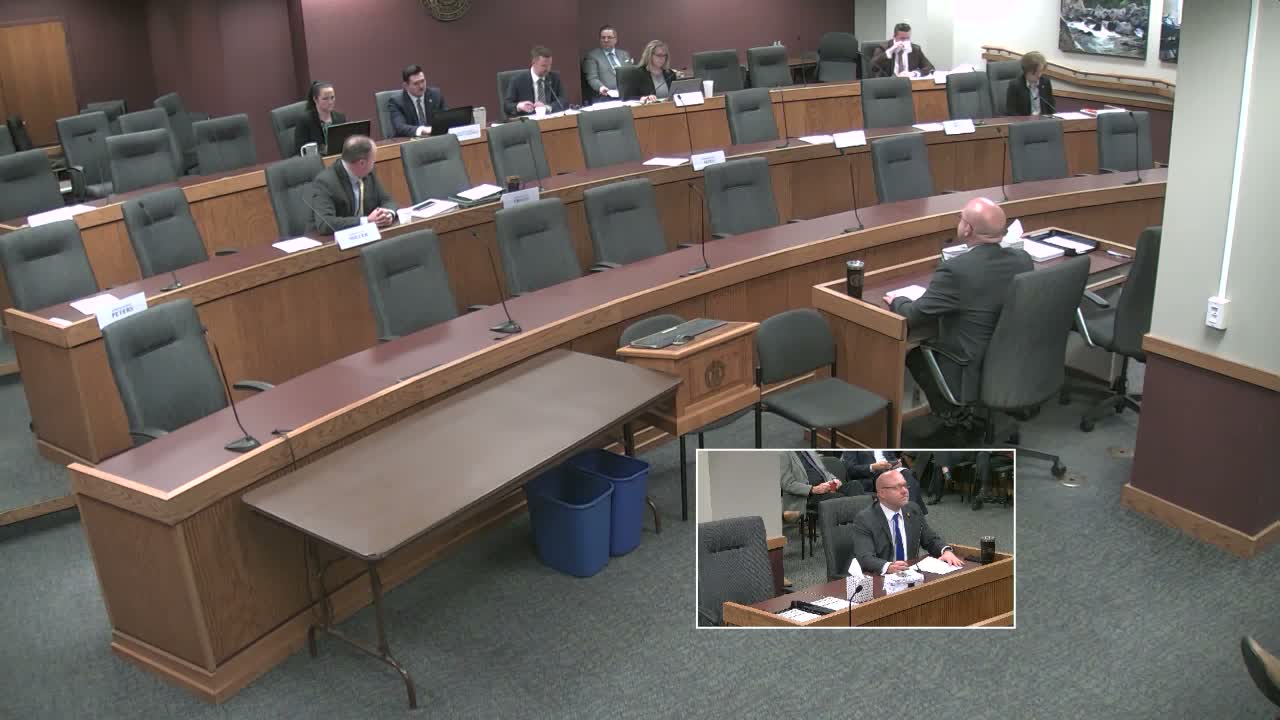
Summary
Representative Chad Perkins told the Commerce Committee House Bill 2,531 would create a $50 million fund to rehabilitate historic and underused downtown buildings, split among very large structures, upper‑floor housing projects and other eligible residential conversions; business and civic groups urged passage.
Representative Chad Perkins introduced House Bill 2,531 as the "Revitalizing Missouri’s Downtown to Main Streets Act," saying the measure would make $50 million available to repair and convert older buildings to usable commercial and residential space statewide. Perkins described a three‑part allocation: 50% (about $25 million) for very large buildings (he cited a 750,000‑square‑foot threshold), $12.5 million for upper‑floor housing projects such as small downtown apartments above storefronts, and another $12.5 million for residential projects meeting the bill’s eligibility standards.
The sponsor framed the program as statewide in scope — “every main street in the state of Missouri” — and said the measure would reach both large‑city projects in St. Louis and Kansas City as well as smaller and rural downtowns. Perkins told the committee the proposal includes a sunset provision; when asked whether the program is a one‑time appropriation or recurring, he said the bill sunsets in 2034.
Business and civic leaders testified in support. Tim Brinker, senior director of policy at Greater St. Louis Incorporated, urged the committee to pass the bill, saying downtowns face vacancies, higher construction costs and reduced redevelopment feasibility, and arguing public funding would catalyze private investment and jobs. Brinker cited rising construction costs and warned communities risk losing residents if downtown corridors continue to degrade. Other supporters included the Goldman Group, the Missouri Chamber of Commerce, the Missouri Bankers Association, the Missouri Municipal League, AARP Missouri and trade groups representing builders, grocers and retailers; witnesses emphasized financing readiness, workforce benefits and livability advantages for older residents.
During questioning, members asked whether the allocation would disproportionately favor metropolitan areas. Perkins and witnesses said the smaller funding pools were intended to serve projects statewide and that the bill’s third funding tier is aimed at projects that do not fit the two larger categories. AARP’s testimony highlighted the potential to expand housing options near services for older residents and the role of modest public grants in completing community‑led redevelopment.
The committee closed public testimony on HB2531 after an extended record of support and moved on to the next agenda item. No formal committee vote on the bill occurred during the hearing.
The next procedural step will be at the committee’s discretion; sponsors and supporters emphasized they are available to confer on technical language and eligibility details.