
State economist: updated revenue forecast shows little change; risks remain
Get AI-powered insights, summaries, and transcripts
Subscribe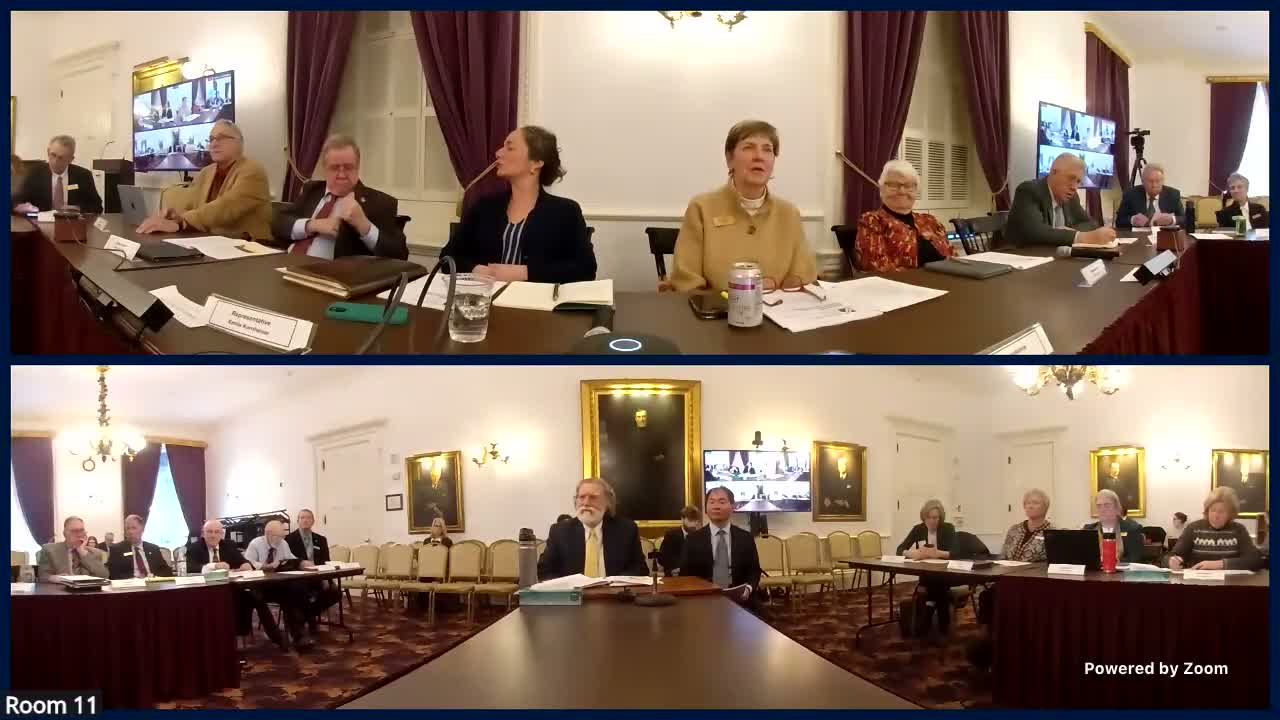
Summary
State economist Tom Cravat told a joint Appropriations and Ways & Means hearing that the January revenue forecast shows minimal change from July, with most major funds varying by roughly 1% or less, while flagging provider‑tax effects, corporate refund volatility, and national data gaps as risks.
Tom Cravat, the state economist, told the joint hearing of the House Appropriations Committee and the House Committee on Ways & Means on Jan. 16 that the office’s updated revenue forecast shows ‘‘one of the least amount of change from the last forecast we did of any that we’ve done in the last 30 years.’’ He said no major fund deviates by more than roughly 1% between the January and July forecasts for fiscal 2026–29 and staff are not proposing drastic changes to the outlook.
Cravat walked members through tables in the briefing (pages 6–7 and appendix material), noting that year‑to‑date revenue dollars and percent differences are broadly stable across the general, education and transportation funds. He said corporate income collections showed recent weakness driven by elevated refunding in November and December but staff have not found a pattern that indicates a systemic collapse in corporate receipts. ‘‘We couldn’t find anything that would cause us to think this is systemic,’’ Cravat said.
The economist emphasized the office’s five‑year forecasting practice to give lawmakers perspective beyond the statutory two‑year window and pointed members to appendix K for corporate income projections. He also described a ‘‘K‑shaped’’ consumer demand pattern in which higher‑income households account for a disproportionate share of spending, while lower‑income households show credit stress and increased repossessions.
Cravat urged caution about headline stability: although the aggregate forecast is close to prior estimates, several downside risks could change near‑term results — notably health‑care provider tax changes, concentrated corporate refund activity, and gaps in national statistical series such as the CPI that can bias estimates. He encouraged members to raise follow‑up questions and said staff will communicate any new analytic findings to committees.
The committee closed without any formal votes on the forecast; members requested additional follow‑up meetings if new patterns emerge in corporate refunds or other data.