Lifetime Citizen Portal Access — AI Briefings, Alerts & Unlimited Follows
Missouri committee hears bill to treat intoxicating hemp products as marijuana and align state rules with federal changes
Loading...
Summary
Representative Dave Hinman presented House Bill 2,641 to mirror recent federal language and create an "Intoxicating Cannabinoid Control Act," prompting testimony from law enforcement about youth hospitalizations and from small-business owners warning closing stores and job losses. Witnesses debated regulation pathways, record-retention privacy provisions, testing requirements, and whether sales should be limited to dispensaries or allowed in conventional retailers with guardrails.
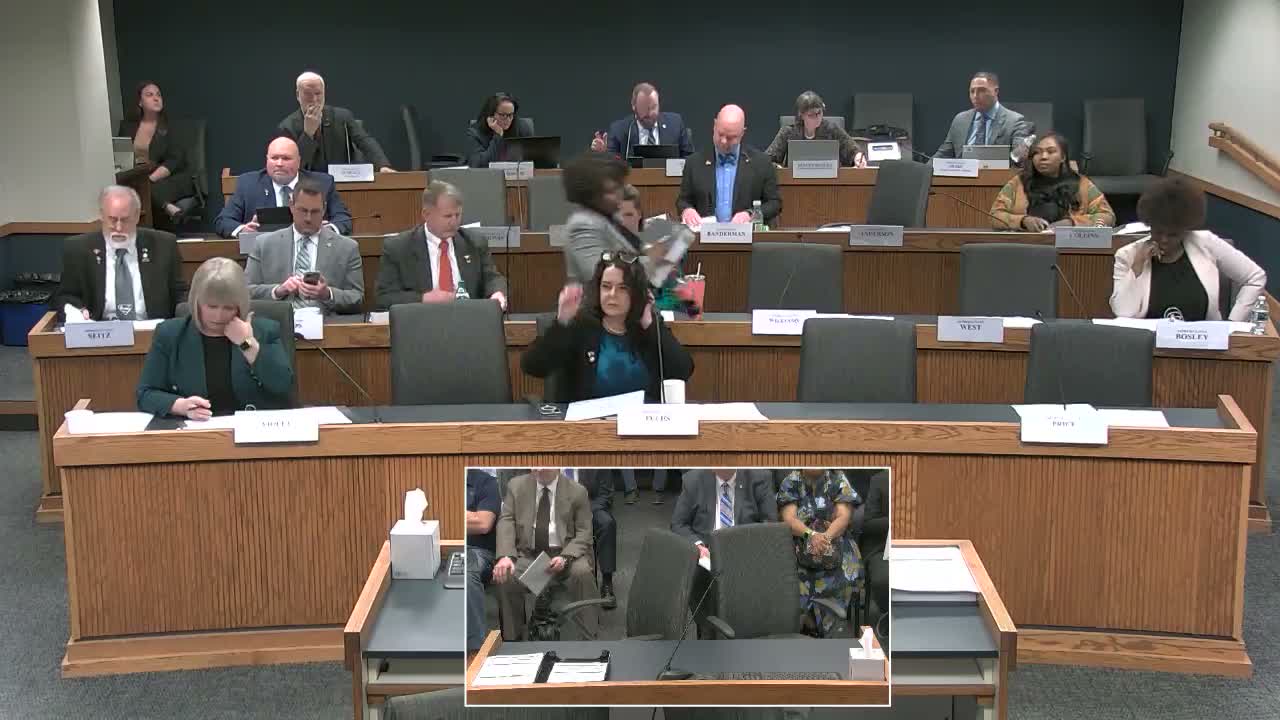
Representative Dave Hinman told the Missouri House Committee on Crime and Public Safety that House Bill 2,641 would align state law to recent congressional language and create an Intoxicating Cannabinoid Control Act to regulate intoxicating hemp-derived products. "Our biggest goals have been keeping the products out of the hands of children and testing to make sure that businesses are selling safe products," Hinman said as he outlined provisions that give the attorney general primary enforcement responsibility and call for coordination with the Department of Health and Senior Services, the Department of Public Safety and the Missouri Highway Patrol.
The bill would adopt the federal thresholds referenced by the sponsor — a 0.3% total THC standard and a 0.4 milligram-per-container reference in the draft — and includes language that, on its face, bars state agencies from providing names or applicant records about qualifying patient or card holders to federal authorities and allows an adult consumer to request that a retailer not retain transaction records. Hinman said the protections were intended to prevent unnecessary federal disclosure of identifying information.
Committee members asked detailed questions about implementation and definitions. Representative Bosley asked whether the privacy protections would prevent a person arrested for another crime from voluntarily showing identification; Hinman said the provision targets state-to-federal disclosures and that other practical interactions would still be considered in enforcement. Members also pressed the sponsor on whether the bill should treat intoxicating hemp separately from marijuana or explicitly mirror federal terminology; Hinman said the draft mirrors Congress to avoid legal ambiguity and reduce opportunities for organized crime to exploit loopholes.
Law enforcement and public-safety witnesses supported the bill citing youth exposures and enforcement gaps. Christy Giuseppe of the Law Enforcement Legislative Coalition told the committee that police chiefs have reported cases in which teenagers were hospitalized after consuming high-THC gummies and said field officers often lack a reliable way to test products in the field: "We can't field test it because field tests will come up positive for THC — hemp or marijuana — and we have no way out," Giuseppe said, urging statutory clarity so officers can protect communities and limit access to minors.
Industry and retailer witnesses presented competing views on market impacts. Ron Leone of the Missouri Petroleum and Convenience Association told the committee retailers want to sell any federally lawful hemp-derived products with appropriate guardrails — age gating, packaging and potency limits — and urged automatic alignment with whatever federal law allows. By contrast, Nathan Simpson, owner of the retail chain Cana Corner, testified that HB 2,641 would force compliant stores to close, cancel leases and lay off employees, arguing the bill would "erase" businesses that have operated within the state framework since 2018.
Several witnesses — including a statewide sampling study referred to in testimony — described testing results and contamination concerns. Committee members cited a compliance report presented by witnesses that found a high proportion of sampled products contained THC levels indistinguishable from marijuana or, in some samples, contaminants, and used those results to underline the need for clearer regulation and testing standards.
The committee took no formal vote at the hearing. Chairman Myers closed the public testimony after alternating witnesses for support and opposition and invited written submissions; he then opened a separate hearing on House Bill 16-25 later in the session.