
Missouri sponsor seeks ban on opaque license-plate covers, citing trafficking and stolen-vehicle investigations
Get AI-powered insights, summaries, and transcripts
Subscribe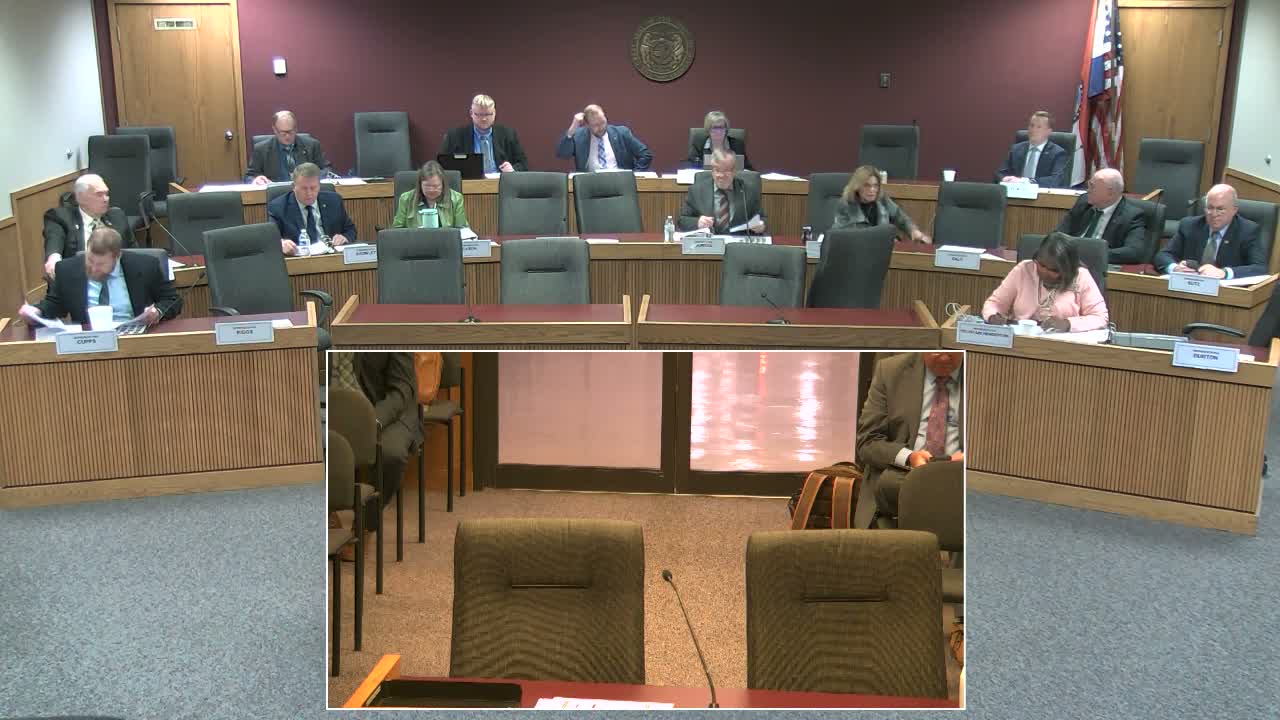
Summary
Representative Wellingkamp introduced HB 1732 to prohibit license-plate covers or frames that obstruct naked-eye or camera reads, saying obscured plates hinder recovery of stolen vehicles and missing persons; critics warned the measure could enable more stops and surveillance and urged careful drafting.
Representative Wellingkamp introduced House Bill 1732, the "license plate modernization act," saying Missouri ranks among the top five states for illegal trafficking and stolen vehicles and that new reflective or tinted covers can block law-enforcement and camera reads. He said the bill would prohibit any license-plate cover that obstructs the naked eye or equipment used to capture plate information and require covers to be fully transparent and non-tinted so plate data remain legible.
Wellingkamp told the committee he consulted with the Missouri Highway Patrol and described two cases he said illustrated the problem: a parental abduction that was difficult to investigate because a suspect's plate was obstructed, and a hit-and-run suspect who used a tinted cover to impede reading of the plate. "If the plate is completely obstructing your plate with this stuff today, all they can do is say…you may want to make it easier for us," he said.
Several members pushed back on civil-liberty and enforcement concerns. Representative Kupps asked whether the bill would advance a "surveillance state," questioned whether private plate-scanning vendors or law enforcement had driven the measure, and asked how officers would exercise discretion where a clear cover became cloudy with age. Kupps said: "Do we want a surveillance state?" and urged care to avoid broadly enabling continuous tracking of people.
Sponsor Wellingkamp replied that neither a private company nor a law-enforcement agency brought the bill to him; rather, senior members suggested the issue because his district is disproportionately affected. He said the bill targets plate obstructions, not general surveillance systems, and that law enforcement had told him it is a real problem in parts of Missouri.
Arnie C, who identified himself as a state public advocate during public testimony, urged caution and opposed HB 1732 as written. He said the Missouri Uniform Traffic Code already prohibits tinted covers in his experience and warned the bill might provide an additional pretext for traffic stops. He described being cited previously for a lightly tinted cover and said he feared increased stops, arrests and fines for minor infractions. "I just think this bill is going too far," Arnie C said, while acknowledging some provisions — such as a ban on covers that obscure plate information — were reasonable.
The committee heard no floor vote on HB 1732 during this session; the hearing record includes sponsor remarks, extended questioning, and public testimony. The chair closed the public hearing and moved to the next agenda item.