Get Full Government Meeting Transcripts, Videos, & Alerts Forever!
Get email alerts on the Ems Funding topic
No spam. Unsubscribe anytime.
Merrimack County weighs options to shore up ambulance funding as billing problems persist
Summary
County commissioners reviewed three options to address local EMS shortfalls — keep the status quo, offset billing through jail or nursing-home accounts, or join as a fourth equal partner in a regional contract (estimated at about $130,000). Staff flagged billing errors and reimbursement lags as core causes.
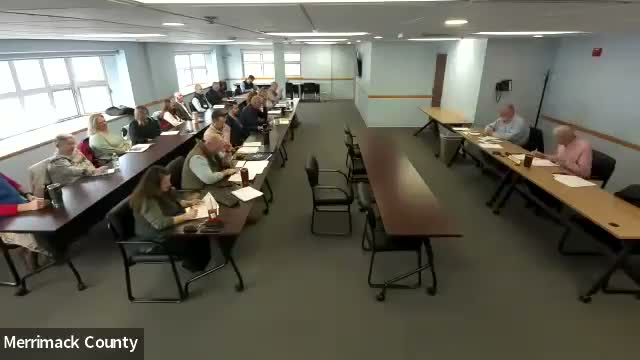
At a regular Merrimack County meeting, commissioners debated how to address shortfalls in local ambulance funding, with staff outlining three possible approaches and noting billing problems had reduced expected reimbursements.
Speaker 2, who led the discussion, summarized the choices: maintain the current arrangement; try to recover shortfalls by adjusting how the county offsets costs on jail or nursing‑home accounts; or become an equal partner (the “fourth leg”) in a regional EMS contract. "That's roughly about a 130 k, we estimate," Speaker 2 said when describing the estimated cost of joining as an equal partner.
Staff and commissioners focused on billing and communications as drivers of the gap. Speaker 7 explained ambulance billing is handled by the ambulance provider and that some invoices had errors — misspelled names, incorrect data — that delayed payment. Speaker 7 said internal review had cleared a majority of problematic invoices but that the true net impact remained uncertain: "Somewhere probably in the 20 to 65,000 mark," Speaker 4 said when estimating unresolved exposure.
Commissioners discussed the timing and governance of any commitment. One option discussed was to budget the county’s share within the administration’s budget and adjust in consultation with the jail and nursing‑home administrators as billing numbers become clearer. Speaker 2 recommended presenting refined figures to subcommittees (the Feb. 6 subcommittee or the Feb. 20 executive committee were referenced) so the delegation would see a clear plan before any delegation vote.
No formal motion to change service arrangements was approved at the meeting; the board left the item open for further information and recommended staff return with more precise billing reconciliation and cost estimates to the appropriate subcommittee.
What happens next: staff will continue reconciling ambulance billing invoices and prepare detailed numbers for subcommittee review so the board can decide whether to keep the status quo, offset costs through targeted accounts, or budget for regional partnership.