Get Full Government Meeting Transcripts, Videos, & Alerts Forever!
Get email alerts on the Zoning Landuse topic
No spam. Unsubscribe anytime.
Council denies request to add off‑site rock‑crushing use to zoning code
Summary
After public testimony about noise, dust and monitoring challenges, the council voted to deny an amendment that would have added off‑site material processing and rock crushing to the town’s B‑2 zoning uses for a Kaluchar Organization proposal at 640 Putnam Pike.
The Glocester Town Council on Jan. 15 voted to deny a proposal that would have amended the town’s table of permitted uses to allow off‑site material processing and rock crushing at 640 Putnam Pike (AP 17, Lot 107), an application tied to the Kaluchar Organization and owners William and Bonnie Cooper.
At a resumed public hearing, a town staff member outlined a two‑step regulatory approach intended to control the activity: “It requires that you would need to get a special use permit from the zoning board, and then apply to the council for a license,” the staff member said, characterizing the proposed change as an amendment to the existing earth‑removal licensing process.
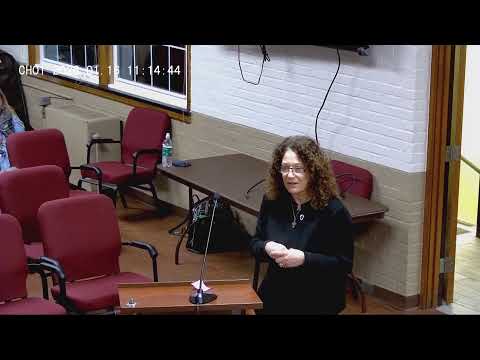
Residents urged caution. Janice Lowell of West Gloucester told the council she opposed any change that would permit material processing in town, citing the existing zoning language that prohibits uses that are “obnoxious by reason of admission of odors, gas, dust, noise, or vibration” and noting the planning board’s negative recommendation. “I’m here tonight to ask that you do not make this change to the Gloucester Ordinance on processing of materials,” Lowell said.
Speakers at the hearing raised several practical concerns: how the town would identify and monitor operations to distinguish dust or noise from adjacent sites, whether the town has staff or technical capacity to measure compliance, and potential groundwater contamination from imported fills. Town staff had proposed objective limits to narrow eligible sites — for example, minimum parcel sizes and buffer distances — and said those criteria would reduce the number of qualifying B‑2 parcels to roughly nine locations.
After public comment, a councilor moved to deny the amendment to permit material processing and crushing; the motion was seconded and the council recorded its vote in favor of denial. No formal regulatory text was adopted; staff said they would prepare clean draft language only if the council directed them to pursue an ordinance change.
The council closed the hearing on the zoning amendment and will not adopt the requested change. The applicant’s rights and any further appeals were not discussed in detail on the record.
What happens next: the town clerk will record the vote and the denial will be reflected in the minutes for Jan. 15. The council indicated it will only pursue ordinance changes if a clear, posted draft is available for public review and comment.