
First 5 Sacramento approves $4.1 million in community-driven 'Equity & Action' grants
Get AI-powered insights, summaries, and transcripts
Subscribe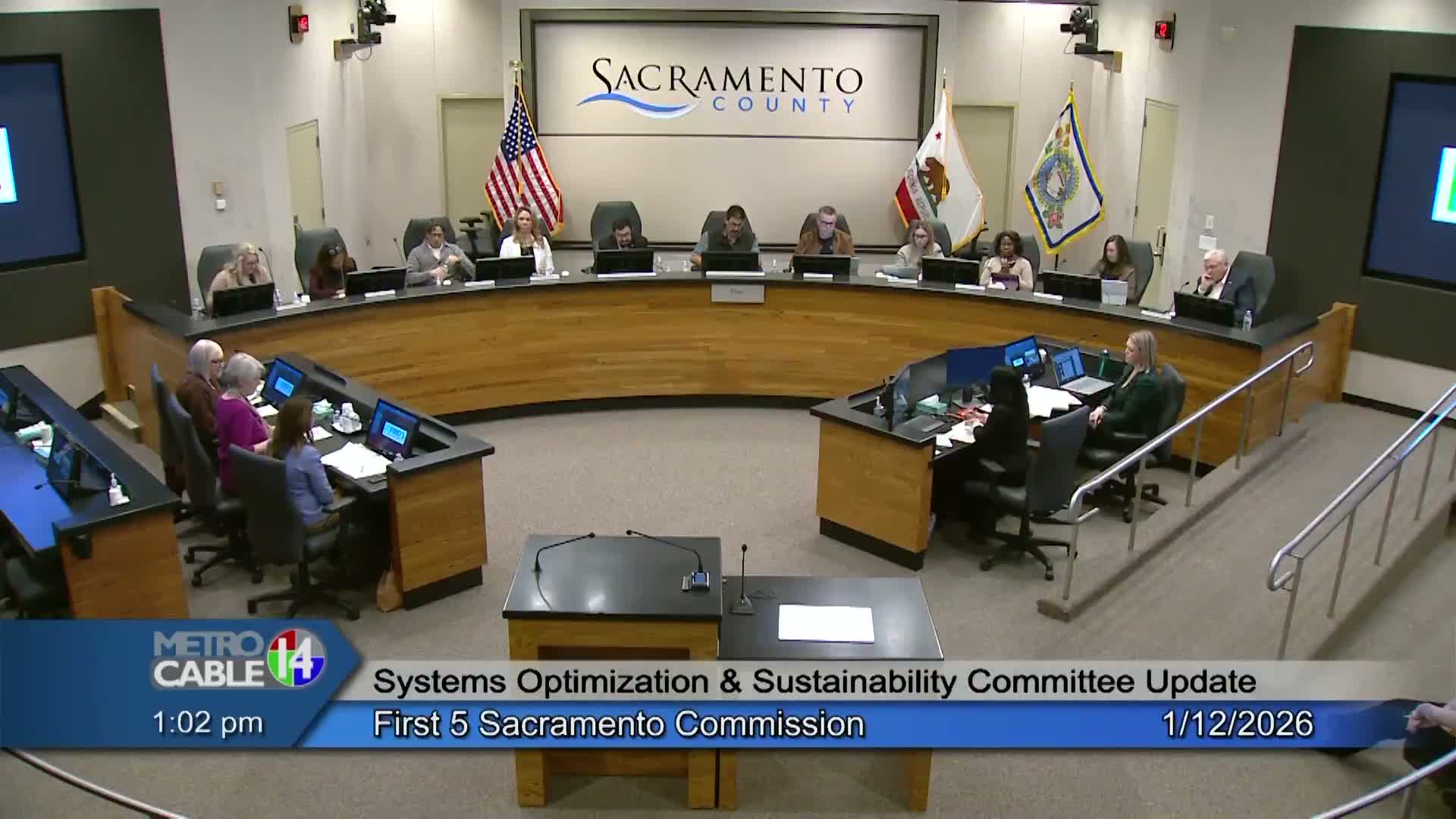
Summary
The First 5 Sacramento Commission voted Jan. 12 to approve participatory grant awards from the Equity & Action initiative after a community-led scoring process that drew more than 400 letters of interest and 62 applications for roughly $4.1–4.2 million in available funding.
The First 5 Sacramento Commission on Jan. 12 approved funding recommendations for its new Equity & Action initiative, a participatory grant program designed to center community voice in distributing limited early-childhood dollars.
Staff said the process began with more than 400 letters of interest that totaled about $62,000,000 in requests. From those, the commission and its Equity & Action committee invited roughly 70 organizations to apply; 62 submitted full applications. The committee of 15 community members entered thousands of individual scores and met repeatedly to develop recommendations for award tiers and capacity supports.
Executive Director Julie Galaylo described the effort as “the culmination of hundreds and hundreds of hours of work” and said the process prioritized neighborhood representation, lived experience, and reduced barriers to equitable access. Committee members Lashonia Bridal and Alberto Mercado told commissioners they used conflict-of-interest rules and an accessible scoring process to surface both grassroots and larger nonprofit proposals.
The awards are organized in three tiers. Committee presentations and materials reflected a mix of community-based services, workforce supports, basic-needs programming and early-childhood activities. Staff explained larger tier-2 and tier-3 grantees will have assigned monitors and capacity-building supports; tier-1 mini-grants will be administered through a fiscal agent to reduce administrative burden on very small organizations.
Multiple applicants and prospective grantees addressed the commission during the public-comment period. Christine Wynne, chief executive of My Sister’s House, said the funding will allow shelter and survivor services to expand immediate supports for women and children. Tanya Mack, founder of Universal Cafe, called the award “a shift in what’s possible” for workforce and food-security programming in Del Paso Heights. Several small providers said the grants were their first public awards and asked for reporting requirements that are accountable but not unduly burdensome.
Vice Chair Eric Guerra moved to approve the staff recommendations; the motion was seconded and passed by roll-call vote. Commissioners recorded affirmative votes and the commission adopted the awards.
Next steps outlined by staff include selecting a fiscal agent for mini-grants, assigning monitors and capacity-building resources for larger grantees, and returning to the commission with implementation details and reporting expectations.