
Rideshare drivers urge Portland committee to require independent appeals, driver resource center
Get AI-powered insights, summaries, and transcripts
Sign Up Free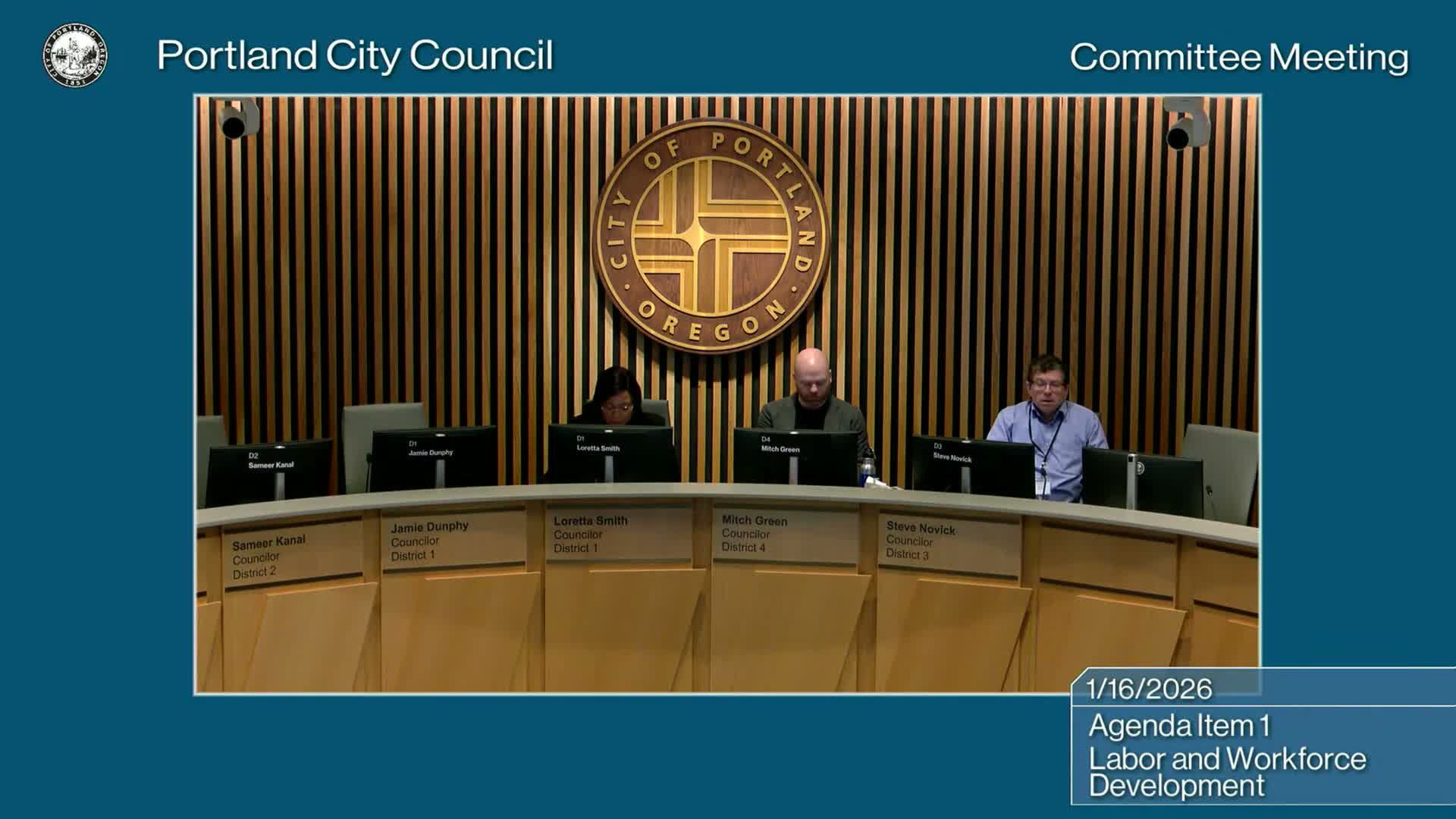
Summary
Rideshare drivers and union representatives told the Labor and Workforce Development Committee on Jan. 16 they face arbitrary deactivations, low pay and language barriers and asked the city to fund a staffed driver resource center and establish an independent third‑party appeals process.
Rideshare drivers and a coalition of driver advocates told Portland’s Labor and Workforce Development Committee on Jan. 16 that platform companies routinely deactivate drivers without adequate investigation and that the city should help establish an independent appeals process and a staffed driver resource center.
At the committee meeting, drivers described abrupt deactivations that left them without income or housing and said company customer service is often nonresponsive. Ahmed Al Shamani, who identified himself as a Portland driver, said he was deactivated during the pandemic and credited a drivers union with restoring his account: “I was deactivated for no reason,” he said, describing months of lost income and difficulty getting help.
A representative for the drivers’ coalition said the group has formed the Fair Rides Oregon Coalition and urged the committee to adopt protections similar to Washington state’s, where drivers can access arbitration and representation. “We believe that it is necessary for there to be an independent third party appeals process for an account deactivation,” the representative told the panel.
Drivers and advocates also asked the city to fund and host a driver resource center — a staffed, physical location offering translation and legal assistance, case support and help navigating deactivation appeals. The panel discussed funding options; a driver organizer said a $2 per-trip transportation network company (TNC) fee passed in last year’s budget could supply such a center — roughly 20¢ of the fee per trip, by their estimate.
Councilor Green and other members pressed witnesses on pay calculations and evidence. Witnesses said Uber and Lyft have used investor subsidies and later increased their take rates; one driver testified that a rider fare of $109.14 translated into an outsized platform take, a claim the driver framed as a central example of driver pay compression. Drivers said platforms have also made it difficult to see ride receipts on some apps and that downloading trip-level receipts from some platforms requires a cumbersome process.
Councilors said they supported exploring legislative and budgetary options, including a potential ordinance or a tax mechanism tying city revenue to the share of the fare retained by platforms, and asked BHR and council staff to follow up with supporting studies and proposals. Committee members also flagged the need for translation services at any resource center, calling out the high share of immigrant drivers in some neighborhoods.
No formal action was taken on the item; panel members said they will continue conversations, circulate the economists’ reports referenced by witnesses and consider ordinance and budget options ahead of the next steps.