
Contract Compliance Board votes to submit contract safety language recommendations to Metro Council
Get AI-powered insights, summaries, and transcripts
Subscribe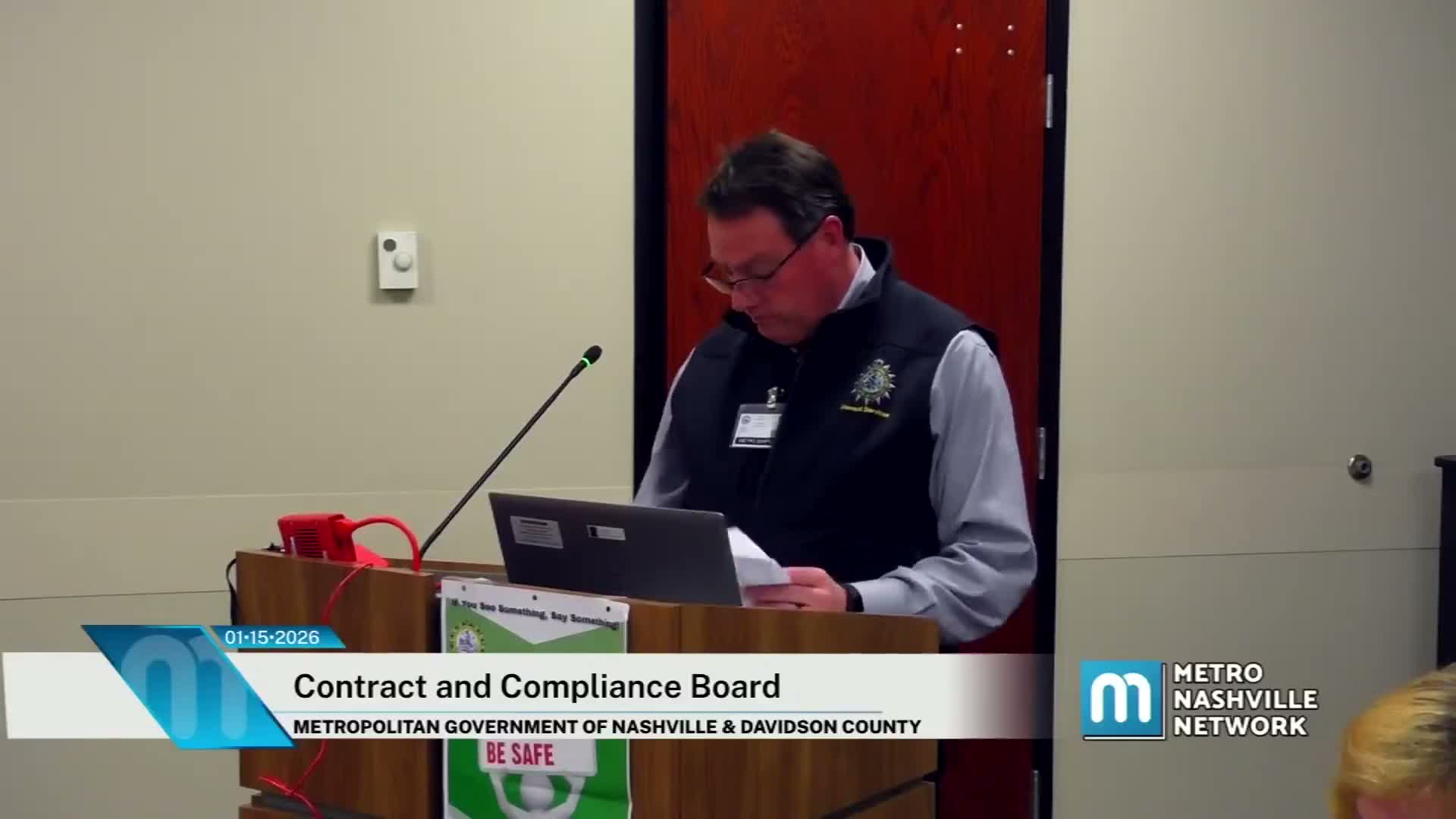
Summary
The Metro Contract and Compliance Board voted to send recommended contract safety language — including OSHA references, site reporting requirements and worker stop‑work protections — to Metro Council, subject to staff incorporating edits discussed at the meeting.
The Metro Contract and Compliance Board voted Tuesday to submit a package of recommended contract safety language and council recommendations to Metro Council, the board decided after several hours of line‑by‑line review.
The board’s recommendations package centralizes safety requirements for Metro construction contracts, refers contractors to federal workplace‑safety standards (29 CFR 1926) rather than spelling out an exhaustive list of requirements, and adds provisions meant to make safety reporting and compliance clearer for workers and contractors. The motion to submit the recommendations was made on the floor and approved by voice vote; staff were asked to incorporate the clarifications and to circulate a draft before submission to council.
Why it matters: The board’s language will travel to Metro Council as the board’s formal recommendation. The provisions discussed address how safety plans will be included in procurement, the flow of responsibility from general contractors to subcontractors, on‑site reporting, and worker protections for refusing dangerous work — all items the board says are important to reduce job‑site hazards on Metro projects.
What the board changed and clarified
- Reference to OSHA standards: Members agreed it is preferable to require safety plans to comply with 29 CFR 1926 (OSHA construction standards) rather than enumerating every safety requirement in the contract language, so Metro will rely on established federal standards for technical coverage.
- Contractor responsibility and subcontractors: Legal counsel cautioned that Metro is typically in privity of contract with the general contractor and that indemnity and insurance protections generally flow to Metro through the prime contractor; the board kept language holding contractors responsible while removing wording that could create ambiguity about sole liability for primes.
- Inspection accompaniment (2.4): The board clarified that employees may elect to accompany inspectors or, where the law allows, a non‑employee representative may do so — a change intended to accommodate small contractors that lack dedicated safety staff.
- Site notices and reporting: Members directed staff to require contractors to post Contract Compliance Board reporting posters and business cards (with QR codes linking to Hub Nashville) on project sites and to include the board’s reporting mechanism in contractor orientation and ongoing safety obligations.
- Stop‑work/right to refuse: After legal guidance, the board agreed on the following worker protection language: “All workers on a job site will continue to be informed of their right to refuse work that presents an imminent danger of death or serious physical injury.” That wording was chosen to avoid implying workers may abandon a site while still protecting workers in imminent danger.
- Remedies and CCB role: The board asked staff to add a discrete bullet to the remedies section noting that Metro may consider review and possible recommendations from the Contract Compliance Board when pursuing remedies (suspension, debarment, etc.). Legal counsel clarified the board’s authority is recommendatory: Metro procurement and finance have the statutory authority to exercise suspension or debarment.
Quotes
"All workers on a job site will continue to be informed of their right to refuse work that presents an imminent danger of death or serious physical injury," a board member proposed and the board accepted as the operative language.
Legal counsel cautioned members that some contract‑level remedies are controlled by Metro procurement and finance and that the board's proper role is to make recommendations.
Votes at a glance
- Motion to approve prior meeting minutes — Passed (voice vote). (See meeting minutes for attendees and procedural record.) - Motion to submit contract safety language and recommendations to Metro Council — Passed (motion made and seconded; approved by voice vote). The motion was made subject to staff incorporating the revisions discussed during the meeting.
What’s next: Executive Director Trey will circulate a draft reflecting the agreed edits and staff will submit the final recommendation package to Metro Council on the board’s behalf.