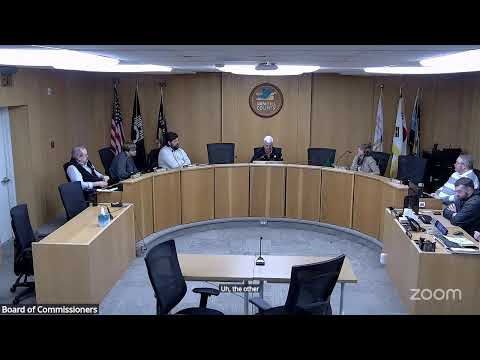
Yamhill County moves to adopt C‑PACE program framework after presentations from MEDP and private lenders
Summary
Following presentations from CPACE Equity and the McMinnville Economic Development Partnership, commissioners gave consensus direction to staff to prepare the ordinance/resolution and implementing documents so the county can offer Commercial Property Assessed Clean Energy financing to commercial property owners; staff will notify utilities and return for formal adoption.
Don Schultz of PACE equity and Patty Herzog, executive director of the McMinnville Economic Development Partnership, briefed the Board on Commercial Property Assessed Clean Energy (C‑PACE) financing and urged the county to adopt a local program.
Schultz described C‑PACE as private capital repaid through a voluntary special assessment lien on commercial real property to finance energy‑efficiency, seismic retrofit, HVAC, water‑conservation and similar improvements. He said the capital is private and the county would not pledge taxpayer funds; the lien is attached to the property and typically transfers with ownership unless paid off.
Patty Herzog said MEDP would help assemble pre‑application packets and assist with outreach; MEDP offered to carry much of the upfront application work in exchange for a portion of statutory application fees. Derek Warfia, Yamhill County assessor and tax collector, explained administrative options, noted that counties often outsource initial administration, and flagged the need to consider procedures in the event of loan defaults and any foreclosure steps tied to special assessments.
Todd Severson, a local business owner, urged adoption in public comment, saying C‑PACE would allow his insect‑agriculture startup to finance necessary HVAC, insulation and water‑system upgrades without taxpayer exposure. County staff and commissioners discussed administrative burden, a fee structure statutorily capped at 1% (or $2,500, whichever is less, to a $15,000 maximum as described by staff), and evidence from other Oregon counties that startup costs are largely recovered by applicant fees.
Rather than taking immediate formal action, the board expressed consensus for staff to draft the ordinance or board order, coordinate required notice to local utilities and stakeholders, and return with documents for formal adoption. Commissioners requested contingency plans if MEDP could not continue pre‑application support and asked staff to explore outsourcing or backup arrangements.
Next steps: Staff will prepare implementing documents (ordinance/resolution and application forms), notify utilities and return the proposal for formal consideration. MEDP and interested local partners said they will assist with outreach and initial application processing.
AI generated
The text on this page is AI generated. Summaries, highlights, analysis, and video transcripts are all produced from the original source material.
AI can make mistakes, so if you spot one, and we will fix it for everyone.
Note: the source content is unaltered by us. Any content source we link to, be it a video, an audio recording, or a document, is presented exactly as its publisher released it. That publisher is usually a government body, sometimes an individual official or another organisation.