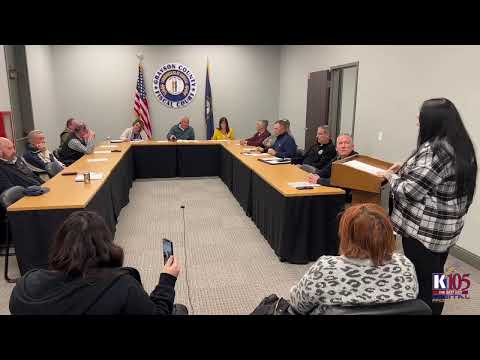
Grayson County fiscal court approves routine finance items, accepts sheriff’s excess fees, and places golf-course alcohol petition on May 19 ballot
Loading...
Summary
The Grayson County fiscal court approved a suite of routine financial and administrative measures, accepted $239,357.46 in sheriff’s 2025 excess fees for use on 2026 payroll and expenses, appointed an electrical inspector candidate and reappointed tourism board members, and placed an alcohol-sales petition for Precinct A on the May 19, 2026 ballot.
The Grayson County Fiscal Court on record approved a series of routine financial and administrative items and routine appointments during a regular meeting. Members voted to approve the previous meeting’s minutes, multiple payments of bills, the treasurer’s budget transfers and monthly settlement, the treasurer’s quarterly finance statement, the jailer’s bills, and the sheriff’s monthly settlement.
The court accepted the sheriff’s 2025 excess fees in the amount recorded in the meeting as $239,357.46 and approved a request to use those excess fees for 2026 payroll and other sheriff’s office expenses. The court also approved the sheriff’s fourth-quarter final budget update.
The court appointed Baron Clemens as an electrical inspector candidate after members said Clemens had “passed all the required requirements out of Frankfurt.” The court approved reappointments and new appointments to the Grayson County tourism board and approved payment of three additional bills that arrived the preceding day.
Members voted to place an alcohol-sales petition for the golf course on the May 19, 2026 ballot for Precinct A (referred to in the record as 'South A') after confirming the petition had the required number of signatures and that the wording conformed with statute.
All routine items in this record were adopted by voice vote; motions and the names of movers and seconders were recorded in the meeting minutes. No formal roll-call vote tallies were recorded in the transcript provided; every contested motion reported the chair asking “All in favor?” followed by vocal affirmations recorded as “Aye.”
The court moved on to new business and a public-comment period after these approvals.