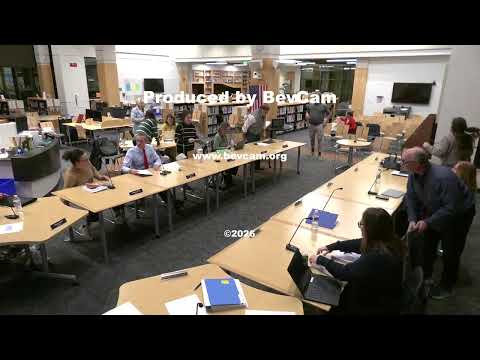
Beverly Public Schools directors outline curriculum adoptions and early outcomes
Loading...
Summary
High‑school curriculum directors described recent multi‑year adoptions in English, math, science and history, outlined teacher‑led piloting and vertical alignment work, and linked the English adoption to improved ELA performance and increased student reading engagement.
Paul Casey, humanities director at Beverly High School, and Jennifer Thomas, STEM director, told the Curriculum, Instruction and Student Life committee on Jan. 14 that the district has pursued multi‑year adoptions and aligned instruction vertically and horizontally to ensure consistent standards across sections and grades.
Casey described the English adoption process as teacher‑driven: committees of teachers piloted candidate texts for a full year, collected student and teacher feedback, presented their findings to content teams and recommended final materials to the school committee for approval. "We have 350 copies of The Nickel Boys," Casey said, noting that the district now provides enough classroom copies so students can take books home. He also said student‑survey data showed the share of students who considered themselves readers rose from about 40% before high school to about 65% after a year using the adopted materials.
Thomas said science adoptions (biology, chemistry, anatomy & physiology, forensics) included updated textbooks and digital components, new scope and sequence documents, benchmark assessments, and partnerships with local companies that supplied probes, calculators and field‑trip opportunities. She described the math adoption as producing strong vertical alignment supported by a supplemental adaptive program (described in the meeting as "Alex") that targets individual student needs.
Casey acknowledged limits on attribution but cited district assessment results: "In 2024, two years after this adoption, or a year after this adoption, we actually saw our highest growth in ELA scores in over a decade," he said, while cautioning that adoption is not the sole cause. The directors said the district plans classroom learning walks, expanded teacher observation opportunities during pilot phases, and direct student feedback to guide decisions on remaining pilots (for example, a planned Savvas pilot in history). They expect to compile pilot results by May for further content‑team review.
The presentation emphasized teacher piloting, professional development, and use of local grant funding to support curriculum implementation. Grant‑funded work cited by Casey included more than $135,000 used over three years for civic and genocide education professional development and a new mandated senior course titled "Preserving Democracy." The committee discussed data sources (MCAS, district benchmarks, common assessments) that leaders and PLCs use to spot standards needing additional attention.