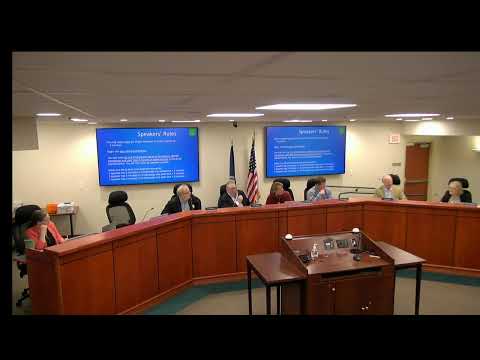
Goochland Planning Commission defers decision on Virginia Sports Park after hours of public comment on noise, wetlands and lead
Loading...
Summary
After a multi‑hour hearing with dozens of residents and technical witnesses, the Planning Commission deferred consideration of Virginia Sports Park’s conditional use permit for a sporting‑clays and archery facility to March 19 for additional analysis and conditions.
The Goochland County Planning Commission voted 4‑1 to defer action on Virginia Sports Park’s conditional use permit application for an 85‑acre sporting‑clays and archery facility after a night of extensive public comment and technical testimony.
Planner Ben Ellis presented the proposal as a sporting‑clays course with trap, 5‑stand and archery facilities, a clubhouse, access and support improvements and mitigation measures including berms and 50‑foot perimeter buffers. Ellis said staff had prepared draft conditions—19 in total—addressing hours of operation, shot fall zones, parking, an environmental stewardship plan and limits on tournaments while noting outstanding information on noise, lead mitigation and some plan details.
Adnan Hamidi, director of Virginia Sports Park, told the commission VSP is a nonprofit focused on youth and safety and said the organization had committed to an environmental stewardship plan and to follow state and federal rules on lead. “We are not a gun range,” Hamidi said, adding the proposal would not include rifles or pistols and that the facility’s purpose is education and community sporting activity.
An acoustic consultant for the applicant, Paul Thomas of Applied Laboratory Services, presented a two‑hour monitoring set of decibel readings taken during a January demonstration and reported eight‑hour averaged measurements well below the federal 85‑decibel hearing‑conservation benchmark used in the study. “Based on our testing results, we feel that there is not any noise that is going to exceed those regulations,” Thomas said.
That technical evidence did not satisfy many residents. Dozens of neighbors said the proposed layout placed shooting stations too close to homes, wetlands and public roads, and they urged denial or significant conditions, including larger setbacks, binding ammunition limits, stricter tournament caps, third‑party noise verification and a robust lead‑management plan. Neighbors cited potential lead deposition into wetlands and Deep Creek, impacts to private wells and wildlife, and the difficulty of relying on voluntary restrictions.
Opponents presented a community impact and suitability report documenting shot‑fall overlap with wetlands and nearby homes and pressed the commission for requirements such as 1,000‑foot setbacks from homes, soil and water monitoring, a surety for cleanup, limits on hours and days of operation, and perimeter fencing to reduce risks to children and pets.
Supporters — including representatives of the landowner Luckstone and several youth‑sports proponents — argued the project would create local recreation, jobs and education for youth, and that additional technical review and enforceable conditions could address community concerns.
Commissioners cited three issues they wanted resolved before sending a recommendation to the Board of Supervisors: clearer, independently verified noise analysis and monitoring protocols; definitive environmental safeguards and a robust, enforceable lead‑management plan; and resolution of shot‑fall geometry and setbacks so no shot fall extends beyond the CUP area or into wetlands and roads. The commission’s motion to defer set a new planning commission hearing for March 19 to allow staff, the applicant and independent consultants time to provide follow‑up work and to let the public review it.
The motion to defer passed 4‑1. The roll call recorded Mister Kimmerle, Miss Kowalski, Mister McLaughlin and Mister Dean voting to defer; Mister Patuck voted against the deferral. The commission directed staff to work with the applicant to provide the additional studies and to circulate them to the public and the commission prior to the March meeting.
Next procedural step: the application will return to the Planning Commission on March 19; if the commission makes a recommendation then, that recommendation will be transmitted to the Board of Supervisors for final action.