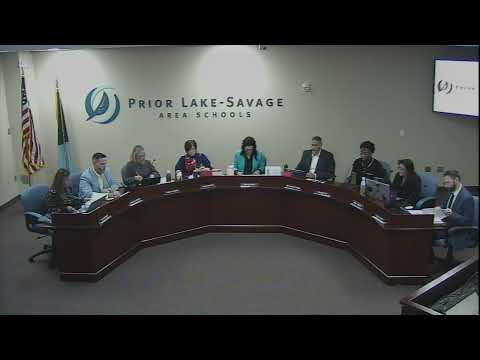
Board begins levy planning, weighing inflation‑adjusted referendum and tax impacts
Loading...
Summary
Prior Lake‑Savage Area Schools board discussed operating‑levy options, timeline and tax impacts for a possible Nov. 3, 2026 referendum, including inflation indexing, per‑pupil authority and scenarios that could raise $3.3M to $7.0M; staff noted an estimated $115,000 cost for non‑November mail ballots and recommended a November timeline.
The Prior Lake‑Savage Area Schools Board spent a large portion of its Jan. 12 meeting reviewing operating‑levy options and five‑year forecasts that will shape any decision about seeking voter approval for new revenue. Staff and advisors outlined choices, potential revenue levels and tax impacts on the average home, and recommended pursuing a traditional November election if the board chooses to move forward.
Staff said the district's current voter‑approved operating referendum authority is $6.23.97 per pupil and that the statutory cap is $2,003.98 per pupil unit. Using state models and local property values, staff presented two scenarios: adding $364 per pupil (generating roughly $3.34 million) or adding $762 per pupil (about $7.0 million). "This is all considering above and beyond where we currently are at," the presenter said when outlining the examples. The presentation included a calculation that an average home in the district (shown at $525,000 in the slides) would see an estimated tax impact of about $180 a year for the $3.34M option (about $15 per month), or about $377 a year for the larger option (roughly $32 per month).
The staff recommendation addressed timing and cost: May or August elections would require mail‑only ballots and could cost the district roughly $115,000 in mailings and administration; that prompted staff to recommend a November 3, 2026 timeline if the board chooses to place a question on the ballot. Staff reminded directors that the board would need to call the election by Aug. 11, 2026 for a November vote and noted implementation timing for recognized tax receipts and budget years.
Directors pressed for comparative context and operational detail. Requests included: a comparison of districts of similar size and composition, scenario modeling that reflects staffing and consolidation assumptions, and a programmatic plan that would link any levy amount to specific classroom and program restorations. Staff said they would prepare a schedule of options and the related programmatic impacts for future workshops.
No binding decision was made; the discussion established parameters for follow‑up work and timelines should the board choose to pursue a referendum.