Baltimore council asks administration for 3‑week cost plan to stand up civilian crisis response
Loading...
Summary
After testimony from Durham and Denver officials and local experts, Baltimore City Council asked the administration to produce a three‑week analysis estimating what it would cost to build a best‑in‑class civilian and clinician crisis‑response system dispatched from 911; administration noted $15,000,000 in opioid restitution funds already allocated.
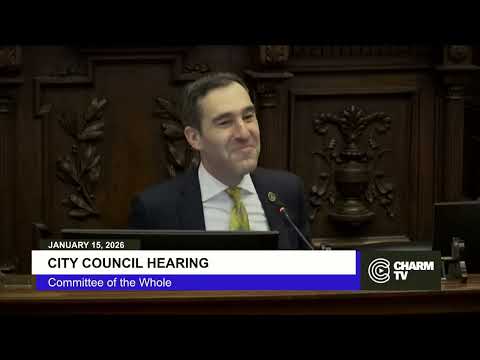
Baltimore City Council convened a committee hearing to examine civilian alternative response and clinician mobile crisis models on the heels of several fatal interactions between police and people experiencing behavioral health crises. Council leadership asked the administration to deliver, within three weeks, an analysis estimating what it would take — in staffing, dispatch capability and budget — to build a citywide system that could respond to eligible 911 and 988 calls with non‑police responders or clinicians at response times comparable to police.
The hearing featured local and national testimony. Director Sarah Whaley of the Mayor’s Office of Overdose Response said Baltimore has embedded clinicians in 911, expanded mobile crisis teams and is working through a Behavioral Health Collaborative to build a 24/7 safety net; she stated the city has secured $15,000,000 from the opioid restitution fund to support the work. Krista Taylor, executive director of Behavioral Health System Baltimore, recommended two priorities: funding loan‑repayment and residency‑style pipeline programs to recruit social workers, and establishing citywide civilian emergency response teams dispatched from 911 for nonviolent, nonmedical calls.
Durham and Denver officials described how their programs evolved. Chief Patrice Andrews said Durham’s HEART program began in 2021 and grew through regular debriefs and officer engagement; she reported structures to protect clinicians (radios, optional vests) and said HEART averages about 6.05 minutes to scene across its qualified responses. Andrew Dammerin, Denver’s 911 director, said STAR was launched in 2020 as a fourth dispatch option, that Denver identified about 15,000 STAR‑eligible calls in 2025 and that STAR historically handled roughly 20% of eligible calls in earlier reports.
Council members repeatedly pressed for specifics — how many calls are eligible, how many are actually diverted, and what level of funding and partnerships would be needed to expand capacity. Council members framed the request as a practical next step: they asked the administration for a cost and capacity estimate that could inform FY‑27 budget planning. Deputy Mayor Leticia Gerasa and administration staff agreed to produce the analysis in roughly three weeks and noted existing interagency QA/QI structures and the opioid restitution allocation.
The council’s formal committee request asks the administration to estimate the budget and operational steps required to provide a reliable alternative‑response option and to align dispatch triage, staffing pipelines and follow‑up services. The hearing ended with the council planning follow‑up briefings and a commitment to continued cross‑agency collaboration.
The committee will review the administration’s analysis when it is delivered; no formal ordinance, appropriation or vote was taken at this hearing.