
Buncombe County elections staff brief board on candidate‑challenge hearing rules, subpoenas and appeals
Get AI-powered insights, summaries, and transcripts
Subscribe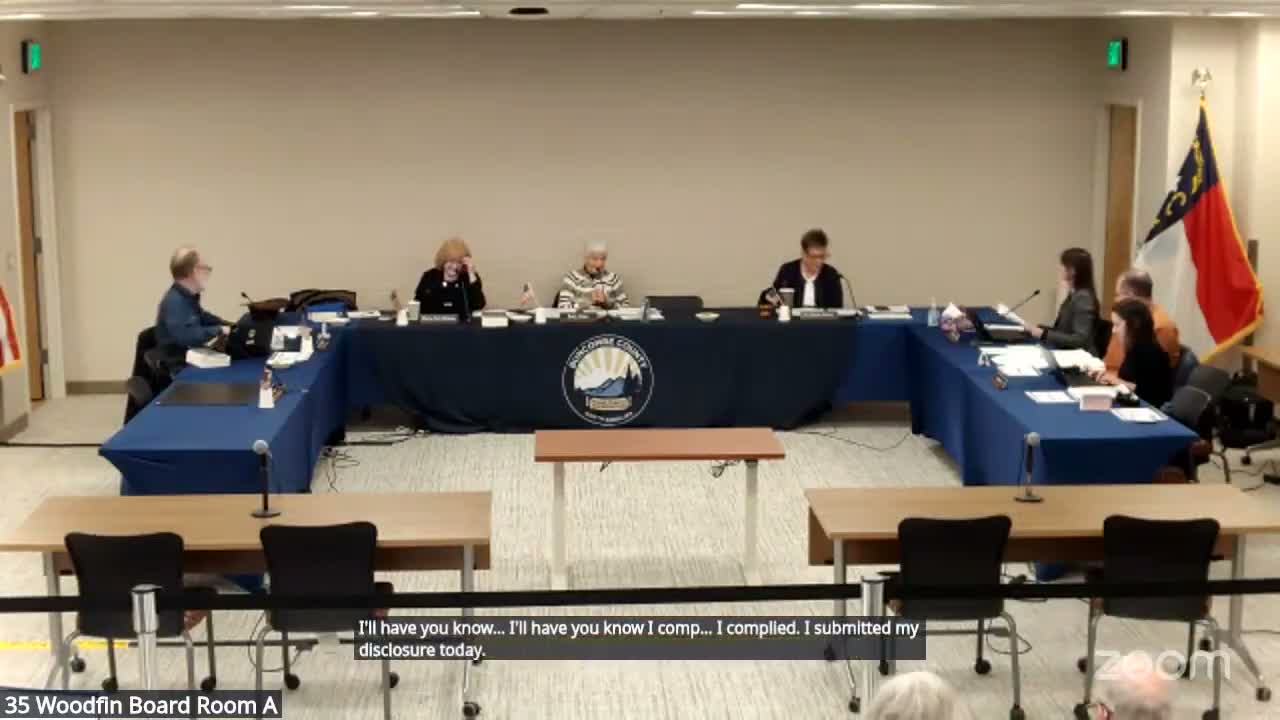
Summary
Board members were trained on the quasi‑judicial process for two candidate‑challenge hearings set for Jan. 20, including evidence and witness rules, a subpoena deadline, how decisions affect ballots and an expedited appeals timetable to the State Board of Elections.
Corinne Duncan, executive director of the Buncombe County Board of Elections, led a presentation on procedures for two candidate‑challenge hearings scheduled to begin Jan. 20 at 2:30 p.m., telling board members the proceedings are quasi‑judicial and formal.
"Candidate challenges are definitely one of our most formal duties," Duncan said, explaining the hearing format and roles. The hearings will begin with a chair introduction, allow optional three‑minute opening statements (which she emphasized are not evidence), move to the case in chief where parties present evidence and sworn witnesses, permit closing statements of two minutes, and conclude with open deliberation and a motion followed by a written decision.
Duncan said the burden of proof in the challenges rests with the candidate: the board must determine eligibility by a preponderance of the evidence — "more likely than not" — rather than the higher criminal standard of proof.
County counsel in the meeting explained evidentiary rules the board will follow: documents, affidavits and business records may be submitted, the chair initially rules on admissibility, and the board may override the chair’s evidentiary ruling by majority vote if members object. Affidavits are expressly allowed by statute but may raise hearsay objections; business records often qualify under hearsay exceptions.
The counsel reminded the panel that attorneys participating at the hearing act as advocates and do not give testimony unless sworn. Witnesses will be placed under oath, the party that calls a witness conducts direct examination, the opposing party may cross‑examine and board members may ask relevant follow‑up questions.
Board members were told to be ready for subpoena requests: counsel cited a published deadline for issuing subpoenas (the transcript references the 17th) and noted holidays and service logistics may complicate last‑minute subpoenas. As of the meeting no subpoenas had been issued.
Duncan warned of jurisdictional and timing complications tied to ballots. She said there are separate procedures for county and municipal challenges and that if ballots have already been printed or mailed in a municipal race, the candidate’s name could remain on the ballot and votes may still be counted according to statute; the county will consult with the State Board of Elections on administrative steps if changes are required after absentee ballots go out.
The meeting also covered appeals: once the board issues a written decision, interested parties have two days to appeal to the State Board of Elections; further appeal may be taken to the Court of Appeals. Counsel said appellate review will be based on the record created at the hearing, underscoring the importance of a full transcript and careful written findings of fact.
Counsel advised the board to document any ex parte contacts and to disclose them at the start of the hearing. The board discussed a recent newspaper story involving a person named Annette Mosley; counsel cautioned that newspaper accounts are not evidence and that anything taken into the record should be presented and admitted under applicable rules.
The panel was asked to arrive by 2:00 p.m. on Jan. 20 so hearings may begin promptly at 2:30 p.m. The board was given a template and staff assistance for drafting findings of fact and a written decision, which statutory timelines allow up to 20 days to file but which staff said they expect to prepare promptly the following day.