Get Full Government Meeting Transcripts, Videos, & Alerts Forever!
Get email alerts on the Budget topic
No spam. Unsubscribe anytime.
Rec and Park warns of two-year deficit as PUC rate changes and lost baseline funds bite
Summary
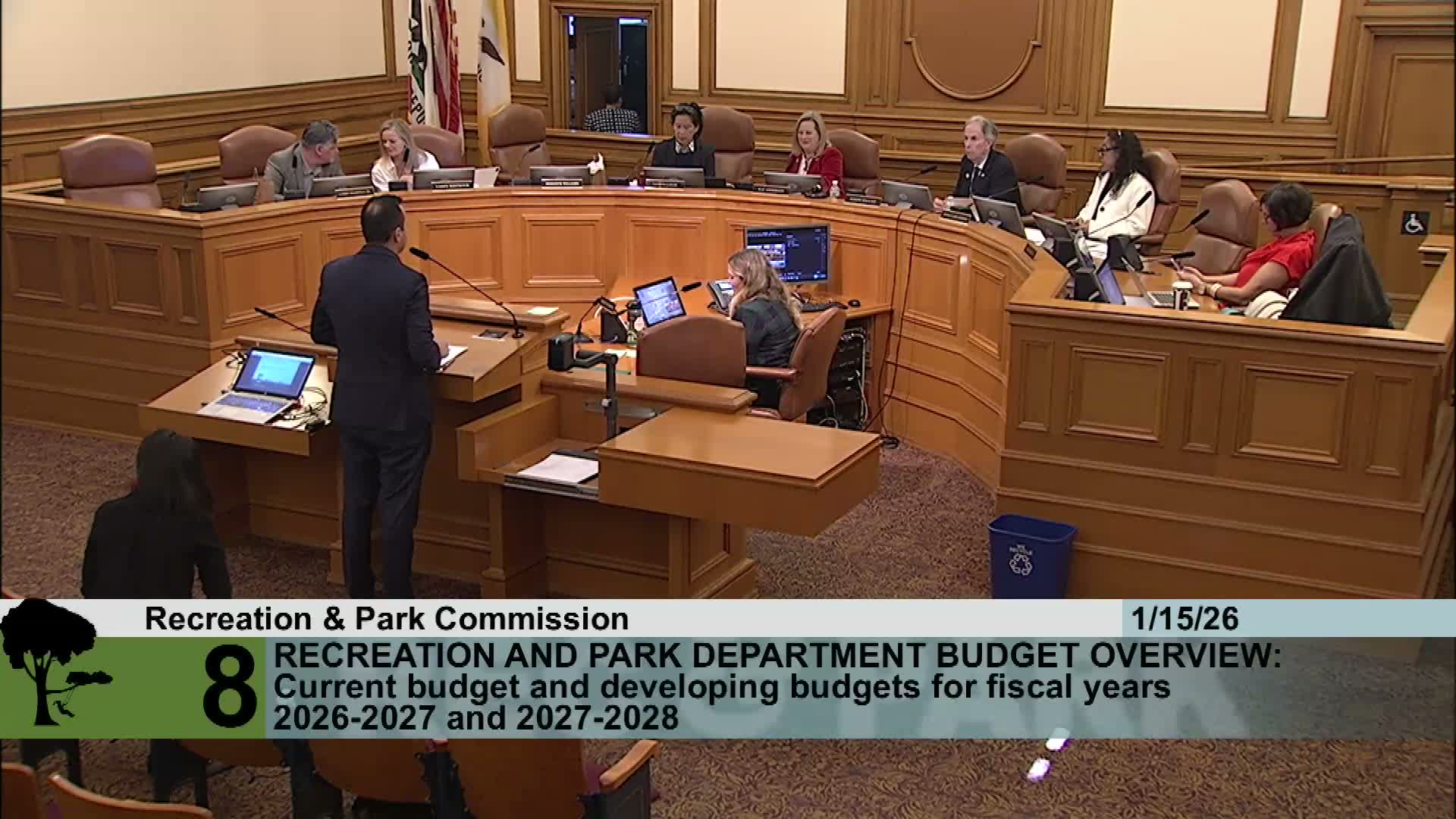
Department finance staff told commissioners Rec and Park faces a projected $5 million deficit in FY26–27 and larger gaps thereafter, driven by changes in PUC stormwater/sewer and water rates, reduced baseline Prop B funding and rising health-care costs; commissioners pressed for a joint meeting with the PUC.
Recreation and Park department finance staff presented a two-year budget outlook that projects a $5 million shortfall in fiscal year 2026–27 and a larger structural gap over subsequent years, with the department’s five-year plan showing growing pressure from utility and pension costs.
Antonio Guerra, the department’s director of administration and finance, told the Jan. 8 commission meeting that San Francisco faces a citywide structural shortfall and that three changes in particular are driving pressure on the parks budget: the loss of a guaranteed Prop B baseline allocation starting in FY26–27; rapidly rising health-care costs (projected at about 9% annually in the near term); and reallocated charges from the San Francisco Public Utilities Commission (PUC), including a new stormwater surcharge that changes how sewer/stormwater costs are apportioned.
Guerra said those PUC decisions and the end of a fixed Prop B increment reduced the department’s expected baseline by several million dollars and contributed to a $5 million projected deficit for 2026–27 and roughly $9.6 million the following year under current assumptions. He described other headwinds including declines in some discretionary revenues and higher utility bills tied to changing customer classes and capital investment needs at the PUC.
Commissioners asked whether the mayor’s office, the city attorney or the Board of Supervisors could intervene on rate design, and staff said they were coordinating with the mayor’s budget director and the city attorney on possible legislative or advocacy options. President Anderson proposed scheduling a joint Rec and Park — PUC commission meeting so commissioners and the public can review PUC rate drivers and potential remedies; staff agreed to pursue such a meeting.
Public commenters and commissioners urged stronger prioritization of ADA and long-delayed capital fixes in parks and asked that staff explicitly identify core vs. discretionary programs in the department’s January budget submission to the mayor. Antonio Guerra said departments were being asked to map core services and discretionary programs, supply metrics and align proposals to mayoral priorities by late January and to submit final budget materials in late February.