Punta Gorda council asks staff to pursue anchoring‑limitation strategy to tackle derelict vessels
Loading...
Summary
After extended public comment, council directed staff to coordinate with Charlotte County and the Florida Fish & Wildlife Commission on using a new 14‑day permit window and an anchoring limitation area (45‑day limit) to reduce derelict vessel problems and improve safety and hurricane resilience.
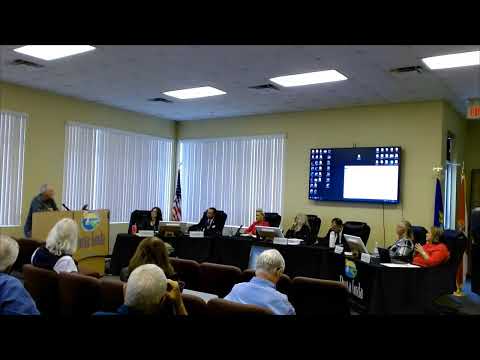
Council members and numerous residents spent a large portion of the Jan. 14 meeting debating options to address derelict and abandoned vessels in Punta Gorda’s harbor. Chief Pam Smith of the Punta Gorda Police Department described a two‑part approach based on recent state law and a local anchoring‑limitation area.
"This came about for years we've been having a lot of derelict vessel issues in the area in front of Gilchrist Park," Chief Smith said, describing safety and property‑damage incidents. She explained the new state provision requiring vessels anchored within about one nautical mile of an anchorage buoy to obtain a permit if staying longer than 14 days, and said the city could pursue a separate anchoring‑limitation area (45‑day limit) outside that nautical‑mile zone to focus enforcement on storage and neglected boats that become derelict.
Several liveaboard residents and marina workers urged council to distinguish between long‑term liveaboards who comply with sanitation and safety rules and owners who anchor and abandon boats. Marina worker Lehi Weaver told the council "it's not the liveaboards that have a problem. It is the people who use the harbor as a storage facility. They take their boats out, anchor them, forget about them." Other speakers described incidents of boats breaking loose and causing damage.
Council discussed enforcement limits, the need for certified mail and documented owner‑contact efforts when boats are abandoned, and the length of time that must pass before a vessel can be declared abandoned. Chief Smith said enforcement will be time‑consuming and involve multiple agencies, including the county and FWC, but that the new statutory tools give the city more definitive timelines and legal pathways for removal where owners do not respond.
Council’s direction: staff should pursue intergovernmental coordination (county and FWC), map potential anchoring‑limitation areas (the statute limits such areas to prescribed size), and return with implementation options including cost, enforcement protocols, and hurricane‑season contingencies. Several council members flagged the need to balance enforcement with protections for legitimate long‑term liveaboards who obtain the required permits.
The council did not adopt an ordinance at the meeting; instead it authorized staff to study, coordinate and report back with a recommended approach.