Get Full Government Meeting Transcripts, Videos, & Alerts Forever!
Get email alerts on the Ai Moratorium topic
No spam. Unsubscribe anytime.
Ironton council debates emergency moratorium on AI data centers amid community outcry
Summary
Ironton City Council considered an emergency moratorium on AI data centers to 'buy time' for zoning and safeguards after residents and Hamilton Township Trustee Bob Blankenship said trustees were not informed; the transcript records debate and a motion to suspend rules but does not record a clear final adoption vote for Ordinance 26-01.
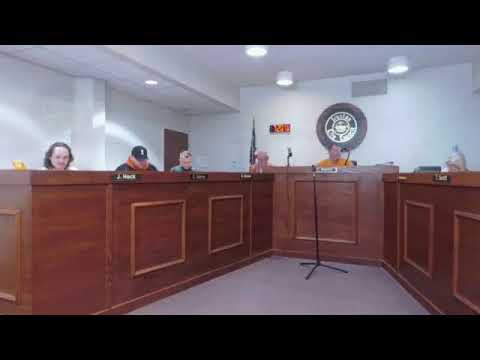
Ironton City Council members on Jan. 8 debated whether to impose an emergency moratorium on locating AI data centers within city limits, with council members and residents sharply divided over timing and potential economic consequences.
Supporters of the moratorium, including a motion to suspend rules and give Ordinance 26-01 its second and third readings by title, said a temporary pause would give the council time to develop zoning protections and safeguards and to meet with affected stakeholders. An opponent urged the council to use zoning to exclude AI centers from I-1 and I-2 industrial zones instead of imposing a moratorium that could send a negative signal to existing local manufacturers.
The debate followed public concern and testimony from township officials and residents. Hamilton Township Trustee Bob Blankenship told the council trustees were not informed about a recent ribbon-cutting related to the project and said trustees were ‘thrown under the bus,’ adding he was ‘‘against it, 100%’’ and urging county-level engagement. Council members said they had already engaged with members of the public and held a special meeting with Dr. Dingus to compile questions.
Council members weighing both perspectives cited procedural limits and practical timelines. One councilor noted zoning changes require multiple readings, public hearings and roughly 3–4 months to complete, while proponents of a moratorium said that timeline made an immediate pause necessary to avoid unexpected ground-breaking and rushed approvals. Another councilor warned the city's largest local employer — cited in the discussion as employing ‘‘400 plus’’ people and supplying HVAC systems for data centers — had not been consulted and could be harmed by a moratorium.
The transcript records a motion to suspend rules and proceed to second and third readings for Ordinance 26-01 and extended debate across several council members, but it does not clearly record the final roll-call outcome for that suspension or for adoption of 26-01. The council proceeded with other agenda items afterward. Council members instructed staff to draft zoning language to prohibit AI centers in I-1 and I-2 zones for consideration at the next meeting.
The council emphasized that the moratorium is not framed as anti‑AI but as a temporary safeguard while the city pursues a deliberate process; proponents said the measure could be repealed once zoning or other safeguards are in place. Opponents cautioned about unintended consequences for existing businesses and urged direct outreach to local employers before taking restrictive action.
Next steps recorded in the meeting include drafting zoning language for I-1 and I-2 exclusions, further outreach to affected employers and scheduling follow-up public meetings; the transcript also records residents being advised to contact Lawrence County Commissioners and township trustees where jurisdiction lies outside city limits.
A clear final determination on Ordinance 26-01 is not recorded in the available transcript text; the council moved on to other ordinances later in the meeting.