Get Full Government Meeting Transcripts, Videos, & Alerts Forever!
Get email alerts on the Academic Performance topic
No spam. Unsubscribe anytime.
Norwood ‘State of the Union’ midyear update shows reading and math gains, lower chronic absenteeism in places
Summary
Superintendent and curriculum leaders presented a midyear dashboard showing literacy gains in grades 1–4, improvement on winter benchmark math assessments, success moving ~200 students out of the lowest reading category, and district efforts to reduce chronic absenteeism through attendance teams and family outreach.
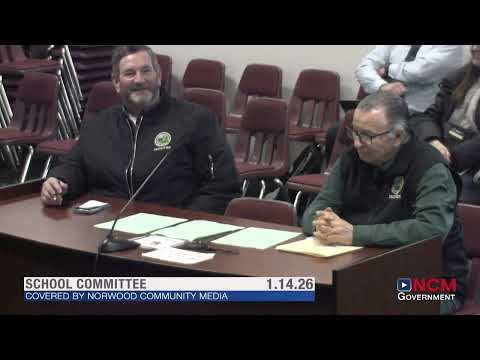
The school committee heard a midyear “State of the Union” presentation that administrators designed as a running dashboard of academic, behavior and engagement indicators intended to guide midyear adjustments.
Doctor Munoz and JJ outlined early literacy progress — in grades 1 through 4 more than half of students are at or above grade level on the district’s early reading assessment, and administrators reported nearly 200 students had moved out of the most‑concerning category into better performance bands. On mathematics, Renaissance STAR winter benchmarks showed strong kindergarten growth (administrators said kindergarten proficiency on an algebraic thinking measure roughly doubled compared with fall), and third and fourth grades posted higher winter benchmark scores than the same point last year.
Administrators credited Tier 3 interventions and newly structured coaching cycles for some of the gains and said the district is now focusing on ‘bubble’ students (those close to meeting standards) and on sustaining growth for students already at or above grade level. They also reported increases in AP placement enrollment and expanding innovation pathway programs at the high school.
Regarding behavior and attendance, administrators stressed data nuance: while incident counts can look large in aggregate, 88.4 percent of students had no behavioral incident recorded in the period reviewed. The district also noted steady declines in chronic absenteeism in several schools; leaders attributed improvements to school attendance teams proactively contacting families, more consistent outreach and, in some cases, the use of established attendance enforcement tools required by state law.
Committee members requested clearer slide breakdowns (percentages vs. raw numbers), additional context showing causal factors for attendance improvements and documentation of how the district is supporting dyslexia screening and related interventions. Administrators agreed to refine the dashboard and return with more detail on subgroup breakdowns and implementation examples.
No formal action was taken; administrators said they will present a final year‑end State of the Union recap later this school year.