Get Full Government Meeting Transcripts, Videos, & Alerts Forever!
Get email alerts on the Bridges Construction topic
No spam. Unsubscribe anytime.
Volunteers press ahead on major bridge builds; Large Airport Trench mostly cleared
Summary
Volunteers reported major progress on the Large Airport Trench and multiple bridge projects: most decking and wood are staged or moved, sandbag cofferdam work continues and some sites will require engineering and permits; the committee expects to complete nearby bridges in the coming months with volunteer labor and targeted permitting.
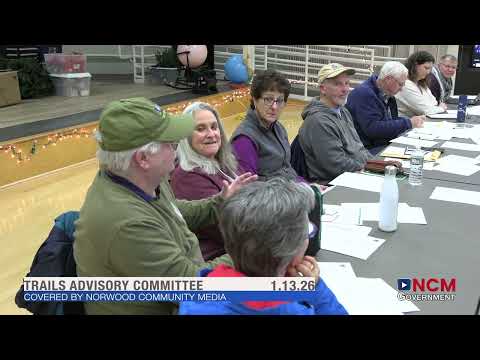
At the Norwood Trails Advisory Committee meeting, volunteer leaders gave a detailed status update on several bridge and water-crossing projects, including the Large Airport Trench, which remains the most complex active site.
Joe Barrett outlined recent accomplishments: "As of Sunday, all the wood is moved. There's no more wood wood to move out there," Barrett said, describing a large volunteer effort to clear materials and stage components. He reported that the railing posts are presently notched and staged at Chapel Street and that stringers and decking are in preparation.
Barrett said volunteers built a sandbag cofferdam in the trench but the structure was partly submerged after a storm, and the team will need to wait for river levels to drop to complete cribbing and decking work. He described a four-phase approach for upcoming bridge builds — materials prep, transport to staging areas, cribbing/stringer installation, and decking/finish work — and said the work will rely on coordinated volunteer crews and occasional use of canoes to shuttle materials across the river.
Permitting and engineering: several bridges require formal permitting and an engineering plan before ConCom (Conservation Commission) review. Barrett explained the workflow for permits: the trails committee prepares field flagging and initial materials, the town's engineering department converts that to formal plans, and the Conservation Commission reviews permit applications. Bridges labeled 3, 4, 5, 8 and 9 are on the committee's current permitting docket; the committee plans to bundle permits where possible to limit abutter notices.
Labor and logistics: Barrett urged the need for substantial volunteer crews for heavy lifts, noting some operations ideally require 8—16 people to move stringers and other large elements safely. He also said the committee has begun to standardize permit templates and project plans so future bridge permits can be replicated more easily.
Next steps: the committee will continue immediate tasks that can be done when river conditions permit (sandbag moves and cribbing), order materials for the next phases, coordinate transportation to staging areas and press the engineering department for plan preparation to move pending permit applications to ConCom review.