Davenport council pauses vote on wholesale zoning change after safety and notice concerns
Loading...
Summary
After hours of debate about allowing wholesale establishments citywide in C-3 zones, the Davenport City Council voted unanimously to postpone ORD 25-03 for four cycles so staff and the petitioner can refine options such as converting the change to a site-specific special-use process.
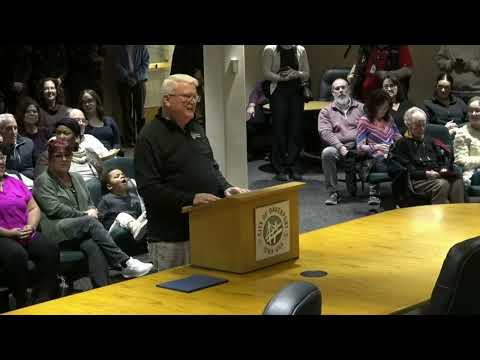
Davenport City Council on Jan. 14 postponed consideration of ORD 25-03 — a proposed amendment to Chapter 17.08 that would allow wholesale establishments as a permitted use in the city's C-3 zoning districts — after a multi-hour debate about public notice, safety and local control.
Petitioner attorney Tom Pasternak argued the change would help regenerate underused commercial corridors and "provide the opportunity for future development," saying wholesalers generally produce fewer car trips than retail. "All I'm asking for is the opportunity to provide for it," Pasternak said during public comment.
Council members who support the concept said wholesale is distinct from heavier warehousing or industrial uses and may be appropriate along high-volume corridors such as Brady, Kimberly and Elmore. Alderman Kyle Gripp, who read supporting background on the item, said existing C-3 corridors were built to carry that kind of traffic and pointed to legal, nonconforming wholesalers already operating in C-3.
But several aldermen raised objections to making the change a blanket permitted use across the entire C-3 category. Alderman (recorded as) Newton said, "I am pro business. I am pro economic development," but added that his objection was to a citywide, automatic change that would "grandfather in" any use that met the wholesale definition, including potentially hazardous or bulk-storage operations in proximity to neighborhoods. Staff and commissioners had previously flagged concerns about outdoor storage, hazardous materials and separation distances where C-3 abuts residential areas.
City planning staff explained that, by definition in the materials provided, wholesale is a form of retail that sells goods to retailers, businesses or other wholesalers. Laura Berkley, development and planning administrator, told the council that some regulatory oversight of hazardous or flammable materials would fall to fire and other codes, but she acknowledged that a special-use approach would allow more site-specific review and neighbor notice.
Council debated two alternatives: (1) keeping wholesale as a permitted use citywide, which opponents said would remove site-by-site council or public notice controls; or (2) making wholesale a special use requiring a near-complete site plan, a public hearing before the Zoning Board of Adjustment and notice to property owners within 200 feet. Several members recommended additional staff work to draft principal-use standards or definitional language limiting the kinds of wholesalers allowed in certain locations.
With unresolved concerns about hazardous materials, residential proximity and public notice for an in-session amendment, the council voted to table ORD 25-03 for four cycles to allow staff and the petitioner to develop options (including special-use language and principal-use standards). The motion to postpone carried on roll call, 10—0.
Next steps: staff was asked to continue dialogue with the fire chief and zoning commissions and to return with clearer, implementable language and options that would preserve neighbor notice or case-by-case review for potentially sensitive wholesale uses.