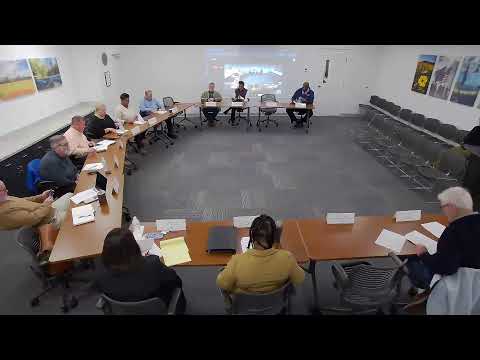
Economic advisory board recommends pausing Columbia County residential incentive program to rewrite criteria
Loading...
Summary
The Columbia County Economic Development Advisory Board voted to recommend pausing the county's residential development incentive and to schedule facilitated workshops to redesign eligibility, accountability and scorecards for residential and commercial incentives.
The Columbia County Economic Development Advisory Board recommended pausing the county's residential development incentive and asked staff to schedule a facilitated workshop to rewrite eligibility and accountability criteria.
Unidentified Speaker (S6) moved to pause the residential incentive program and to schedule a standalone, facilitated workshop; Unidentified Speaker (S2) confirmed a second and the board approved the recommendation by voice vote, with members responding "aye." The motion was a recommendation to the Board of County Commissioners rather than a binding county action.
Board members said the pause aims to give staff and the board time to tighten the scorecard's eligibility thresholds, clarify whether incentives should be limited to rental or workforce housing, set firm unit and capital-investment minimums, and add measurable deadlines. "If you say, I want 50-plus units''and these boxes are checked, it actually becomes heightened," Unidentified Speaker (S1) said, urging the board to publish a clear "checklist" the county can enforce.
Speakers described recurring obstacles for smaller, local developers: many rural parcels lack water and sewer service, pushing developers to choose septic or pay to extend utilities, which raises per-unit costs and can push rentals out of affordable price bands. "Local folks''are the ones that might need some help," Unidentified Speaker (S9) said, while others argued larger national builders do not need subsidies.
Staff (Unidentified Speaker S3) confirmed the revised development incentive already disqualifies projects receiving state or federal subsidies to avoid duplicative benefits. Board members proposed a range of policy tools during discussion: restrict incentives to rental or workforce units, require multi-year performance guarantees, introduce clawback or reverter clauses into agreements, and cap utility-related reimbursements (one member suggested a $250,000 ceiling for utility construction reimbursement as an example for discussion).
The board asked staff to circulate the existing scorecard and current agreements in advance of the workshop. Staff also committed to present options for facilitated meeting dates within roughly 30 days and to coordinate a separate commercial-scorecard workshop.
Next steps: the advisory board will draft formal workshop materials and return a recommendation to the Board of County Commissioners; staff said the current residential program is in place per BOCC direction until any BOCC action changes it. The advisory board intends that the workshop produce a revised scorecard and vetting process the board can vote on and forward for BOCC consideration.