Get Full Government Meeting Transcripts, Videos, & Alerts Forever!
Get email alerts on the Pension Investments topic
No spam. Unsubscribe anytime.
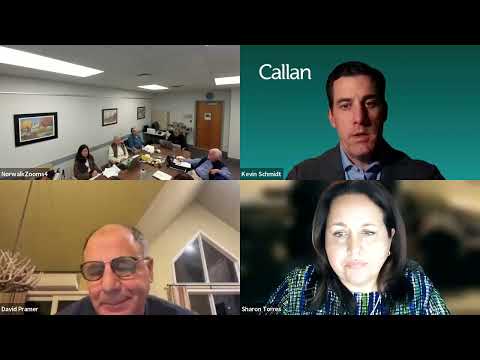
Norwalk pension board reviews 2025 performance and weighs moving more assets into passive ETFs
Summary
Trustees reviewed 2025 manager performance, discussed shifting some international and small‑cap exposure into passive ETFs, and scheduled a February presentation from manager Walter Scott to address recent underperformance.
The Norwalk pension board on Jan. 14 reviewed its 2025 investment results and spent substantial time weighing whether to shift some allocations from active managers into passive exchange‑traded funds (ETFs).
Consultants told trustees the pension plan completed manager searches last year, is transitioning a small‑cap sleeve from Principal to Emerald and has had presentations from several managers, including TCW, PIMCO and Walter Scott. A consultant said the transition paperwork is underway and that the work plan for 2026 will include a formal review of the pension and OPEB investment policy statements.
Trustees focused on Walter Scott’s recent relative underperformance. One trustee described the short‑term gap as “so far off” the index that the board should consider passive alternatives; a consultant said the underperformance is driven by market dynamics and by the strategy’s aversion to speculative names, and recommended a structured review of the international equity sleeve. The consultant said a blended benchmark such as ACWIx US (which includes developed and emerging markets, with emerging markets roughly 30% of that index) could support a passive option that would avoid standalone emerging‑market exposures.
Several trustees requested historical performance slides comparing active managers to passive indices across asset classes and asked the consultant to model what a style‑neutral, market‑owned international equity structure would look like. The consultant agreed to bring comparative slides and noted that if the board loses conviction in active management, there are institutional passive providers (State Street, BlackRock, Vanguard) that can offer low‑cost alternatives.
Walter Scott is scheduled to present to the board in February; trustees said the presentation will inform whether to change implementation. The consultant emphasized that changes should be considered formally, with analysis of portfolio characteristics and style biases before implementation.
The review also covered other managers and asset classes: Prudential outperformed the fixed‑income aggregate in the trailing year, UBS’s earlier September loss tied to a co‑investment write‑down had since moderated, and several legacy private funds are winding down with modest remaining commitments.
Next steps: the board asked staff and consultants to provide the requested active‑versus‑passive comparison slides and to return with a formal review of the international equity structure in the spring. The board will hear Walter Scott in February before deciding on any reallocation.