Oceanside UFSD previews major cost drivers for 2026–27 budget; tax‑cap and capital work highlighted
Loading...
Summary
At Budget Workshop No. 1 the district presented its 2026–27 budget framework: remain within New York State tax‑levy cap, sustain instruction, support growing special‑education needs, and maintain facilities while managing rising insurance, transportation and health‑care costs; Phase 5 science renovations and turf work were updated.
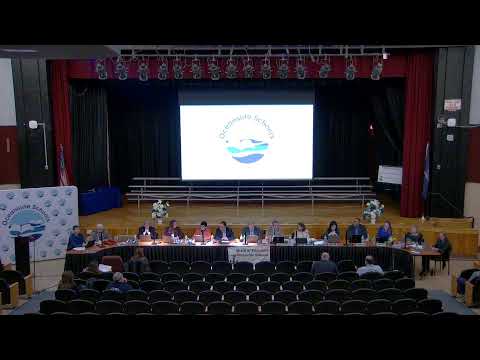
Doctor Coakley, the district’s business officer, opened the January 14 budget workshop with a high‑level overview of how the Oceanside Union Free School District plans to frame the 2026–27 budget. “Tonight we will present our budget development process and budget workshop number 1,” he told the board.
Coakley said the district’s three budget goals are to maintain instructional programs, support all students’ needs and manage district facilities while staying within the tax‑levy cap set by New York State. He noted the tax‑cap formula is verified by the office of the state controller in March and, for planning, the district is using a 2% allowable levy growth factor prior to exclusions or capital exemptions.
The presentation included district demographics and service counts: approximately 5,428 pre‑K–12 students across 10 schools on eight campuses; about 2,300 students receive district transportation (including roughly 75 in‑district and 75 nonpublic/out‑of‑district riders); and districtwide percentages of 17.22% free or reduced‑price meals, 16.3% special‑education classification and 4.99% English‑language learners.
Coakley called out five primary budget pressures largely outside the district’s control: rising insurance premiums (flood, property, liability and vehicles), higher transportation costs driven by fuel and provider obligations, general inflation, rising employee benefits and uncertainty in federal grant allocations. He said the district used a 10% projection for health‑insurance growth in its planning model and estimated federal education grants at approximately $4,000,000.
On capital projects, Coakley updated the board on Phase 5 of the science‑department renovation at Oceanside High School (structural shell complete; contractors to renovate technology and shop spaces next summer) and reported that turf and tennis‑court work at multiple campuses is complete or near completion. “We are committed to having our student athletes out there by this spring,” he said.
The presentation also described an upcoming state‑required district building condition survey that must occur once every five years. Coakley said the district must hire an outside licensed engineer or architectural firm, file the survey with the State Education Department and acknowledge recommendations (with an initial response to SED within a short time frame the district described as roughly 90 to 120 days). Board members described the mandate as unfunded and discussed the time and cost implications.
Board members asked detailed questions about student counts transported to private and parochial schools (the count rose from 476 to 490 year‑over‑year), proposed DACA (Department of Community Activities) fee impacts tied to added security staff, and how solar installations will affect electricity budgets. Coakley said the electricity code is down approximately a quarter‑million dollars to date and predicted larger savings when the largest campuses come online with solar equipment.
What’s next: the administration said this was Budget Workshop No. 1; the program component is scheduled for the next workshop on February 11 with a focus on athletics, instruction, curriculum, special education, student services and technology, and the district’s budget vote is scheduled for May 19, 2026 (7 a.m.–9 p.m.) at the Merrill Avenue Gym at School 6.
Sources and attribution: quotes and figures in this article are drawn from the board meeting presentation by Doctor Coakley (budget workshop remarks) and follow‑up exchanges recorded during the January 14 board meeting.