Get Full Government Meeting Transcripts, Videos, & Alerts Forever!
Get email alerts on the Head Start topic
No spam. Unsubscribe anytime.
Niagara Falls school district outlines Head Start gains and warns of federal funding uncertainty
Summary
District Head Start officials reported improved enrollment and compliance since taking over operations in 2022, highlighted a $10,000 private grant and partnerships for mental-health supports, and warned that national policy changes and a federal review process are creating uncertainty for upcoming grant funding and application requirements.
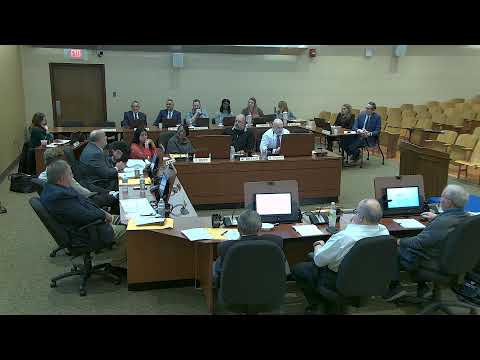
Niagara Falls City School District officials told the board at their Jan. 8 work session that the districtrun Head Start program has grown enrollment and improved regulatory compliance since the district took full operations in January 2022, but that national policy and funding shifts have created uncertainty ahead of the next grant cycle.
"As of January 8, we are at 77 for Head Start and 41" for Early Head Start, Dr. Lynette, the program director, told the board during an annual governing-body review. She said those figures reflect cumulative growth since the district assumed the program and that enrollment remains active while the district addresses waiting lists for infants and toddlers.
Dr. Lynette credited partnerships and internal fixes for measurable improvements: developmental and dental screenings are now tracked and completed through a partnership with University Pediatric Dentistry; staff credentials were raised to meet Head Start minimums; the program earned a provisional 4-out-of-5 Quality Stars rating; and a health advisory committee of more than 40 professionals now meets semiannually. She said the district has also implemented evidence-based social-emotional curricula and training, and established a trauma-informed student champion team.
The presentation flagged several federal-level developments that could affect Head Start providers. Dr. Lynette described a restructuring of regional HHS/Head Start offices and implementation delays for performance standards, and said the Administration has issued new grant guidance altering allowable language in applications. She said those shifts "create challenges" for writing grant narratives and noted the district will submit its five-year Head Start grant application by April 1; the board will be asked to approve the application package in March.
The district also pointed to private support and recent grants that helped sustain programming. Trisha Andrews, representing the New York State School Boards Association, cited a $10,000 award from the Buffalo Bills Foundation that has supported trauma-informed student work. Dr. Lynette said the district will continue applying for federal funds despite uncertainty and emphasized that local in-kind support has been used to cover benefits and other costs not funded by the grant.
Officials urged continued board support and said federal monitoring remains on track: a recent FA2 review was completed in October and the district expects a written report from federal reviewers. Dr. Lynette explained the CLASS (Classroom Assessment Scoring System) process and the videotaped submission now used by the Office of Head Start for instructional-quality review.
Next steps: the district will present the Head Start grant application to the board in March and submit the formal application by April 1; federal award notifications are typically received in late June.