
Witnesses urge more time to finalize tier 3 maps and road‑rule guidance amid Act 250 overhaul
Get AI-powered insights, summaries, and transcripts
Subscribe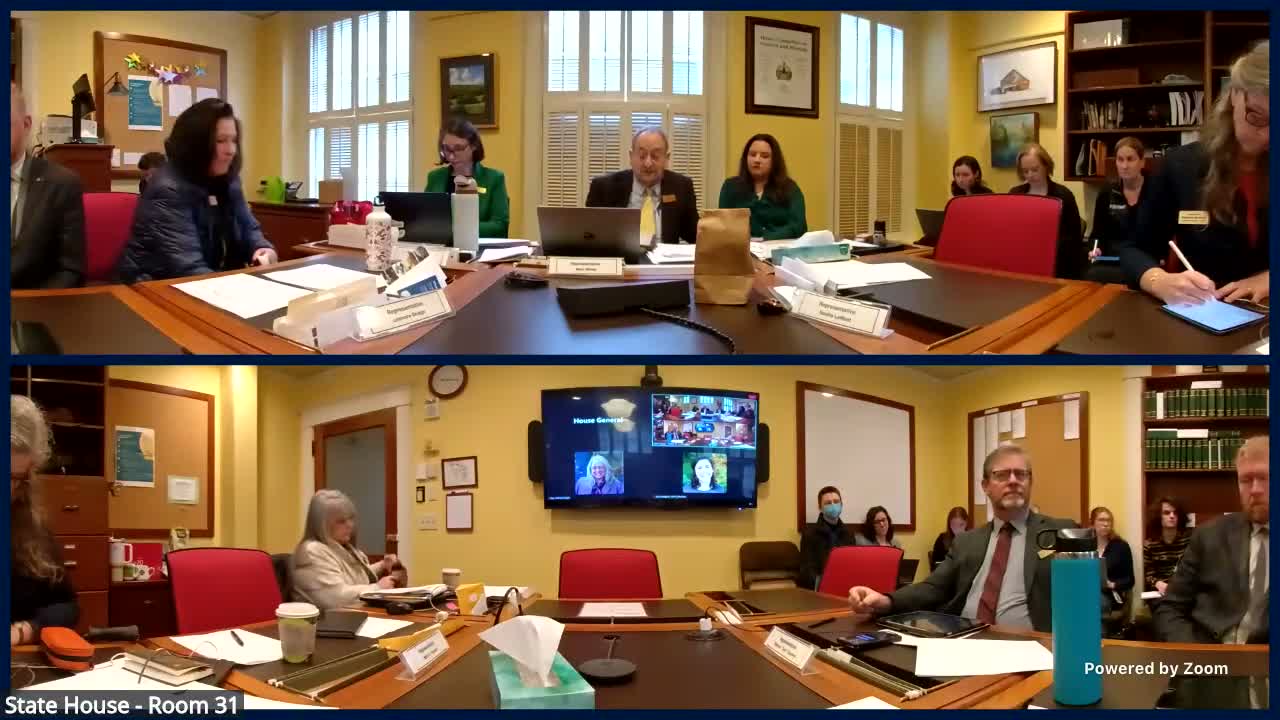
Summary
Vermont Natural Resources Council staff told the General & Housing committee that recent laws (HOME Act, Act 181) advance housing access but the state still needs more time to finalize Act 250 tier‑3 maps and road‑rule guidance; VNRC supports delaying the rule filing to September 1 to refine triggers and protections.
Two staffers from the Vermont Natural Resources Council testified to the General & Housing committee on Jan. 14 about how recent housing and land‑use reforms interact with conservation goals and why some rules need more time to be finalized.
Katie Gallagher, director of the sustainable communities program, told the committee that housing decisions are as much environmental as economic: "When we talk about housing, it's very much, an environmental issue for us," she said, and pointed to transportation emissions from sprawling development as a major source of greenhouse gases. Gallagher said state laws such as the HOME Act (2023) and Act 181 (2024) have reauthorized lower‑unit multifamily development in places with infrastructure and modernized planning tools, but that implementing the changes requires careful mapping and local capacity.
John Groban, VNRC policy and water program director, described gaps remaining in Act 250 — especially protections for critical natural resources in tier 3 areas, including intact forest blocks and habitat connectors — and explained the nascent road‑rule guidance the Land Use Review Board has released. The road rule is intended to identify and limit long roads that fragment forests, Groban said, but "the guidance is very nascent" and the board is still working through how to define triggers such as a "road versus a driveway." He added, "we just need more time" to get the technical mapping and criteria right.
Committee members pressed witnesses about how tier definitions account for water and wastewater capacity and soil suitability. VNRC staff said that capacity can be demonstrated by existing public water or wastewater systems, publicly accessible private systems, or soils that would support community systems, but noted regional and local planning commissions must document capacity in the mapping process.
On timing, witnesses flagged statutory deadlines. Groban said stakeholders including the League of Cities and Towns (LARP) have asked to push back rule deadlines and that VNRC supports moving the final rule filing from the statute's original schedule toward a September 1 target to allow more analysis and public engagement. Committee members also discussed an effective date noted in testimony (July 1, 2027) and whether that date should be extended to accommodate slower guidance development.
Why it matters: committee members are weighing tradeoffs between speeding housing production and protecting conservation values. VNRC framed the point as one of balance — encouraging dense housing in planned centers while avoiding unintended impacts to forests and critical habitats — and asked legislators to allow more time for technical work on tier 3 mapping and road‑rule definitions.
The hearing continued with municipal witnesses after a brief recess; VNRC staff offered to return as the rulemaking proceeds.